
State Department revokes visas for 27 Latin American officials in corruption sweep
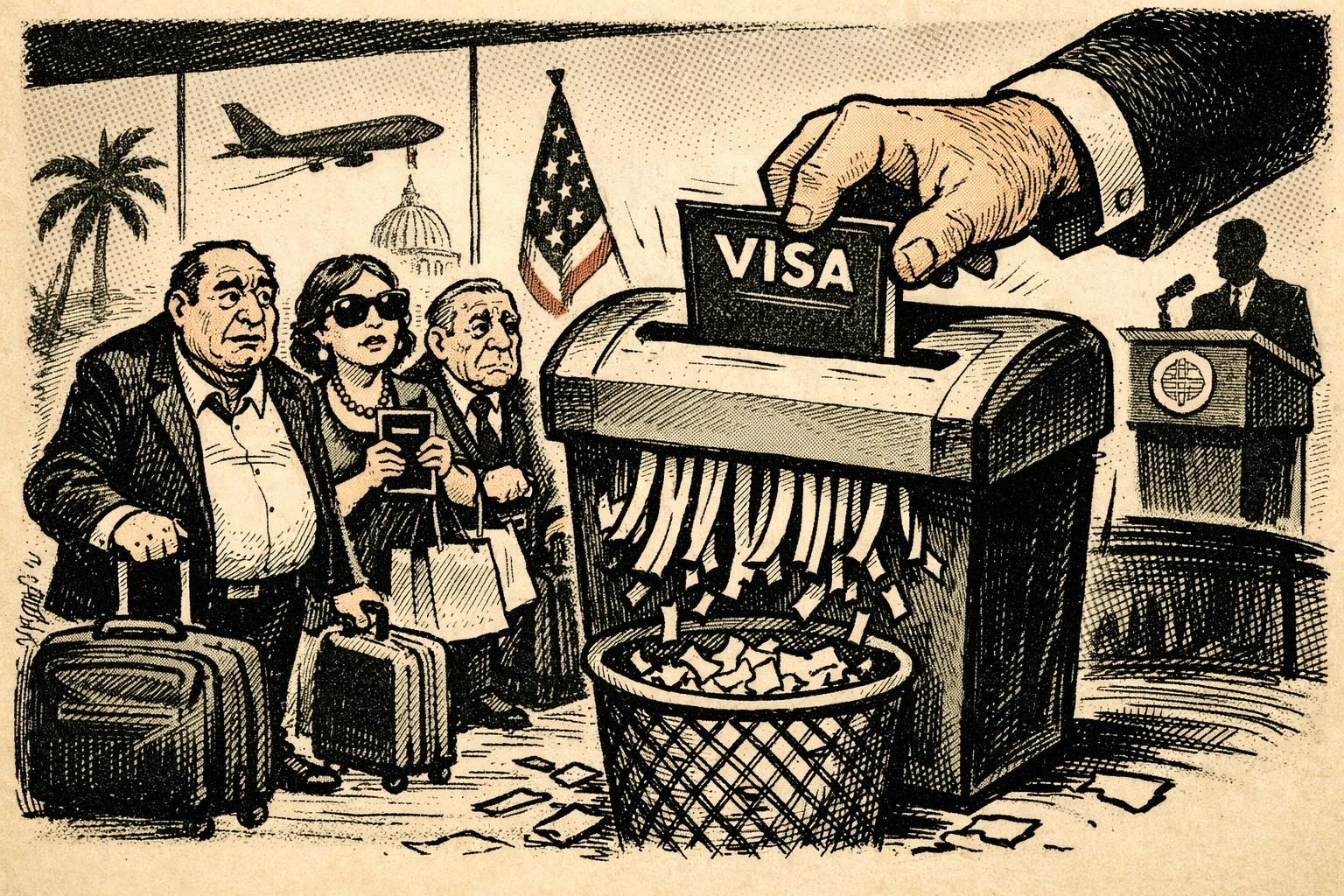
The State Department’s decision to revoke visas for 27 Latin American officials, former officials, and family members lands as both a policy move and a political signal. According to the administration, the list includes Bolivia’s attorney general and others accused of corruption, with the punishment falling outside the courtroom and into the realm of diplomatic leverage. That matters because a visa revocation is not a criminal conviction and does not carry the evidentiary burden of a prosecution. It is, instead, a fast and flexible tool that can be used to freeze out people Washington has decided should no longer be welcome. In practice, that makes the action useful in ways that go well beyond any single anti-corruption case.
The White House is describing the move as part of a broader effort to defend the rule of law, but the mechanics tell a more complicated story. Visa bans are one of the easiest ways for an administration to punish foreign officials without waiting for indictments, extraditions, or judicial findings that might take months or years. That speed can be attractive when the political goal is to show toughness and force a reaction. It can also be helpful when the administration wants to avoid the scrutiny that comes with a trial or a formal legal process. The result is a kind of foreign-policy penalty box, where Washington decides who crosses the line and who gets squeezed, often with little public explanation beyond broad corruption allegations. Supporters are likely to call that decisive. Skeptics are more likely to call it summary judgment with a diplomatic veneer.
The bigger issue is how easily an anti-corruption message can blur into selective punishment. Latin America has seen many U.S. administrations claim to be backing clean government, transparency, and democratic norms, only to apply those standards unevenly when politics get in the way. That history gives any new crackdown an immediate credibility problem, especially when the targets are officials in countries where the United States already has tense relations or competing interests. If Washington singles out people who are politically inconvenient, or those whose removal serves a broader strategic purpose, the moral case starts to look thinner. The administration says the people targeted were undermining the rule of law, but that is still a statement filtered through American judgment rather than a neutral legal finding. For governments in the region, that distinction is not academic. It shapes whether the United States is seen as a partner in accountability or as an outside power using corruption claims as a convenient lever.
The practical fallout is likely to be felt less in courtrooms than in ministries, embassies, and back channels. Revoked visas can embarrass officials, complicate their travel, narrow their diplomatic room to maneuver, and make future cooperation with the United States harder to sustain. They can also chill relationships with family members and associates who may have been swept up in the action as a consequence of proximity rather than direct allegations. On the U.S. side, the move may be presented as a clean message that corruption will carry consequences, but it also fits a broader habit of treating foreign policy as a stage for punishment and loyalty tests. That style can produce instant drama and a satisfying sense of motion, yet it does not necessarily build durable influence. In the end, the administration may get the short-term effect it wants: pressure, attention, and a visible sign of disapproval. Whether that adds up to credible anti-corruption policy, or just another example of Washington deciding who gets to be in the club, will depend on whether the standards are applied consistently and whether the public evidence ever catches up with the political rhetoric.
Comments
Threaded replies, voting, and reports are live. New users still go through screening on their first approved comments.
Log in to comment
No comments yet. Be the first reasonably on-topic person here.