
Blocked outlets say White House is still playing games
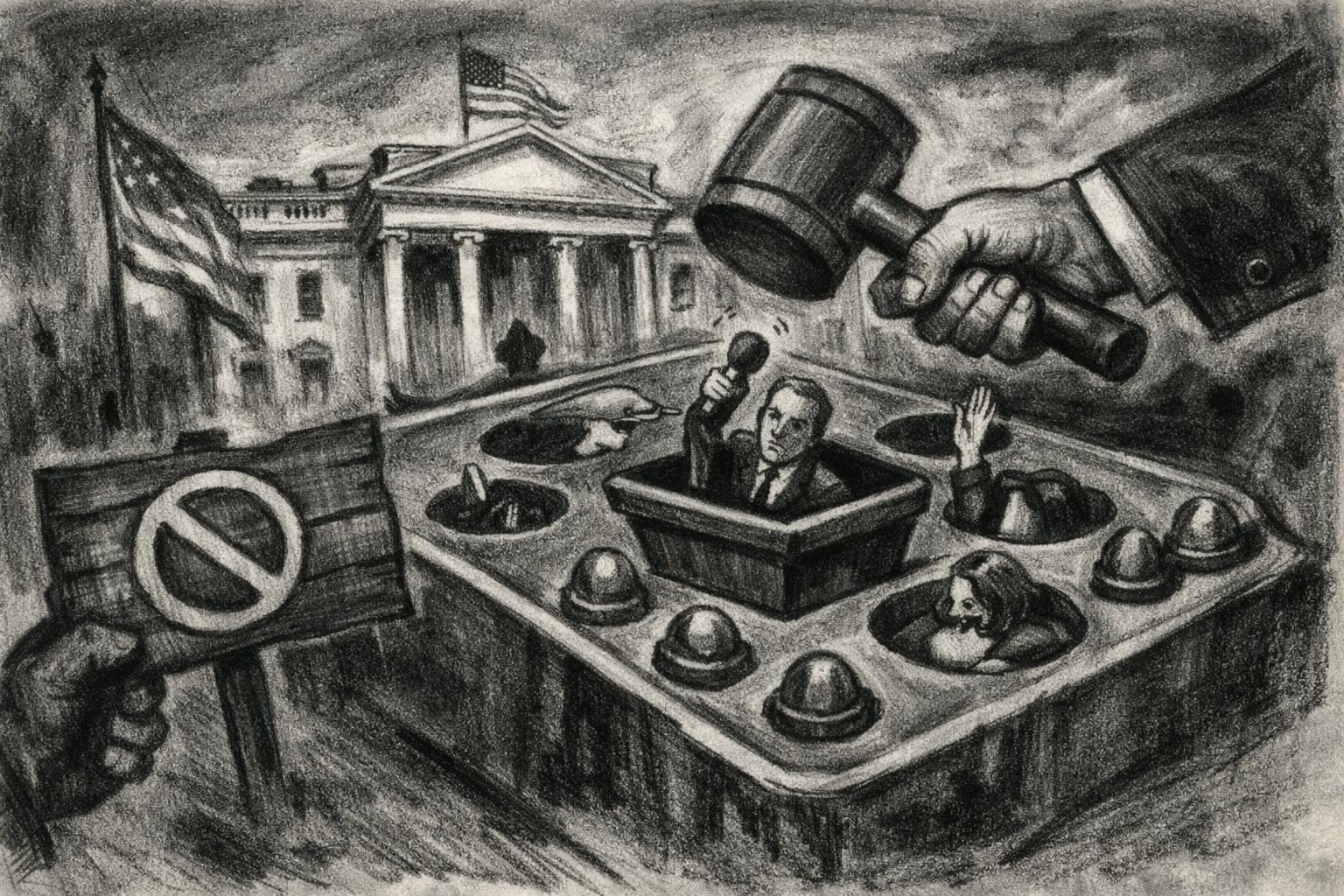
Three major news organizations that have been barred from White House grounds are asking a court to halt the administration’s access restrictions while their lawsuit moves forward, arguing that the government is still trying to enforce the ban in practice even after a judge intervened. The request, filed Monday, comes from CNN, MS NOW, and Politico, according to the case materials referenced in the draft. Their argument is not just that the White House adopted a controversial policy, but that it has continued to apply that policy in ways that undermine the court’s ability to assess what is actually happening. In other words, the dispute is no longer limited to the original access decision. It is now also about whether the administration can say it is complying with legal orders while leaving the underlying punishment in place through narrower, less visible methods. That distinction matters because a restriction that looks paused on paper can still function as a live ban in the real world.
The filing points to a particularly pointed example from the weekend, when the White House allegedly kept CNN out of the television pool even after a judge had already issued a restraining order. That detail is at the center of the new motion because it suggests the administration may be preserving the same practical consequences of the ban, just under a different label or through a narrower channel. The plaintiffs are essentially telling the court that a temporary legal setback is not enough if the executive branch can simply shift its tactics and continue to withhold access. They argue that the White House’s behavior shows the ban has not been cleanly shelved, but rather selectively enforced or reworked in a way that keeps the outlets sidelined. If that is true, the case becomes about more than one credential fight or one weekend’s pool assignment. It becomes a test of whether a federal agency can be prevented from doing indirectly what it has been ordered not to do directly.
The legal claims are broad, but the core complaint is straightforward enough. The outlets say the ban raises First Amendment concerns because it punishes disfavored media organizations by limiting their access to official spaces and events tied to presidential coverage. They also say it creates due-process problems, suggesting the government is not imposing the restriction through a fair or transparent procedure. Monday’s filing goes further, according to the summary, by arguing that the administration’s conduct makes clear it would restore the full ban if given the chance. That assertion is important because courts often look not only at what a defendant says in the moment, but also at behavior that suggests a challenged policy remains alive in practice. If the White House is still drawing lines around who gets access, and doing so inconsistently, the plaintiffs have a stronger argument that the restriction is not a dead issue but an ongoing injury. The government, for its part, has been trying to frame the matter as an internal management decision rather than a constitutional clash, but that framing becomes harder to sustain if the practical effect is continued exclusion.
The stakes are larger than the newsroom politics of any one dispute because White House access is not a symbolic perk. The press pool is one of the main ways the public gets routine, on-the-record reporting about presidential travel, appearances, and informal moments that would otherwise be invisible. That makes it a critical part of how democratic scrutiny works in practice, not just in theory. If the administration can decide which outlets are inside that system and which are left out, it gains influence over what is observed, recorded, and reported back to the public. Press-freedom advocates are likely to see the issue as a transparency problem, while lawmakers and other critics may treat it as an abuse of executive authority. Even if the White House insists it is simply managing access, the effect of a selective exclusion policy is to control the flow of information around the presidency. The latest filing suggests the plaintiffs want the court to recognize that dynamic now, rather than waiting until the restriction has been normalized through repeated workarounds. The more the administration improvises under judicial scrutiny, the more it risks turning a narrow access dispute into a broader case about how far government power can go when it is used against specific media organizations.
Comments
Threaded replies, voting, and reports are live. New users still go through screening on their first approved comments.
Log in to comment
No comments yet. Be the first reasonably on-topic person here.