
White House keeps hyping its app and messaging machine
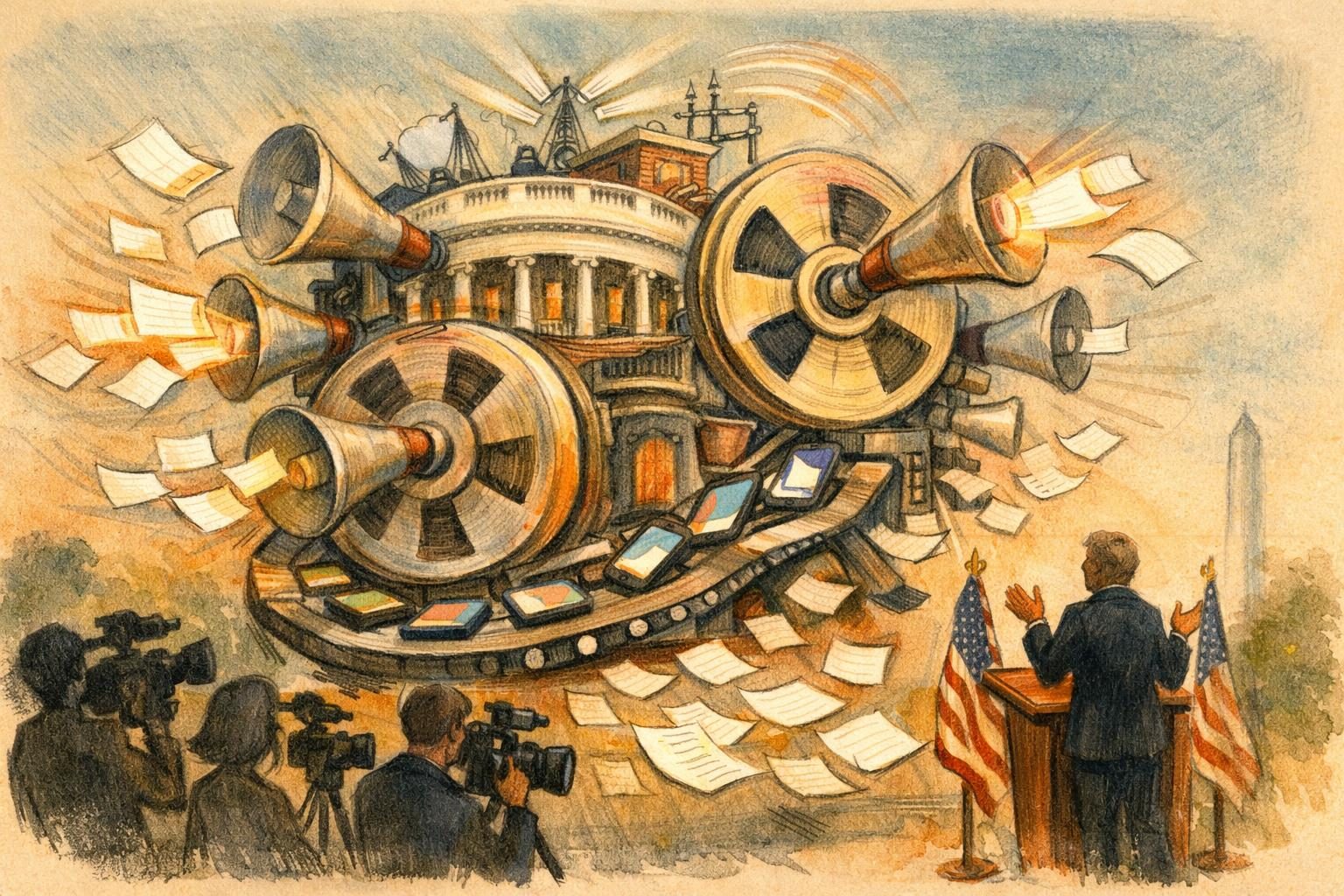
The White House spent part of the day doing something that looks less like routine public communication and more like a victory lap for its own propaganda infrastructure. It promoted its app, highlighted the reach of its media ecosystem, and leaned into a message that Americans are supposedly tuning out “fake news” in favor of the administration’s own channels. On its face, that is not a policy announcement in the usual sense. It is an institutional signal, and one that says a lot about how this White House wants to be seen: not as a government under scrutiny, but as a content operation with its own audience, its own distribution strategy, and its own brand identity. That may be politically useful, but it is also a telling marker of where the administration thinks power now lives. The emphasis is not on persuading the public through governing performance so much as on controlling the feed through which people receive the story of governing.
The boast about an app climbing the charts matters because it is not just self-promotion; it is the administration openly celebrating a direct-to-consumer communications pipeline. A White House app can be a perfectly legitimate tool for announcements, schedules, transcripts, and official statements. But the rhetoric attached to it here goes well beyond administrative convenience. When the executive branch presents its own platform as a substitute for conventional media, it is trying to turn a public information channel into a political weapon. That approach is hardly subtle. It suggests the administration sees value in bypassing journalists, critics, and even the messy friction of public debate in favor of an environment it can more easily shape. In practical terms, that means tighter message discipline, fewer inconvenient questions, and a steadier stream of material tailored to supporters who are already primed to trust the source. In democratic terms, it raises the familiar concern that the government is not simply communicating with the public, but narrowing the public square around its preferred audience.
That is why the tone of triumph is doing so much work here. The White House is not merely noting that its app is popular; it is framing the app’s popularity as evidence of legitimacy, momentum, and maybe even cultural vindication. The administration is essentially congratulating itself for building a communications system that keeps people inside its own loop. The language about Americans “tuning out fake news” is especially revealing because it collapses several separate things into one convenient political slogan. It treats skepticism toward journalism, loyalty to the White House, and consumption of official content as if they all amount to the same thing. They do not. But that is the point of a spin machine: it blurs distinctions that ought to remain clear. If the executive branch is celebrating the idea that the public should get its information from the government’s preferred channels rather than from independent scrutiny, then the message is not really about information at all. It is about authority, loyalty, and the power to define reality on the administration’s terms. That kind of self-congratulation is often a clue that the institution doing the talking would rather be praised than questioned.
The larger concern is not that a White House has an app or that it wants to disseminate releases quickly. Governments should be accessible, and there is nothing inherently sinister about modernizing how official information is delivered. The concern is what happens when the communications operation starts to look like the achievement itself. A White House that treats messaging performance as evidence of success is one that risks substituting optics for governance. It is also one that may be trying to distract from the hard parts of the job, especially when the administration is already under pressure from litigation, enforcement disputes, and the familiar churn of an election year. In that setting, a loud focus on the media machine can serve as a useful diversion. It lets the White House project confidence, rally supporters, and redirect attention toward the spectacle of its own messaging rather than toward unresolved questions about policy, legality, or execution. That does not prove a specific motive in any particular case, but it does fit a broader pattern that is hard to miss: managed attention over open scrutiny, platform over substance, and a public relations apparatus that increasingly resembles a governing philosophy. The immediate fallout may be mostly cultural and institutional, but those effects accumulate. The more the White House normalizes this style of politics, the more it trains the public to accept a government that measures success in clicks, rankings, and loyal reach instead of accountability, transparency, and results.
Comments
Threaded replies, voting, and reports are live. New users still go through screening on their first approved comments.
Log in to comment
No comments yet. Be the first reasonably on-topic person here.