
White House puts Canada tariff move on a hard September 29 clock
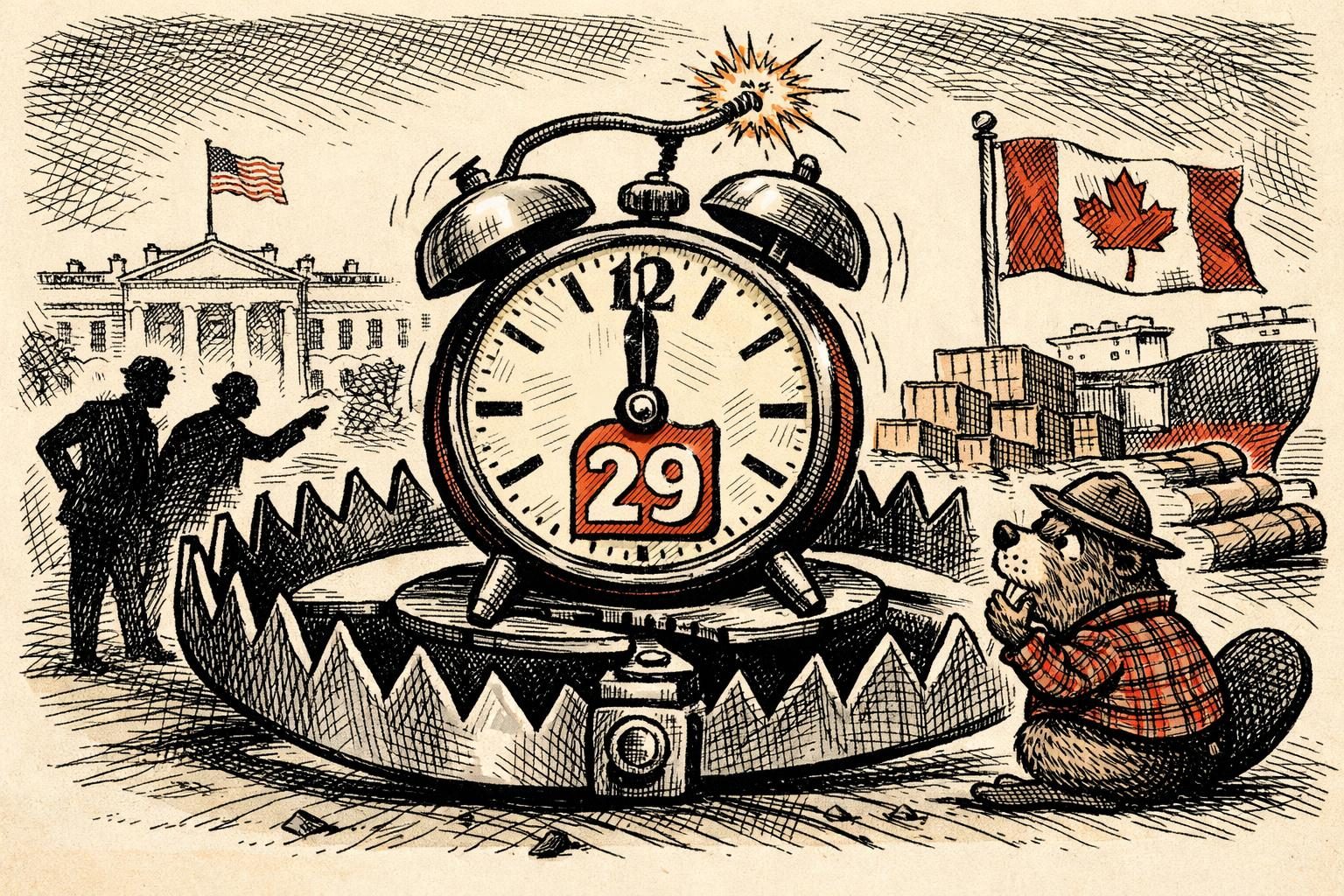
The White House has put a hard date on its latest trade escalation against Canada, and the timing leaves little room for ambiguity. According to a fact sheet released over the weekend, import bans tied to Section 338 are scheduled to take effect on September 29, 2026, while the administration also adjusts which goods are covered. Some products are being removed from the list, others added, but the larger message is unmistakable: the government is moving from threat to enforcement. The document frames the action as a response to what it calls Canadian discrimination against American commerce, presenting the move as a corrective to harm done to U.S. businesses. In practice, that turns a familiar trade dispute into a concrete policy escalation with immediate consequences for importers on both sides of the border. The White House may describe the change as targeted and responsive, but the existence of a fixed effective date means companies now have to treat it as a real operational shock rather than another round of rhetorical brinkmanship.
For businesses that depend on cross-border flows, the immediate problem is uncertainty layered on top of existing uncertainty. Tariffs already make planning difficult, and import bans add another level of risk because they can change not just cost but availability. Firms that source components, finished goods, or inputs from Canada now have to ask whether a shipment will still clear, whether it will carry a higher price tag, and whether contracts signed weeks ago still make commercial sense. The fact sheet’s indication that the new restrictions are separate from other duties already in place only deepens the complexity, because companies must now map out multiple layers of exposure instead of a single tariff line. That kind of policy design may create leverage for the White House, but it also pushes uncertainty down the supply chain where manufacturers, wholesalers, retailers, and ultimately consumers tend to absorb the damage. The administration is clearly willing to make the system feel unstable if that instability produces bargaining power, yet instability is exactly what trade-dependent firms say they cannot afford.
The political logic here is just as important as the economic one. The White House is presenting the move as a defense of American workers and a response to unfair treatment, which allows it to frame the action as retaliation rather than escalation. But the structure of the policy suggests something broader than a single defensive measure. By reshuffling the list of affected goods and tying the change to a specific date, the administration is sending a signal that tariffs and import bans can be used as a flexible instrument of pressure, not just as a narrow corrective tool. Supporters are likely to see that as hardball politics and proof that the president is willing to fight for domestic industries. Critics, meanwhile, will see a federal loyalty test disguised as trade policy, with rules that can be tightened or loosened according to the administration’s judgment. Either way, the result is the same for the market: more friction, more uncertainty, and more reason for companies to assume that today’s rules may not survive into next week. The White House may insist it is restoring balance, but the method chosen here looks less like stable governance than deliberate disruption.
What happens next will depend on how the targeted industries, Canadian officials, and affected businesses decide to respond. Countermeasures are one obvious possibility, and legal challenges are another, especially if companies conclude that the changes create disproportionate harm or lack a clear commercial rationale. Border-state economies, which tend to feel trade disruptions first and most sharply, will be watching for knock-on effects in logistics, employment, and pricing. Even if some products are removed from the list, the broader message to the market is that access can be narrowed again at any time, for reasons defined by the White House. That is not how predictable trade policy is supposed to work, but predictability does not appear to be the administration’s main objective. The more immediate goal seems to be leverage, and leverage often comes with collateral damage. If the move holds, it may become another example of using trade rules as punishment first and economic strategy second, which is a very expensive way to make a political point.
Comments
Threaded replies, voting, and reports are live. New users still go through screening on their first approved comments.
Log in to comment
No comments yet. Be the first reasonably on-topic person here.