
Senate Judiciary stages Jack Smith grievance hearing
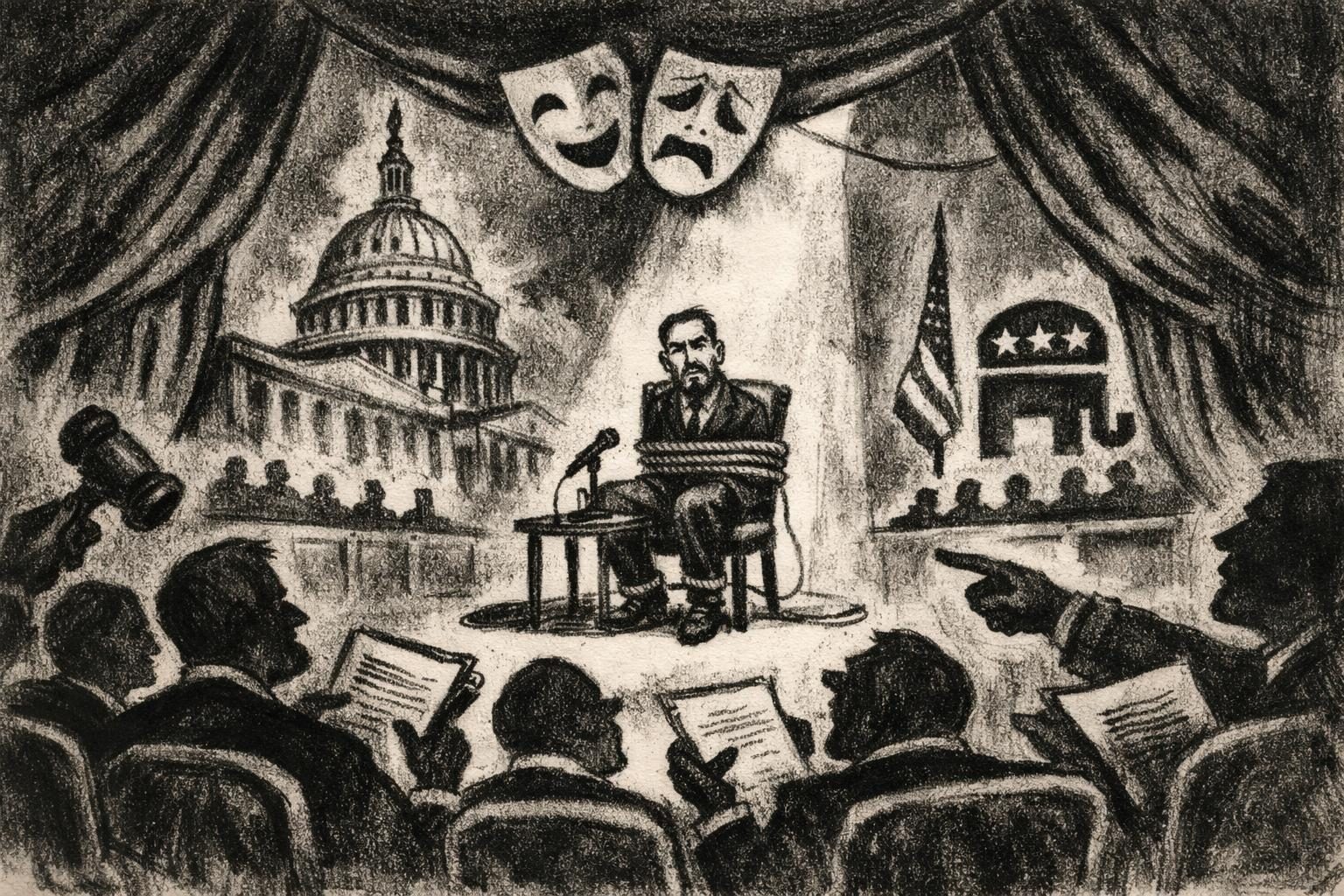
The Senate Judiciary Committee has decided that Jack Smith, the former special counsel whose work defined much of the Trump-era legal confrontation in Washington, is now the right subject for a hearing titled “Oversight of Jack Smith’s Abuse of Authority and the Targeting of Republicans and Related Matters.” That is the actual title posted for the committee’s September 29 session, and it leaves very little to the imagination about the tone Republicans intend to strike. Smith is listed as the witness, which turns the hearing into something closer to a political summons than a neutral review of executive-branch conduct. The official label pretends to be a standard oversight exercise, but the framing makes clear that the conclusion has been drafted before any testimony begins. If the hearing is meant to investigate, it is doing so with the verdict already embossed on the placard.
That setup is why the event reads less like legislative oversight than grievance theater with a formal seal. The committee is not opening a new legal chapter, and nothing about the hearing suggests a fresh discovery of facts that would alter the basic public understanding of Smith’s work. Instead, it is offering a stage on which Republicans can continue recasting the special counsel’s investigations as a kind of political persecution, while Democrats and other defenders of institutional norms are likely to argue that being investigated is not the same thing as being wronged by the state just because the subjects of those investigations disliked the outcome. The gap between those two views is large, but the committee’s chosen title narrows the range of acceptable interpretation before the first question is asked. That is part of the point. The hearing is not being presented as an open inquiry into what happened. It is being presented as a chance to relitigate who was embarrassed, who feels aggrieved, and who gets to define accountability. In that sense, the committee is not merely examining the conduct of a former special counsel. It is testing how far Senate Republicans are willing to push the chamber toward political performance disguised as institutional review.
The political motivation is not hard to detect, and it is not especially subtle. Republicans have spent months trying to turn Smith into a symbol of overreach, using the language of abuse and targeting to suggest that the special counsel’s investigations were not serious law-enforcement efforts but partisan operations aimed at the party’s preferred figures. That narrative may energize the base, but it also does the work of shrinking complex legal questions into a simpler emotional script. The problem for the committee is that the script comes before the evidence, and once the premise is set that way, the hearing starts looking less like a search for truth and more like a loyalty ritual. Senate time is a scarce resource, even if the chamber often behaves otherwise, and the choice to devote it to this subject says a great deal about the current incentives inside the Republican Party. The country still has unresolved fights over appropriations, health care, disaster response, and a long list of policy failures that are not going to fix themselves by holding a hearing about a prosecutor no longer in office. Yet the party’s leadership is choosing, again, to spend prime institutional real estate on a retrospective fight that is designed to validate resentment. That is not governing in any practical sense. It is political maintenance for a movement that has discovered grievance is easier to organize than competence.
The larger institutional cost is harder to measure, but it is real enough to notice. When a Senate committee leans this aggressively into performative retaliation, it weakens the line between oversight and revenge, and that line is one of the few things that still gives congressional investigations any legitimacy. There are times when congressional scrutiny is essential and overdue. There are also times when lawmakers use the machinery of oversight to create an appearance of accountability while actually aiming to settle a score, feed a narrative, or keep an old outrage alive for electoral consumption. The more often that happens, the harder it becomes for the public to tell the difference, and the easier it becomes for bad actors in any party to dismiss future investigations as just another round of scripted combat. That is the real damage here. A hearing like this may satisfy the audience that wants Smith treated as a villain, but it also teaches everyone else that the Senate is willing to use its authority as a backdrop for political payback. Once that expectation sets in, genuine oversight becomes cheaper, weaker, and easier to shrug off. The chamber gets its spectacle, the base gets its enemy, and Congress gets another reason to look like a place where facts arrive after the message has already been decided.
Comments
Threaded replies, voting, and reports are live. New users still go through screening on their first approved comments.
Log in to comment
No comments yet. Be the first reasonably on-topic person here.