
Senate passes college sports bill with wage-and-transfer overhaul
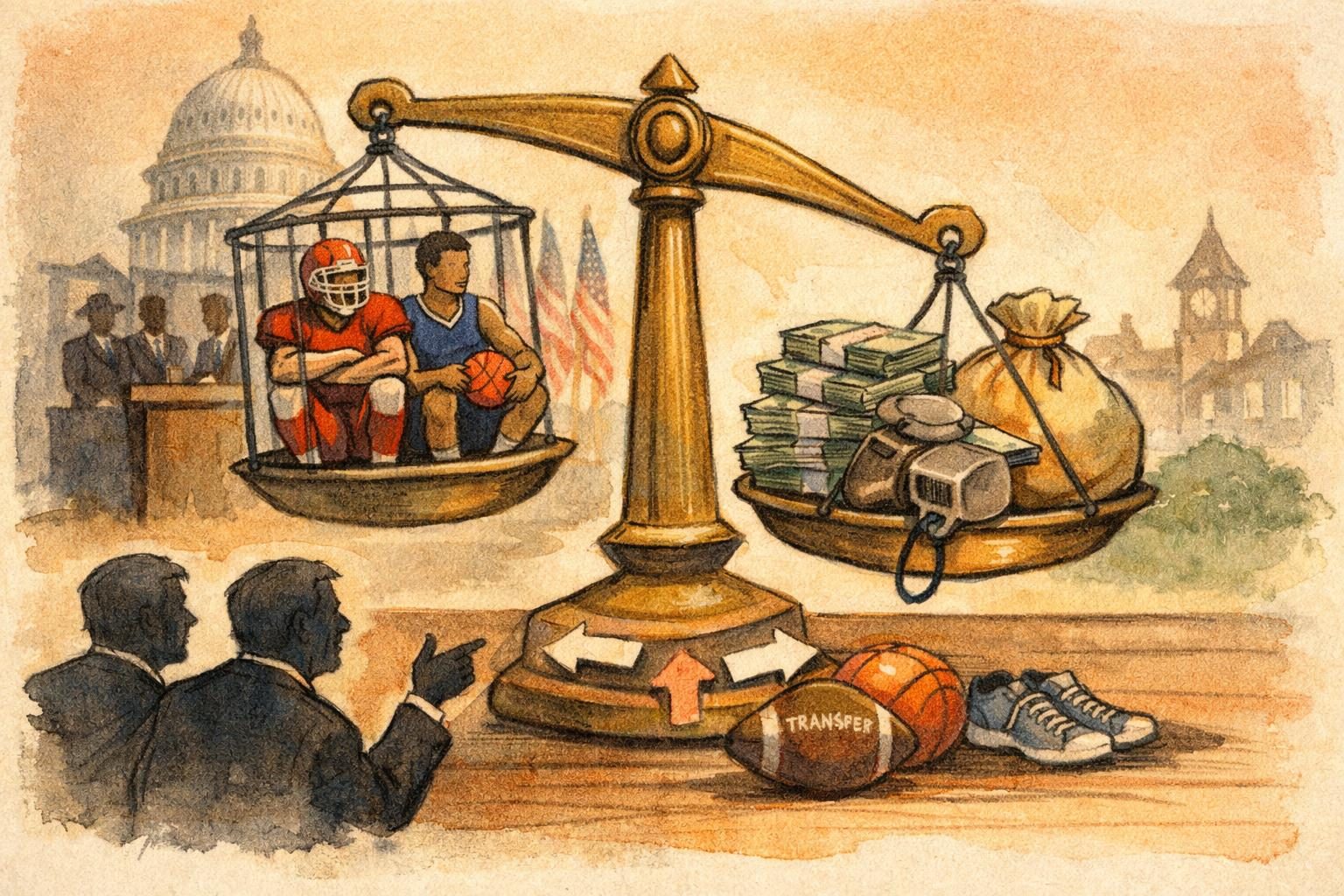
The Senate’s approval of a bipartisan college sports bill marks a major escalation in the fight over who controls the money, movement and labor of athletes in the modern campus game. For years, college athletics has been drifting away from the old amateur model and toward something that looks more like a fast-moving, lightly regulated labor market. Booster-backed payments, transfer portal churn and constant legal threats have already changed the business in ways the old rulebook never anticipated. This bill is an attempt to impose federal structure on that disorder, even if the structure itself may end up being as contentious as the chaos it is meant to replace. Supporters are presenting the measure as a much-needed cleanup operation, while critics are likely to see it as an effort to lock in new rules after the old system was already broken beyond repair.
The timing matters because college sports are no longer a side hobby wrapped in school colors and sentimental slogans. They are a multibillion-dollar industry with television contracts, sponsorships, donor influence and player movement all tied together in one unstable package. When Congress steps in to regulate athlete payments and transfers, it is not merely tweaking eligibility rules or simplifying paperwork. It is deciding how much leverage athletes should have in a system that has long treated them as essential workers without fully acknowledging that reality. The broader debate is really about labor power, even if lawmakers are talking in the cleaner language of reform, competitive balance and health protections. That is why the Senate vote is significant beyond the usual sports politics; it suggests there is now enough bipartisan discomfort with the current free-for-all to move the issue into federal lawmaking.
The bill’s supporters argue that a national framework is necessary because the current setup is inconsistent, unstable and increasingly exposed to legal challenge. They say athletes need clearer protections, especially on health and labor issues, and that the transfer and payment markets need boundaries that the schools and conferences themselves have been unable to enforce. Those claims are not implausible, especially given how rapidly the system has changed and how often the changes have been driven by litigation rather than planning. But the core question is whether the legislation will actually give athletes more meaningful rights or simply dress up a new set of restrictions in the language of fairness. A federal rulebook can be sold as modernization while still leaving the most powerful institutions in control of the terms. That is why even sympathetic observers are likely to read the details carefully and with a fair amount of suspicion.
Progressive labor advocates are likely to view the bill as part of a larger struggle over worker classification, bargaining power and the value athletes create for the institutions that profit from them. College football and basketball generate enormous revenue and political attention, yet many athletes still have limited control over compensation, transfers and injury-related protections. The old amateur framework has already been eroded in practice, but the legal and economic questions behind it have not gone away. A bill like this could represent a genuine shift toward acknowledging athletes as workers with rights, or it could end up stabilizing a system that benefits schools and conferences while placing new limits on athlete mobility. Much will depend on how the final version handles payment rules, transfer restrictions and health coverage obligations. If the protections are narrow or conditional, the legislation may do little more than formalize the same imbalance under a more respectable label.
What happens next will determine whether this is a real turning point or simply the latest attempt to manage a crisis that keeps outgrowing the solutions offered to it. The measure still has to survive the House and any final negotiations, where the details could change substantially and the politics could become much messier. Even so, the Senate vote is an important sign that the federal government is no longer pretending college sports can drift along indefinitely without a broader legal framework. The old model is gone whether its defenders admit it or not, and lawmakers are now being forced to decide what replaces it. The unresolved issue is not whether college athletics will be restructured, but who gets to design that restructuring and who benefits most when the dust settles. For athletes, schools, conferences and the people who make money from the whole machine, that question is likely to define the next phase of the fight.
Comments
Threaded replies, voting, and reports are live. New users still go through screening on their first approved comments.
Log in to comment
No comments yet. Be the first reasonably on-topic person here.