
Justice Department rolls out 16 election-crime charges in one sweep
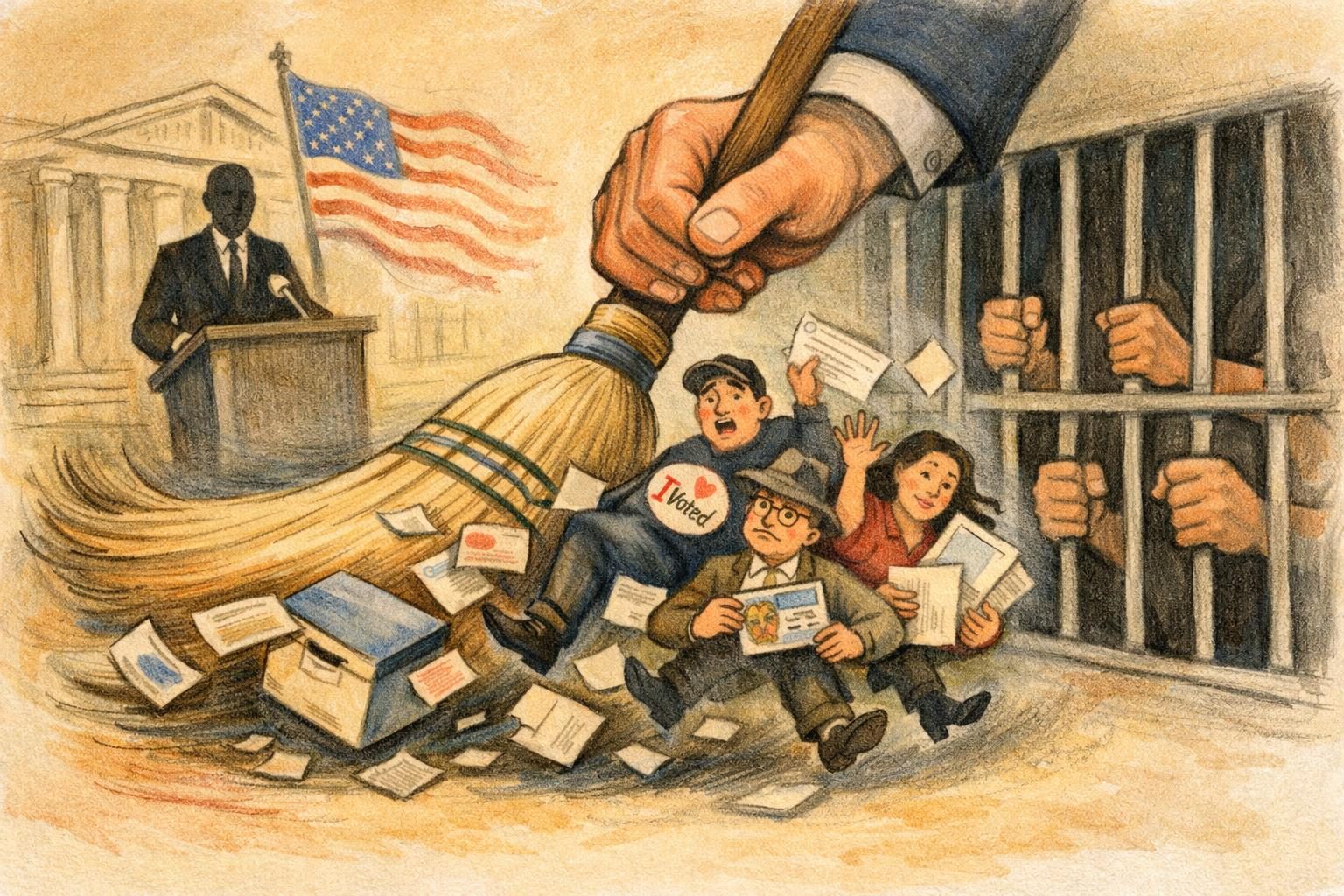
The Justice Department on October 12 said it had charged 16 people in a set of election-related criminal cases that together touch several of the country’s most politically sensitive voting issues. The allegations span illegal voting, false voter registration, false claims of U.S. citizenship, and related conduct that prosecutors say violated federal law. According to the department, the cases are spread across multiple states and involve a range of factual scenarios, including repeated voting, unlawful voting by noncitizens, and other conduct described by prosecutors as fraudulent or deceptive in connection with elections. The announcement did not present the matter as one sprawling conspiracy. Instead, it framed the charges as a coordinated enforcement push that gathered several separate cases into one public rollout. That distinction matters because it makes the move feel less like a routine criminal update and more like an intentionally packaged signal about what the department wants the public to see.
The size and timing of the announcement give it added political weight. Election-related prosecutions are always sensitive, but they are especially combustible in an environment where voter fraud claims are already central to the administration’s public message. By putting 16 charges in front of the public at once, the department is not just describing a set of allegations; it is also reinforcing a broader story line about election integrity and government vigilance. Supporters of the crackdown are likely to argue that the Justice Department is doing exactly what voters expect it to do: investigate and charge people when there is evidence of unlawful conduct in the voting process. From that perspective, the announcement can be cast as a necessary demonstration that election rules mean something and that violations will not be ignored simply because they are politically fraught. The department’s own language suggests it wants the public to understand the cases as part of a broader enforcement posture rather than as isolated, low-level matters buried in ordinary docket traffic.
Critics, however, are likely to see something different in the same set of facts. When a department gathers a cluster of election-related charges into a single public event, the move can look like a messaging campaign dressed up as law enforcement. That concern is especially sharp when the underlying cases involve allegations that are real and serious in a legal sense, but still small in scale compared with the size of the electorate and the ordinary functioning of elections. The danger, critics will say, is not merely that individual defendants may be prosecuted; it is that the administration can use those prosecutions to amplify a broader narrative that treats isolated cases as evidence of a widespread problem. That kind of framing can shape public perception even if the number of charged cases remains limited. It also invites scrutiny over whether election-crime enforcement is being deployed evenly, or whether certain cases are being elevated because they fit a preferred political message. The fact that the department chose to announce the charges in one coordinated burst only intensifies that question.
The practical fallout is likely to move on two tracks. First, state and local election officials may face renewed questions about how alleged voting violations were detected, how election systems are supposed to catch them, and whether existing safeguards are being used effectively. Even where the cases are narrow and fact-specific, the public announcement can create pressure on election administrators to explain procedures that are usually discussed only inside government. Second, voting-rights advocates and critics of the administration will likely push back against any attempt to turn the charges into a broad indictment of election systems or voters more generally. They are likely to argue that even legitimate prosecutions should not be used to fuel suspicion about the integrity of elections as a whole, especially when the evidence in individual cases may be disputed, unresolved, or still awaiting court review. For now, the legal question is limited to whether prosecutors can prove the charges they have brought. The political question is broader and already underway: whether a set of relatively discrete election cases will be used to justify a larger and more aggressive narrative about fraud. That tension is what gives the announcement its force. It is also what will make the next phase of the story less about the charges alone and more about how the administration chooses to wield them."}]}
Comments
Threaded replies, voting, and reports are live. New users still go through screening on their first approved comments.
Log in to comment
No comments yet. Be the first reasonably on-topic person here.