
Oregon governor rallies immigrant communities as ICE activity escalates
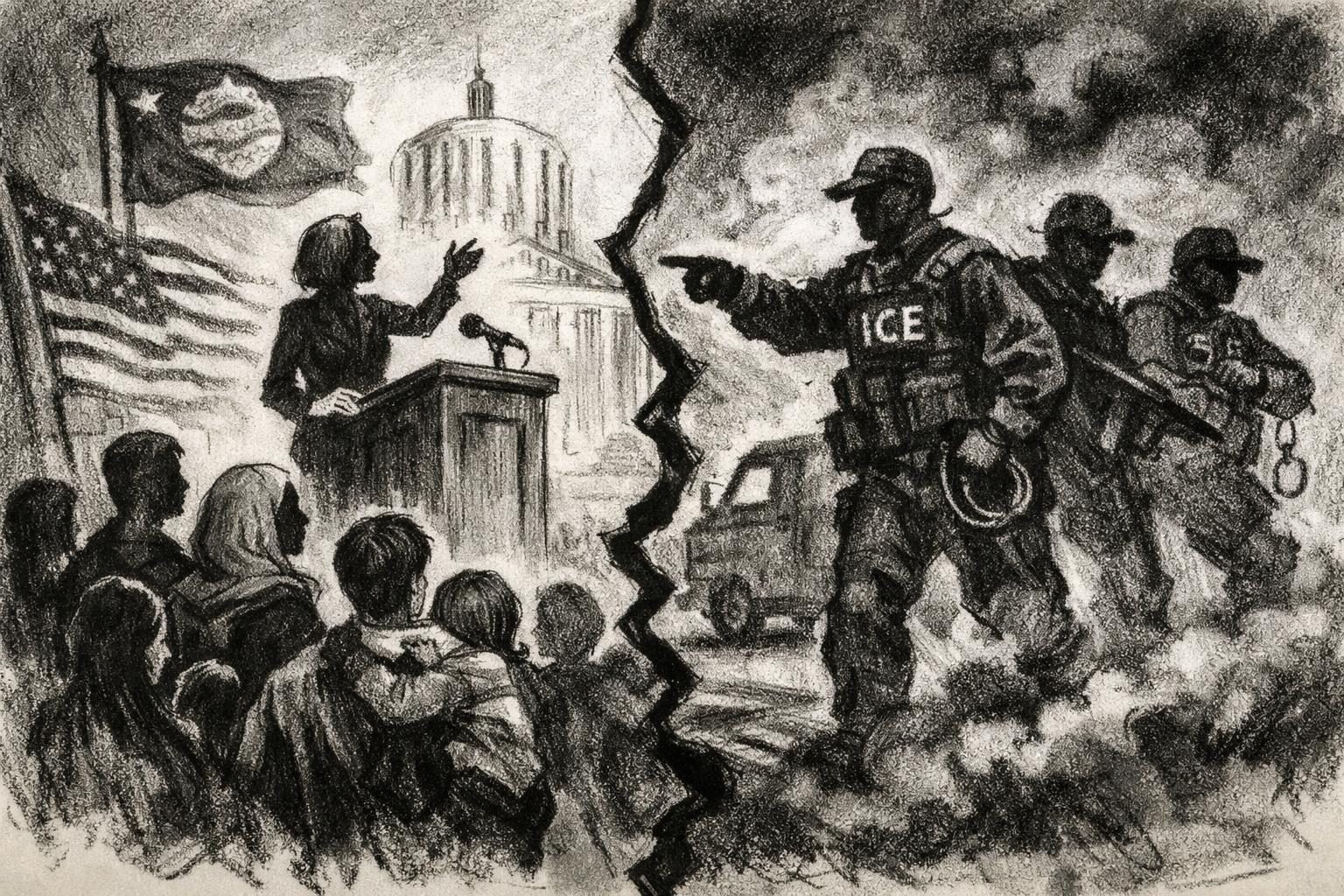
Oregon Gov. Tina Kotek used an October 12 statement to put the state squarely on the record against the Trump administration’s growing immigration crackdown, telling immigrant and refugee communities that they remain part of Oregon and that the state stands with them as federal enforcement activity intensifies. The message came after reports and official notices signaled a broader escalation in Immigration and Customs Enforcement operations, giving the governor a chance to frame the issue not just as a law-enforcement matter but as a test of how Oregon intends to treat families, workers, students, and longtime residents who may now feel newly vulnerable. In practical terms, the statement was a public reassurance aimed at people who may already be worried about school drop-offs, work commutes, medical appointments, or even answering the door. Politically, it was also a direct rebuke to Washington, casting the federal approach as something Oregon leaders see as disruptive rather than routine. The timing matters because this was not a generic stance repeated on autopilot; it was a fresh response to a live situation that state officials say has started to produce fear and uncertainty on the ground.
Kotek’s statement fits into a broader pattern in which blue-state governors have increasingly treated federal immigration enforcement as a flashpoint for state identity, civil rights, and public safety. Oregon’s message did not suggest a legal challenge or an operational stand-down, but it did make clear that state leaders want immigrant and refugee residents to hear from the highest office in Salem that they are not alone. That kind of reassurance matters because immigration enforcement rarely affects only the people directly targeted by agents. It can ripple through schools, workplaces, faith communities, health systems, and neighborhood life, especially in places with large mixed-status families or communities that already have a deep memory of raids and sudden detentions. When a governor feels compelled to speak publicly in that environment, it usually means state officials believe the atmosphere on the ground is changing in ways that could alter daily behavior. People may avoid contacting authorities, skip appointments, stay away from public spaces, or pull back from civic life if they believe immigration agents are active nearby. The statement was therefore both symbolic and practical, signaling to residents that Oregon’s government sees the human impact of enforcement as part of the story, not an unfortunate side note.
The clash also highlights the widening gap between states like Oregon and the Trump administration over what immigration enforcement should look like and how aggressively it should be pursued. Supporters of the federal approach tend to present expanded ICE activity as a necessary exercise of law enforcement authority, one that they say is aimed at restoring order after years of lax border and interior enforcement. Opponents argue that sweeping enforcement sweeps too broadly, punishes families who have built lives in the United States, and encourages fear that extends far beyond the small number of people who may ultimately be detained or removed. Kotek’s statement does not resolve that dispute, and it does not need to; the point is that the disagreement has moved from rhetoric into the daily functioning of state politics. Once a governor starts publicly defending immigrant and refugee communities in response to increased ICE activity, the conflict is no longer abstract. It becomes a question of how local institutions respond, how much trust residents place in them, and whether state officials believe they have a responsibility to cushion the effects of federal action. That tension is especially sharp in a state like Oregon, where Democratic leaders have often positioned themselves as counterweights to the White House on issues involving civil liberties, social policy, and the treatment of vulnerable residents.
The likely fallout is less about a single dramatic confrontation and more about cumulative pressure across communities already operating under stress. Schools may field anxious calls from parents wondering what happens if agents appear near campuses or if a family member is stopped during routine travel. Employers may see disruptions if workers stay home rather than risk contact with authorities. Community organizations may have to spend more time on outreach, legal referrals, and rumor control, while local governments face demands for clarity about how police, social services, and public facilities should respond. Even without a major enforcement action publicly tied to the state, the perception of escalating ICE activity can change behavior in meaningful ways, and that is part of why the governor’s statement matters. It is an attempt to set a political and moral baseline before fear fills the vacuum. Whether that is enough to reassure residents is another question, but the statement shows that Oregon’s leaders believe the moment requires more than silence. It also confirms that immigration enforcement is now one of the clearest lines of conflict between state governments and the Trump administration, with immigrant and refugee communities caught in the middle of a fight over authority, identity, and the basic terms of belonging.
Comments
Threaded replies, voting, and reports are live. New users still go through screening on their first approved comments.
Log in to comment
No comments yet. Be the first reasonably on-topic person here.