
Judge shuts down Trump’s taxpayer-funded political ads after blowback and a late scramble
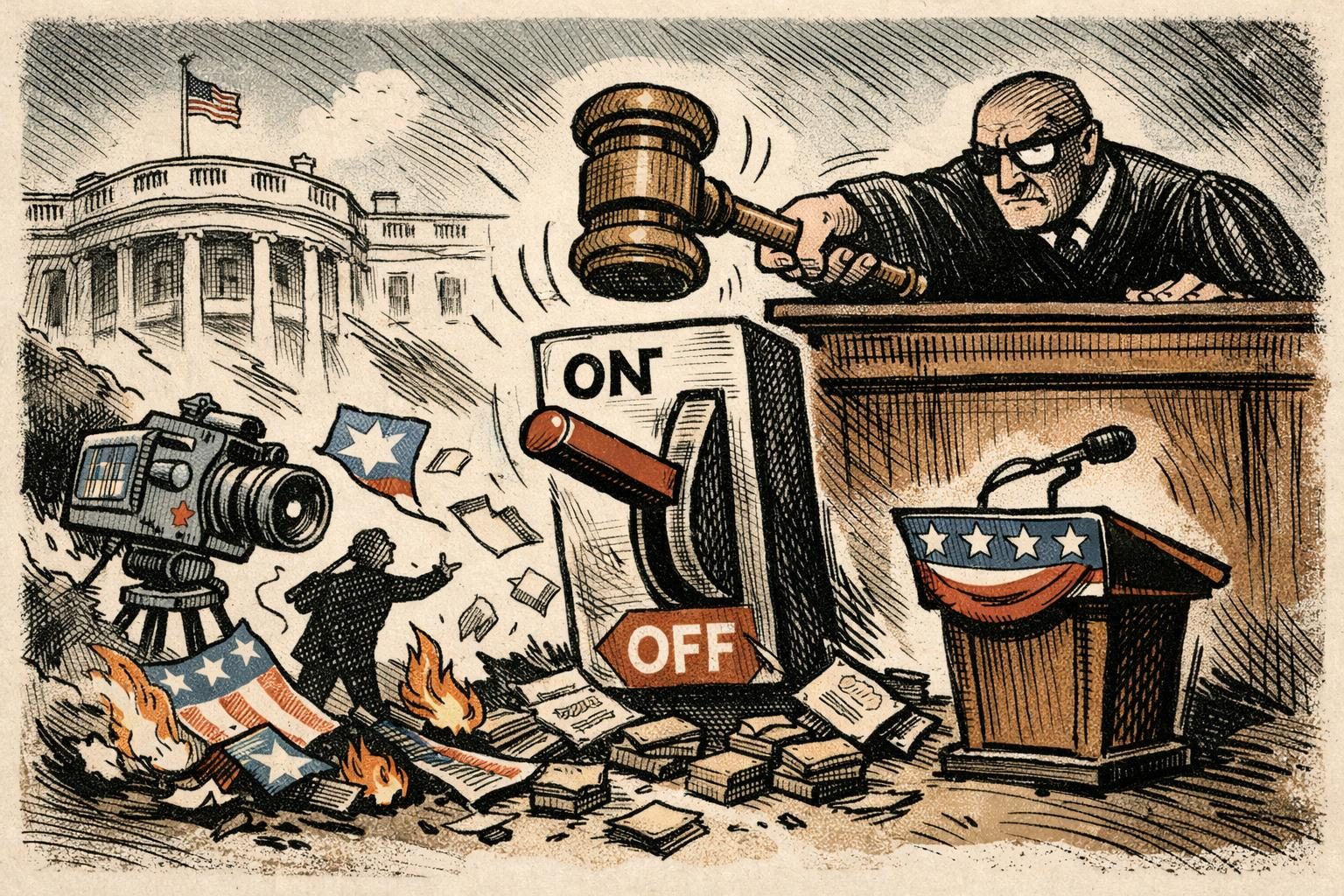
A federal judge in New York on Sunday night ordered the administration to stop airing any remaining television advertisements that were paid for with taxpayer money and that promoted Trump’s political message, handing a quick legal setback to a campaign that had already been running into heavy criticism. The judge issued the temporary restraining order after a coalition of watchdog groups and other plaintiffs argued that the ad buy amounted to an unlawful use of public funds. The dispute centered on $20 million that the Department of Homeland Security had set aside for the spots, a sum that immediately turned the case into a broader fight over whether government money was being used as a political messaging vehicle. The order did not resolve the underlying lawsuit, but it did pause the program while the case moves forward. In practical terms, it shut the door on any last-minute attempt to keep the ads on the air under the same arrangement.
The administration’s public posture suggested it thought the controversy was already fading on its own, but that argument did not persuade the court. White House officials pointed to an Oct. 5 post from Trump and said the messaging would be paid for out of political fundraising instead, as though a promise to reimburse a questionable expenditure could retroactively erase the problem. The administration also told the court that the ad campaign was ending anyway, a position that read less like a legal defense than a damage-control memo. The judge was not required to accept that cleanup act, and the restraining order indicates the court saw enough urgency to prevent any further broadcast while the matter is litigated. That is an important distinction: saying the ads are done is not the same as being allowed to keep running them until the last viewer notices.
At the heart of the dispute is a basic question about how far the executive branch can go when it wants to turn public money into political messaging. The plaintiffs argued that the ads were not ordinary government outreach but blatantly unlawful propaganda designed to reinforce Trump’s political message with a taxpayer tab attached. That framing matters because federal appropriations are supposed to fund actual government operations, not material that looks and sounds like campaign content merely because it comes packaged in official language. The legal challenge treated the ad buy as more than a branding dispute, and the court’s quick intervention suggests the judge saw a meaningful risk that the government would continue spending even as the legality of the program was under attack. If the allegations are upheld, the case could become another example of how administrative power and political ambition blur when spending decisions are made at the top. Even if the final ruling narrows the issue, the temporary order already signals that the court is taking the underlying claims seriously.
The timing also made the matter harder for the administration to shrug off. The ads surfaced amid an election-season atmosphere in which any appearance of taxpayer-funded political promotion was likely to draw attention, and they were already attracting backlash before the legal fight reached the judge. That combination of public money, explicit political content, and suspicious timing is exactly what gives this episode its punch, because it feeds a familiar suspicion that the government is being treated less like a public institution and more like a communications shop for one man’s message. Trump’s defenders may insist this was just another form of official messaging, but that argument becomes harder to sustain when the money comes from a federal agency and the content tracks a political narrative closely enough to invite a lawsuit. The administration may still argue over intent, scope, and timing as the case continues, and it may try to characterize the ads as part of a broader communications strategy rather than a partisan effort. For now, though, the court has interrupted that strategy and forced the government to answer for why public funds were used in the first place. The larger political damage may outlast the commercials themselves, because the case reinforces a recurring question that keeps following Trump-era governance: how much of the state can be repurposed before a judge finally says enough.
Comments
Threaded replies, voting, and reports are live. New users still go through screening on their first approved comments.
Log in to comment
No comments yet. Be the first reasonably on-topic person here.