
GOP states keep enacting voting rules that mirror Trump’s election agenda
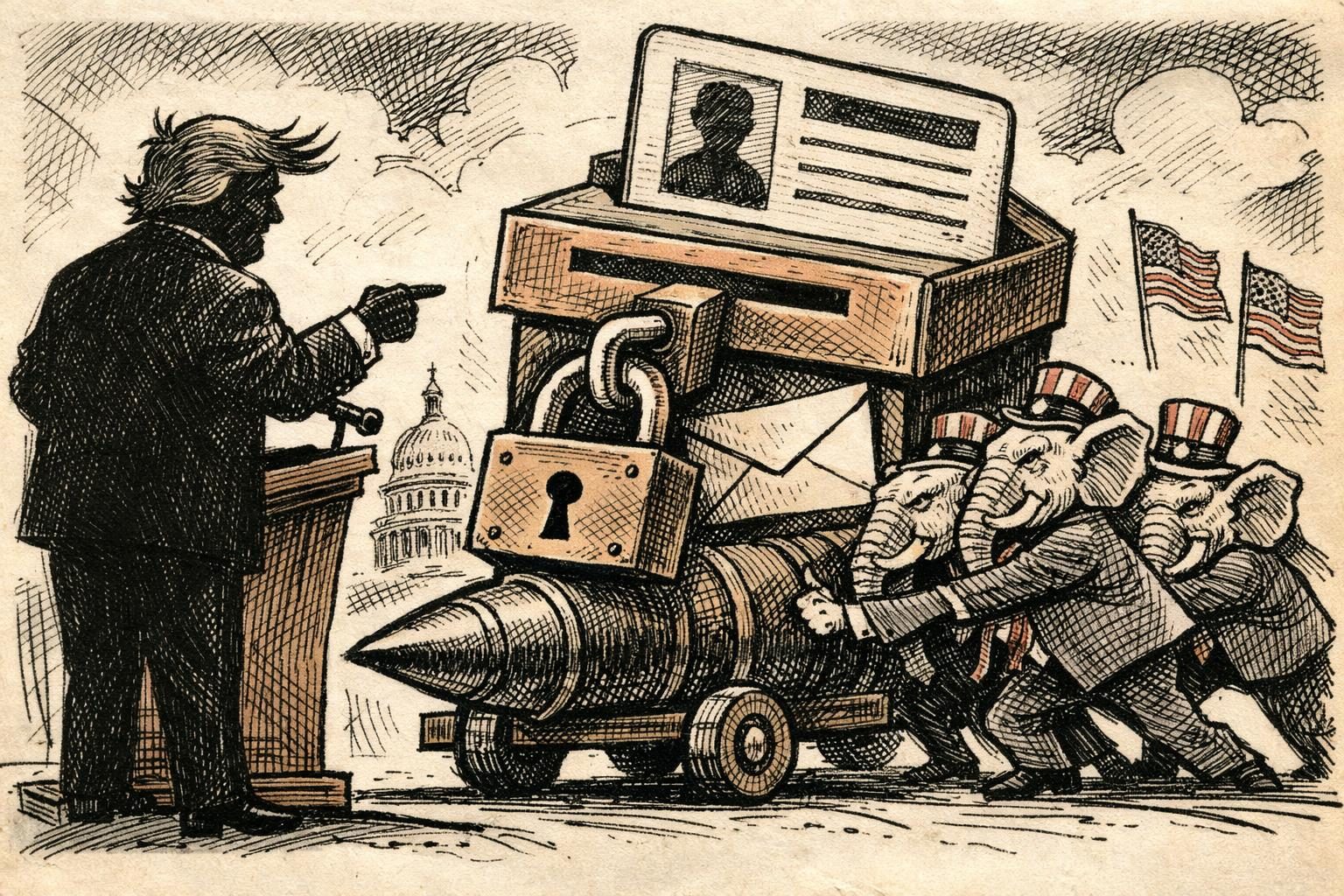
Republican-led states have spent this year advancing voting rules that closely resemble the election agenda long championed by Donald Trump and his allies, with tighter voter identification requirements and renewed limits on mail voting at the center of the effort. The shift is not happening in one dramatic burst, and it is not limited to any single legislature or governor’s office. Instead, it is emerging as a steady institutional push across multiple states, one that gives the politics of election restriction a much more durable shape. What began as campaign rhetoric and partisan messaging is increasingly being translated into statutes, administrative rules, and formal policy changes. That matters because rules written at the state level can outlast a news cycle and affect how people actually cast ballots. The result is a quieter but more consequential phase of the election fight, one in which the battlefield is not a rally stage but the machinery of voting itself.
The practical significance of this trend is hard to miss heading into the next major election cycle. Voting rules are often sold as technical fixes, but they can have real-world effects on who is able to participate easily and who has to jump through more hoops. A stricter voter-ID regime may sound straightforward on paper, yet it can create problems for people who do not have up-to-date documents, who move often, or who have limited access to government offices. Restrictions on mail voting can be even more consequential because absentee and ballot-by-mail systems have become a routine option for many voters, especially those with work, travel, caregiving, or health constraints. If the new rules survive legal challenges, they could alter turnout patterns in ways that are subtle at first and broader over time. If they are blocked or narrowed by courts, the fight still drains time, money, and political energy from election administrators and advocacy groups. Either way, the policy push is forcing states to rethink how much friction they are willing to build into the voting process.
Supporters of the restrictions say they are trying to restore confidence in elections and tighten procedures they view as vulnerable to abuse. Critics see something different: a coordinated attempt to make participation more burdensome under the familiar banner of fraud prevention. That disagreement has long been central to American election law, but the current wave of state action gives it a sharper partisan edge. The timing is especially notable because these state-level changes are arriving alongside a broader national conversation about election security, ballot access, and the rules that govern counting and verification. In that sense, the agenda is no longer just something voiced from Washington or on the campaign trail. It is showing up in local rulebooks and statehouses, where the consequences are more immediate and where implementation details can matter just as much as the headline language. Small changes in paperwork requirements, mailing deadlines, or verification steps can have outsized effects once counties and election officials are tasked with enforcing them. That is why the ongoing debate is less about abstract principles than about the practical mechanics of making voting more or less cumbersome.
The growing number of disputes also suggests that the election system is entering another period of heightened litigation and administrative strain. Washington state, for example, joined a lawsuit aimed at halting a U.S. Postal Service ballot-mail rule ahead of the midterms, underscoring how quickly these policy battles are moving from theory into courtrooms. The case is part of a larger pattern in which states, advocacy groups, and election officials are fighting over the boundaries of access and regulation before ballots are even cast. These fights can be especially consequential in an environment where voters are already skeptical and where small procedural changes can become politically explosive. Even when the rules in question are framed as modest or technical, they can accumulate into a broader set of hurdles that affect absentee voters, younger voters, and people who are less likely to have the right documentation on hand. The deeper concern is that the election apparatus is being altered in ways that are difficult to unwind once they become normalized. Whether these measures are ultimately upheld or struck down, they are shaping the coming contest by making the rules themselves part of the campaign. In practical terms, that means the struggle over access is likely to continue long after the initial legislation is signed, and it may define the political terrain for months to come.
Comments
Threaded replies, voting, and reports are live. New users still go through screening on their first approved comments.
Log in to comment
No comments yet. Be the first reasonably on-topic person here.