
Shutdown standoff keeps grinding on in Congress
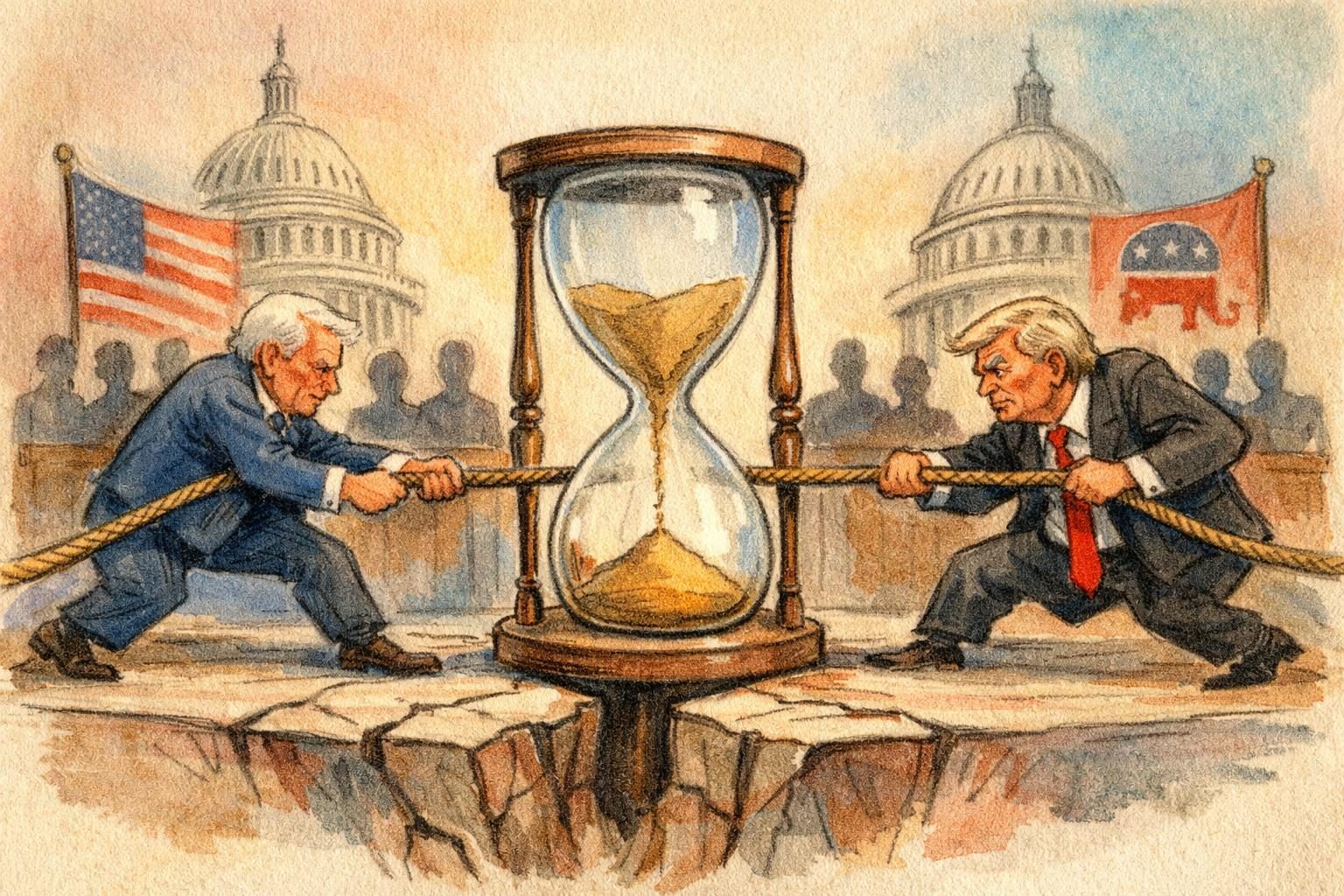
Congress spent Tuesday still locked in its shutdown funding stalemate, and the stasis itself had become the day’s most important fact. There was no clean breakthrough, no dramatic bipartisan surrender, and no public sign that the core dispute had suddenly narrowed enough to end the fight. Instead, lawmakers remained trapped in the familiar pattern in which both sides insist they are defending principle while the federal government stays partially shuttered and the country absorbs the consequences. The longer that condition persists, the less it resembles a temporary bargaining hiccup and the more it looks like a deliberate choice to keep leverage on the table. That matters because shutdowns are not abstract procedural quarrels; they are concrete disruptions that ripple through agency operations, payroll schedules, public services, and the lives of federal workers who are left waiting for politicians to finish the argument. On Tuesday, there was still no sign that either side was ready to give up the advantage of blame without first extracting something it wanted in return.
What made the day notable was not a major vote but the absence of one that would have changed the trajectory. In Washington, deadlock often survives on the hope that a forceful deadline, a market reaction, or public irritation will eventually push negotiators toward compromise. Yet on this day, the machinery of Congress seemed to be running in place, with leadership on both sides apparently still preferring to preserve bargaining power rather than accept an agreement that might weaken their position. That posture is familiar in shutdown politics, where the incentives reward confrontation even when the institutional costs are obvious. Each side can frame itself as the one standing firm for a larger cause, while the actual governance problem deepens in the background. The result is a stalemate that is politically explainable but administratively corrosive, because every extra day of closure stretches the gap between what Congress says it values and what it is willing to do.
The practical damage is part of what makes the stalemate hard to dismiss as routine. When federal funding lapses, the effects are not limited to the Capitol complex or to cable-news arguments about who blinked first. Workers face uncertainty about pay, agencies slow or halt services, and members of the public encounter delays, confusion, or shutdown-related interruptions that can seem trivial in isolation but accumulate quickly. A prolonged funding lapse also erodes confidence in the basic competence of government, which is a politically dangerous outcome even for lawmakers who believe the immediate blame can be managed. The longer the fight drags on, the more it invites the public to conclude that the parties are no longer negotiating over policy alone but over who gets to look less responsible for the mess. That calculation may still be useful inside the narrow logic of partisan warfare, but it becomes harder to defend as the costs widen and the shutdown ceases to feel hypothetical. At that point, the argument is no longer simply about priorities; it is about whether Congress is capable of performing one of its most basic duties.
The unresolved standoff also exposes a deeper problem with the way shutdown politics has become normalized. Leaders can talk about fiscal restraint, border policy, spending levels, or other leverage points, but the public-facing reality is much simpler: the government remains partially offline because the people elected to fund it have not agreed to do so. That reality undercuts any claim that this is ordinary legislative friction. It is, instead, a failure of governing that is being managed as if it were a strategic exercise. Neither side can easily concede without risking criticism from its own base, and that helps explain why the impasse persists even when both parties know the costs are mounting. Still, there is a point at which the politics of brinkmanship runs into the plain fact that the federal government is supposed to function. Tuesday’s lack of movement suggested that Congress had not reached that point yet, or had not been forced to act like it had. Until that changes, the shutdown fight will keep grinding on, not because the problem is unsolvable, but because the incentives for solving it remain weaker than the incentives for keeping the standoff alive.
Comments
Threaded replies, voting, and reports are live. New users still go through screening on their first approved comments.
Log in to comment
No comments yet. Be the first reasonably on-topic person here.