
Judge pauses Trump golf-course work again after tree-cutting spurs fresh alarm
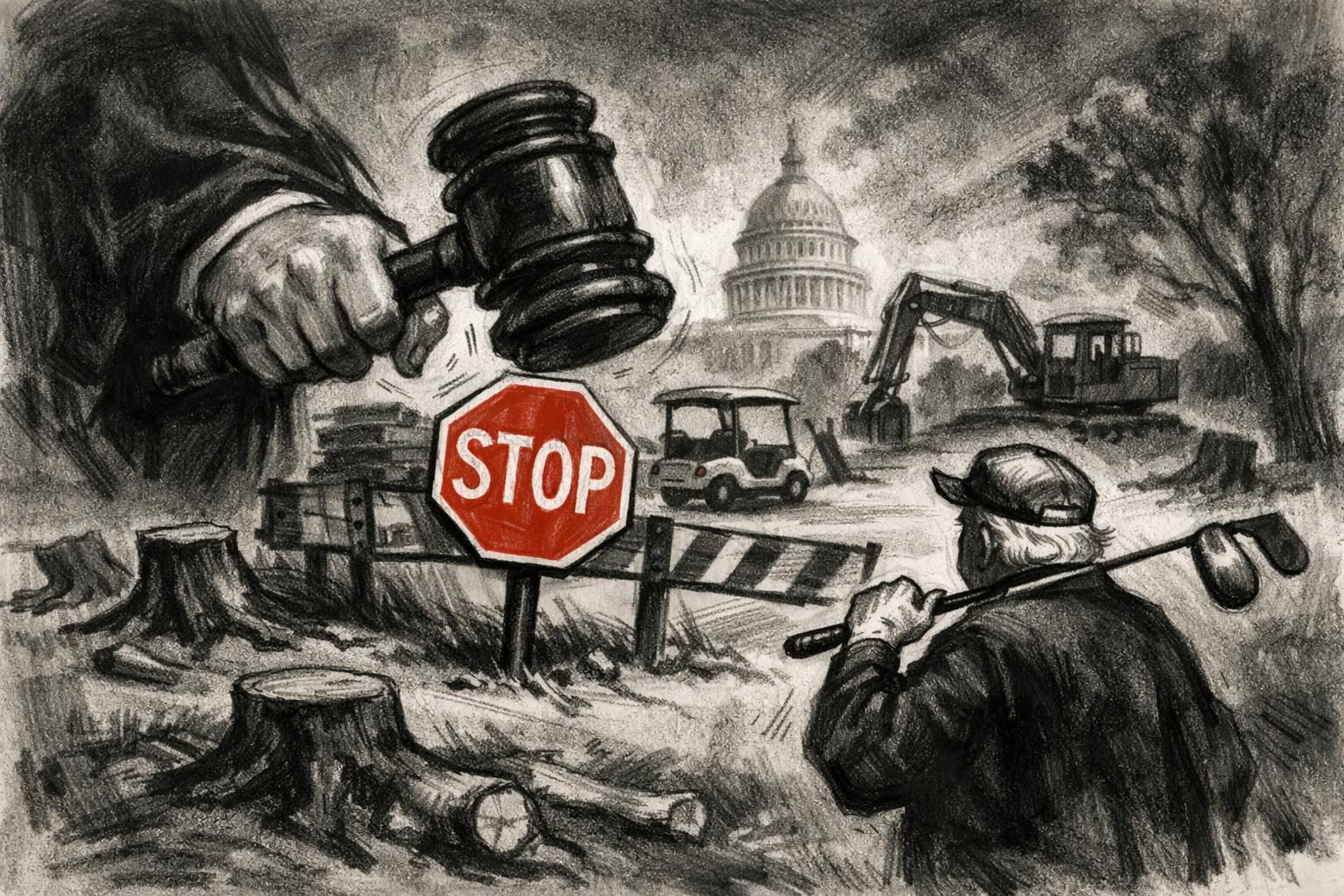
A federal judge on Monday temporarily shut down work at the historic East Potomac Golf Course, ordering the Trump administration to stop changes there until Oct. 26 after weekend tree-cutting and thinly explained construction activity raised fresh alarm in court. The pause is the latest turn in a dispute that has become less about mowing lines and tee boxes than about how aggressively the government can alter public land while a legal challenge is still underway. The judge also required advance notice before any work that could permanently change the course’s features, a signal that the court wants a tighter leash on the project before more of the landscape is altered. In practical terms, the order means the administration cannot keep moving at full speed while the legal questions remain unsettled. In political terms, it is another reminder that the smallest-looking public works fight can quickly become a broader test of how much deference a White House gets when it presses ahead first and answers later.
The immediate spark for the judge’s renewed concern was the burst of tree-cutting over the weekend, which appeared to happen before the court had received the kind of clear notice and explanation it had been asking for. That timing mattered. Courts can tolerate a lot of uncertainty at the start of a dispute, but they tend to get much less patient when parties appear to be making irreversible changes before the paperwork, disclosures and explanations are in place. In this case, the administration’s delay in identifying a key official who could speak to the work only deepened the court’s suspicion that the government was not moving with the care the situation required. That did not automatically prove wrongdoing, but it made the government’s position harder to defend. When a judge has to intervene to keep a public project from outrunning the legal process, the dispute stops looking like a routine permitting matter and starts looking like a governance problem. The order suggests the court wants to prevent a situation in which the landscape is transformed first and litigated second.
The underlying fight is over a public site with historic significance, and that matters because changes to places like East Potomac are not evaluated purely as construction decisions. They can trigger preservation concerns, environmental objections and questions about whether the public was given a real chance to weigh in before work began. Critics of the project see the same pattern that appears in a lot of government land-use battles: fast movement, sparse explanation and a sense that officials expect legal objections to arrive too late to matter. The administration, for its part, can still argue that the work is permitted and that the project is consistent with what it wants the course to become. But that argument lands differently when the court has already felt compelled to stop work once and is now doing it again because it believes the government has not been sufficiently careful. The judge’s order does not settle the merits of the case, but it does suggest the court is not prepared to let the government make permanent changes while key questions remain unresolved.
The political fallout is easy to see, even if the legal outcome is not. Environmental and preservation advocates are likely to point to the tree-cutting and the limited notice as proof that public land can be altered quickly if no one gets enough warning in time to object. Supporters of the administration may say the response is overblown and that the project is being treated as a scandal when it is really just a normal course improvement plan. Both descriptions may contain some truth, which is why the judge’s intervention matters so much. It is not a final ruling on whether the project is lawful, and it does not mean the administration will ultimately lose. But it does mean the government has been forced to slow down, explain itself more fully and accept that haste can carry consequences even when officials believe they are on solid ground. For a White House accustomed to treating legal resistance as background noise, being ordered to stand down on a high-profile public property project is a notable embarrassment. It is also a warning that the court expects the administration to respect the process before it touches anything that cannot be put back easily. Until Oct. 26, at least, the work is supposed to stop, and the larger question is whether this episode ends as a short pause or becomes another example of how quickly an aggressively managed project can turn into a public fight about law, land and restraint.
Comments
Threaded replies, voting, and reports are live. New users still go through screening on their first approved comments.
Log in to comment
No comments yet. Be the first reasonably on-topic person here.