
Justice Department demands California review alleged noncitizen voters in 48 hours
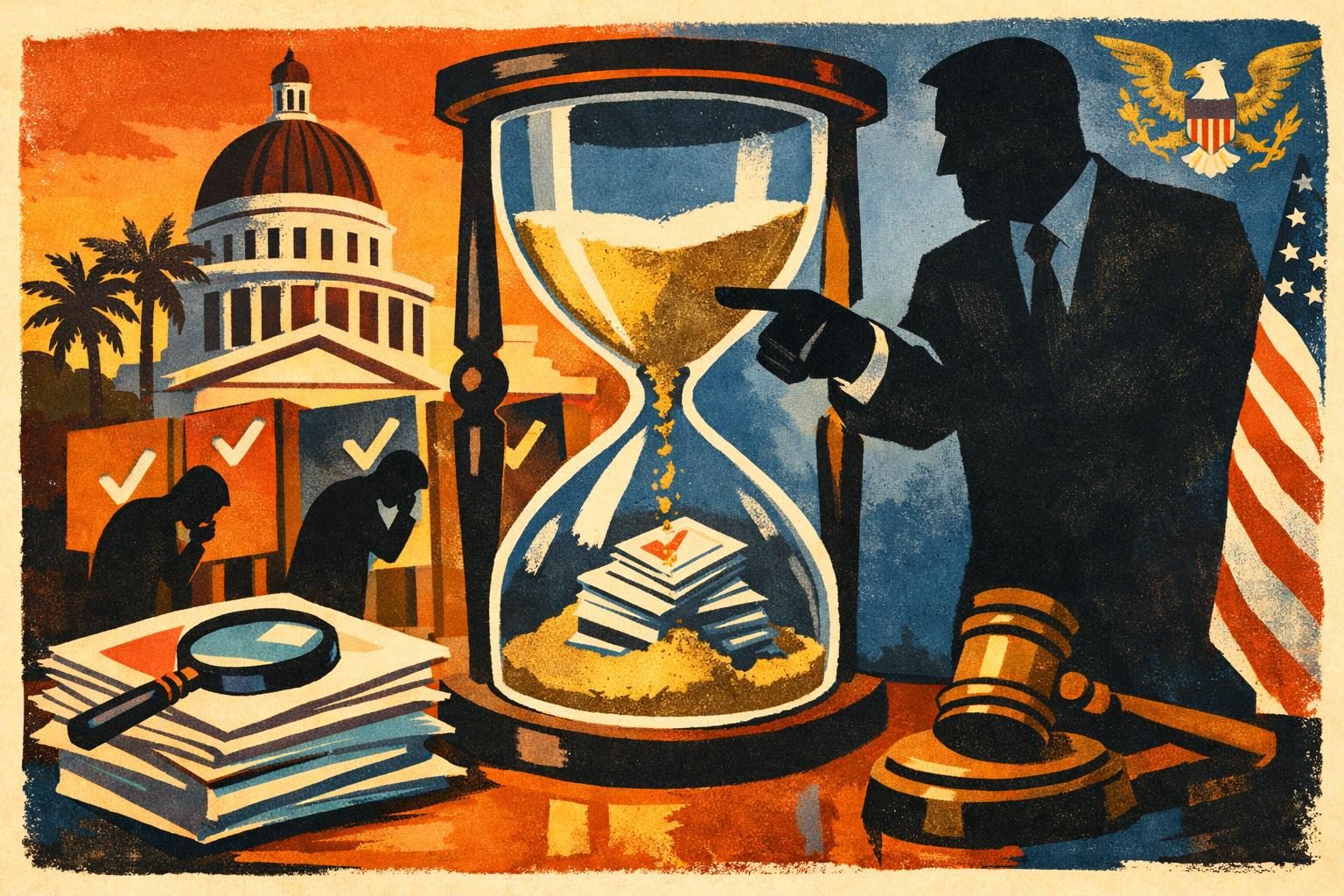
The Justice Department has given California officials just 48 hours to review a list of alleged noncitizen voters or risk possible legal action, turning a familiar argument over election integrity into a much sharper federal confrontation. The move was confirmed by a department spokeswoman, who said the administration would take whatever legal steps were necessary to protect election integrity and ensure compliance with federal law. California officials had not publicly responded in the immediate reporting window. What had been a broader rhetorical fight about voter fraud has now become a formal threat letter with a deadline attached. That alone raises the stakes, because deadlines of this sort are not merely requests for information; they are pressure tools designed to force a state into a fast, defensive posture. The timing also matters, coming just weeks before midterm voting and amid heightened national anxiety over how elections are administered.
The administration’s posture fits a pattern that voting-rights advocates have been warning about for months. Federal officials have repeatedly amplified claims of widespread voting fraud, even as evidence has continued to show that noncitizen voting is rare. That gap between the scale of the allegation and the evidence behind it is central to the dispute now unfolding in California. Supporters of the Justice Department are likely to say it is only enforcing the law and seeking to verify whether state rolls contain ineligible voters. Critics, by contrast, are likely to view the demand as another attempt to cast suspicion on lawful voters and on state election systems that already face intense scrutiny. The clash is not just partisan theater; it goes to the heart of whether the federal government can use its law-enforcement authority to pressure states into investigating voter eligibility based on an unproven premise. Even if the list contains names that deserve a review, the broader political message is unmistakable: comply quickly or prepare for a legal fight.
This is also a classic example of how election disputes can move from accusation to paperwork to litigation in a matter of days. The administration’s critics see a familiar sequence. First comes the assertion that fraud is a major problem. Then comes a demand for records, rolls, or lists that can be framed as proof of compliance. If state officials question the premise or resist the request, the next step is a court challenge or a public campaign to paint them as obstructionist. That approach may be politically useful, especially with conservative voters who are already primed to believe election systems are vulnerable. But it also risks deepening the sense that state election officials are being treated less like administrators and more like targets. In California, that tension is especially sharp because the state is politically blue, populous, and central to the kind of national messaging fight that the administration appears eager to wage. A 48-hour clock is not designed to encourage deliberation; it is designed to create urgency, headlines, and the appearance of motion.
The practical consequences could be substantial even before any lawsuit is filed. State election workers and attorneys may have to divert time from routine preparations to respond to federal demands, sort through records, and decide how much information can or should be shared. Public-record disputes could follow if the federal government seeks documents or if California officials resist releasing material that might be incomplete, misleading, or taken out of context. Voting-rights groups are almost certain to argue that the federal government is manufacturing doubt where little evidence exists, and that the real effect of this kind of pressure is to chill confidence in the system rather than protect it. At the same time, the administration will likely keep presenting the issue as a straightforward effort to enforce federal law and cleanse voter rolls of ineligible names. Whether the list is substantial or thin, the political effect of the letter is already clear: it forces California to spend time, legal attention, and public energy on a claim the administration says is urgent and opponents say is mostly a pretext. In Washington terms, that is a power move with a stopwatch attached, and everyone involved knows exactly what kind of fight is coming next.
Comments
Threaded replies, voting, and reports are live. New users still go through screening on their first approved comments.
Log in to comment
No comments yet. Be the first reasonably on-topic person here.