
Justice Department charges the Southern Poverty Law Center in a fraud and money-laundering case
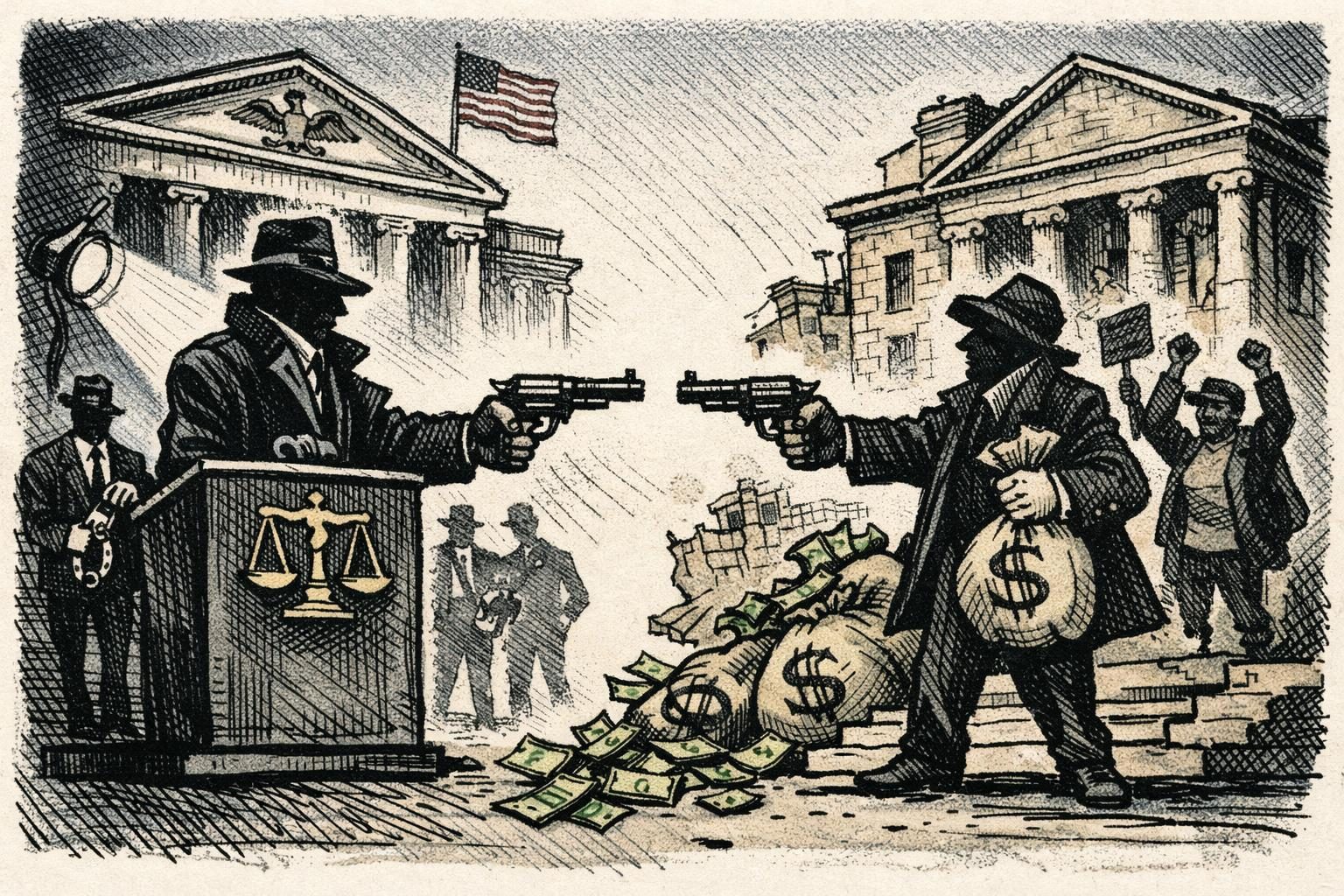
A federal grand jury in Alabama has indicted the Southern Poverty Law Center on charges of wire fraud, false statements to a federally insured bank, and conspiracy to commit concealment money laundering, turning what might once have been treated as a paperwork fight or regulatory dispute into a full-scale criminal case. The indictment, returned on October 13, 2026, immediately raised the stakes far beyond the usual world of nonprofit compliance, because federal prosecutors chose to frame the matter as a criminal prosecution rather than a civil enforcement action. That decision alone gives the case extraordinary institutional weight and ensures it will be read as more than a narrow legal proceeding. It lands in a political environment where every move by the Justice Department is scrutinized for signs of selective enforcement, especially when the target is an ideological institution with a national profile. For that reason, the indictment is already being viewed as a civil-rights showdown as much as a legal one.
The Southern Poverty Law Center is no ordinary defendant. It is one of the most visible progressive advocacy organizations in the country, known for civil-rights litigation, anti-extremism work, and public campaigns against organized bigotry and political violence. That history makes the new charges especially combustible, because the organization has spent years occupying the role of watchdog and institutional critic rather than criminal suspect. Now it must defend itself in a federal case that includes allegations serious enough to invite public suspicion before any evidence is tested in court. Even if the facts ultimately support the government’s theory, the optics are still jarring: a celebrated advocacy group facing a grand jury indictment from the same federal apparatus that has often been accused by critics of being too cautious with powerful interests and too aggressive with ideological opponents. If the allegations are weak, the political and reputational damage could be severe and lasting. If they are strong, the case could become a rare and consequential example of accountability aimed at a prominent institution that has long been treated as part of the civic establishment.
Prosecutors will have to clear a high bar, not just in proving the underlying conduct but also in convincing the public that the case is being handled in a neutral and evidence-driven way. Charges such as wire fraud and false statements to a federally insured bank are not technical footnotes; they imply that investigators believe there was a deliberate scheme involving deception and financial manipulation. The addition of conspiracy to commit concealment money laundering suggests the government is alleging a broader effort to hide or move funds in a way that obscured their source, destination, or true purpose. Those are serious accusations for any defendant, but they carry added symbolic force when brought against a group that has built its reputation on moral clarity and legal advocacy. At the same time, an indictment is only an accusation, not proof, and the organization will have every incentive to challenge the government’s narrative in court and in the public square. That tension will likely define the case from here: prosecutors insisting the evidence speaks for itself, while defenders of the center argue that the criminal process is being misused or overextended against a politically inconvenient target.
The broader significance is that the case could reshape expectations about which institutions are considered safely outside the reach of aggressive federal criminal enforcement. Nonprofit advocacy groups have usually been discussed in terms of audits, donor disputes, compliance questions, and public controversy, not headline criminal indictments involving fraud and money laundering. That is why this development feels so destabilizing: it suggests the department is prepared to use its most serious tools against a class of organizations that normally operate in the realm of speech, litigation, and public persuasion rather than criminal law. Supporters of the center are likely to see the indictment as part of a larger pattern of weaponizing government power against ideological enemies, while the Justice Department will almost certainly argue that no institution is exempt from scrutiny if investigators uncover evidence of serious financial wrongdoing. Both views may coexist for some time because the public record is still limited and the court process has only begun. What is already clear is that the case will not be treated as routine, either by the legal community or by the broader political world watching for signs of how far federal prosecutors are willing to go when the target is a prominent civil-rights player. The immediate consequence is a crisis of credibility for the organization, and the longer-term consequence may be a test of whether federal criminal law is being enforced evenhandedly or used in ways that deepen the country’s already fierce institutional mistrust.
Comments
Threaded replies, voting, and reports are live. New users still go through screening on their first approved comments.
Log in to comment
No comments yet. Be the first reasonably on-topic person here.