
DOJ Says a North Korea-Linked IT Scam Hit More Than 70 U.S. Companies
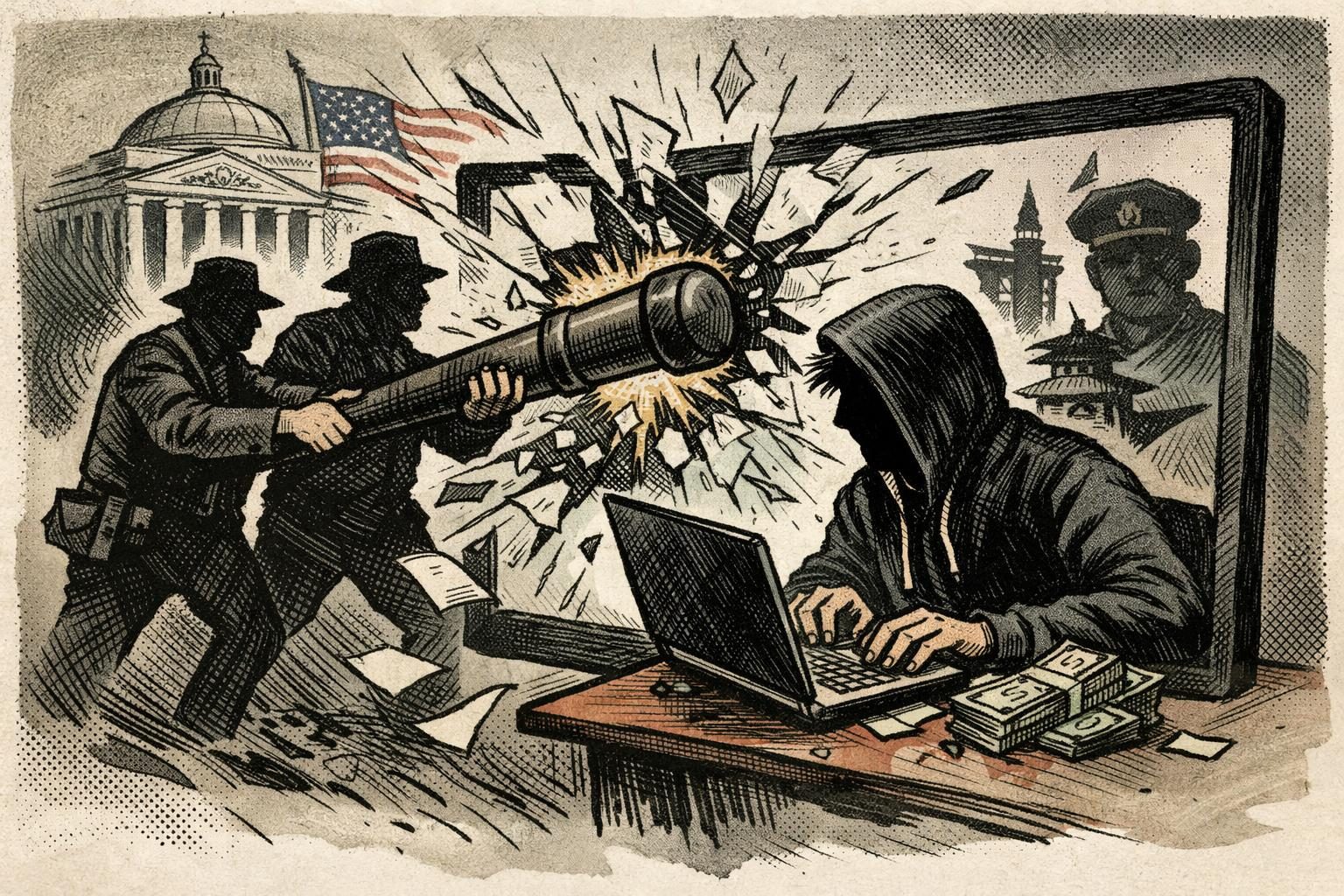
Federal prosecutors in Ohio on October 13 unsealed a sweeping indictment that alleges a remote-worker fraud operation tied to North Korea reached into more than 70 American companies, exposing how easily ordinary hiring and payroll systems can be turned into tools for deception. The case, brought in the Northern District of Ohio, centers on accusations that U.S. citizens and Chinese nationals helped carry out a scheme involving fake or stolen identities, deceptive employment arrangements, and the movement of money through channels meant to disguise who was really behind the work. Prosecutors say the investigation ran for roughly a year before the charges were made public, and the indictment includes counts such as wire fraud conspiracy, money laundering conspiracy, identity theft conspiracy, and aggravated identity theft. Two defendants had been arrested recently and were expected to appear in court soon, according to officials. The details in the charging documents suggest a case that is broader than a simple résumé fraud or a single bad hire, instead pointing to a structured effort to exploit remote work at scale.
What makes the allegations stand out is not just the number of companies affected, but the method prosecutors say was used to gain access in the first place. Remote hiring has made it normal for employers to verify workers through video calls, digital paperwork, and third-party onboarding systems, all of which can create a false sense of security when treated as box-checking rather than risk management. In this case, prosecutors say the fraud operation used that environment to place workers, obtain compensation, and manipulate identity and payroll systems in ways that may have been difficult to detect until after the money had moved. That is a particularly damaging kind of abuse because it turns standard corporate infrastructure into a vulnerability. It also means the harm can spread quietly across multiple departments, vendors, and accounts before anyone realizes that a person on the other end of a remote login may not be who they claimed to be. Even if some companies only suffered limited losses, the allegation that more than 70 employers were touched shows how far a well-organized scheme can travel once it finds a weak point in hiring controls.
The indictment also places the case within a broader pattern of federal enforcement aimed at schemes tied to hostile foreign interests, even when the mechanics look like routine financial fraud. Prosecutors have increasingly framed North Korea-linked and China-linked operations as national security concerns because the point is often not just to steal a paycheck or open a fraudulent account, but to use legitimate American business systems as a source of revenue, cover, and access. In that sense, the case is another reminder that cyber-enabled fraud does not have to involve flashy malware or a dramatic hack to create serious damage. A fake worker with the right credentials can be enough to trigger payroll payments, collect sensitive personal data, and move funds through layers of concealment. The Ohio case appears to fit that mold, with charges aimed not only at the alleged front-line participants but at the financial and identity components that would have helped the operation function over time. Whether every allegation can be proven in court remains to be seen, but the structure described by prosecutors is consistent with a fraud model that relies on patience, impersonation, and scale rather than speed.
For employers, the immediate lesson is likely to be uncomfortable but familiar: verification systems that are loose, outsourced, or rarely revisited tend to fail in predictable ways. Companies that do not closely examine payroll records, device access, employment documentation, or unusual patterns in onboarding may not notice that a supposedly remote employee is part of a broader deception until the loss is already underway. The case also underlines how much modern corporate risk now sits outside traditional perimeter defenses and inside everyday administrative routines. Human resources, finance, and information technology are often treated as separate functions, but fraudsters do not respect those boundaries. They look for the gaps between them. If the allegations here are sustained, the lesson for the business world will be that remote work is not inherently vulnerable, but remote work without serious identity verification can become a welcome mat for organized fraud. For prosecutors, the indictment is a signal that authorities intend to keep treating these networks as more than isolated scams, especially when the alleged victims number in the dozens and the money trail appears to run through multiple layers of deception.
Comments
Threaded replies, voting, and reports are live. New users still go through screening on their first approved comments.
Log in to comment
No comments yet. Be the first reasonably on-topic person here.