
DOJ and Homeland Security move on a multibillion-dollar Venezuelan money-laundering case
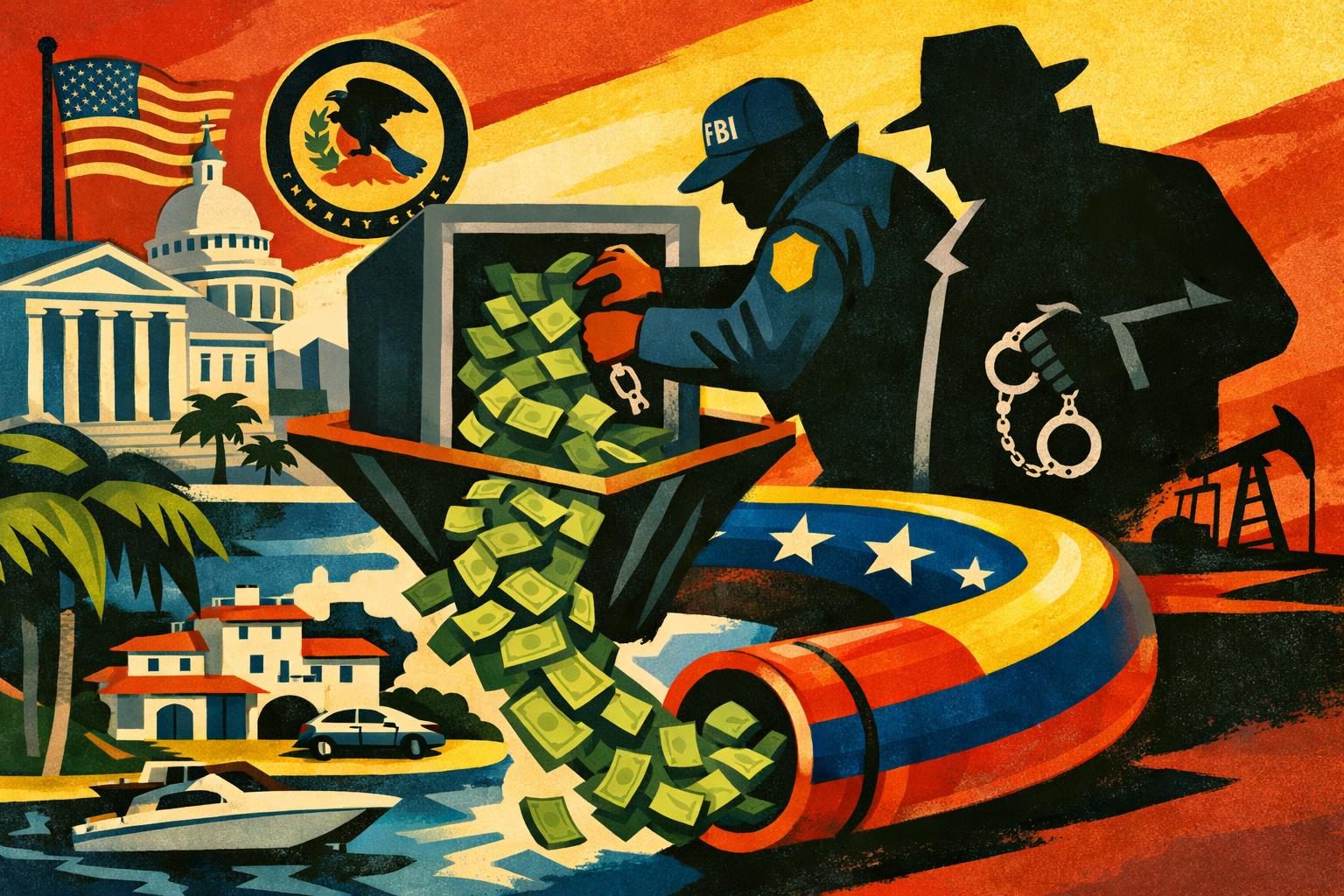
Federal prosecutors say a Colombian national accused in two indictments tied to a sprawling Venezuelan bribery-and-laundering network is due in federal court in South Florida on October 13, putting one of the larger recent corruption cases in motion. The government says the case involves more than $2 billion in alleged money laundering, a scale that turns a standard white-collar filing into a major transnational enforcement effort. The allegations, as described so far, point to a web of bribery, shell entities, offshore transfers, and intermediaries used to move tainted money through financial channels that touch the United States. That alone makes the matter bigger than a local fraud prosecution or a simple bookkeeping dispute. It is the kind of case that depends on the ability of federal agencies to follow money across borders, identify the people moving it, and tie those movements to an underlying corruption scheme.
What makes the case politically and legally significant is not just the size of the alleged proceeds, but the way prosecutors are framing it. The government appears to be treating this as part of a broader campaign against networks that blend foreign corruption, sanctions exposure, and illicit finance into a single structure. In that sense, the South Florida appearance is more than a procedural step. It signals that prosecutors believe they have enough of a record to bring a defendant into the federal system and start testing the allegations in open court. It also suggests that investigators have spent considerable time mapping the financial architecture around the alleged Venezuelan bribery scheme, which is often the hardest part of these cases. Complex cross-border corruption matters rarely hinge on one transfer or one false statement. They usually rise or fall on whether investigators can show how money moved, who benefited, and how the participants tried to hide the source and destination of the funds.
The larger context is the federal government’s continuing effort to show it can still handle heavyweight financial crime even when the underlying conduct reaches deep into politically sensitive territory. Cases involving Venezuelan corruption tend to sit at the intersection of law enforcement, sanctions policy, and foreign affairs, which can give them a broader significance than the underlying charges might otherwise suggest. They also expose the extent to which dirty money from authoritarian or semi-authoritarian systems can pass through U.S.-reachable banks, companies, and professional service providers. That creates a problem that is both domestic and international. Domestic, because it implicates federal criminal statutes, financial oversight, and the integrity of the U.S. system. International, because it is part of the wider effort to prevent foreign kleptocracy from finding a home in the American financial pipeline. The government’s willingness to push forward with a case of this size implies that it sees the allegations not as isolated misconduct, but as a piece of a larger enforcement and diplomatic picture.
At the same time, the case should still be read with caution. An initial appearance is not a conviction, and even a grand jury indictment is only the opening of a process that may change as evidence is tested and defense arguments come forward. The government may be confident enough to say the alleged laundering exceeded $2 billion, but the courtroom reality will depend on what can be proved, how the transactions are documented, and whether prosecutors can connect the defendant to the scheme in a way that survives scrutiny. That matters because the politics around Venezuelan corruption cases are often loud and messy, with rival factions eager to turn enforcement actions into evidence for broader ideological narratives. The facts, however, will ultimately have to carry the case. If prosecutors can substantiate their theory, this will stand as another example of how grand corruption abroad leaves a usable trail inside the U.S. financial system. If they cannot, the fallout will go beyond one defendant, because high-profile anti-corruption prosecutions are part of how the government proves its own capacity to police complex international money flows.
For now, the move into court marks a serious escalation in a case that federal officials are clearly treating as more than routine financial crime. It is difficult to overstate the significance of a multibillion-dollar laundering allegation tied to Venezuelan bribery, especially when prosecutors are positioning it alongside broader sanctions and transnational corruption concerns. The South Florida hearing will not answer every question, but it will move the matter from investigation and charging papers into the public phase of the federal process. That shift alone makes it one of the more consequential enforcement developments of the day. Whether the government can convert the scale of the allegations into a durable legal case remains to be seen, but the initial appearance ensures the matter will draw attention from both law enforcement observers and anyone tracking the reach of U.S. anti-corruption power.
Comments
Threaded replies, voting, and reports are live. New users still go through screening on their first approved comments.
Log in to comment
No comments yet. Be the first reasonably on-topic person here.