
Lawmakers demand FAA pause its airport AI tool
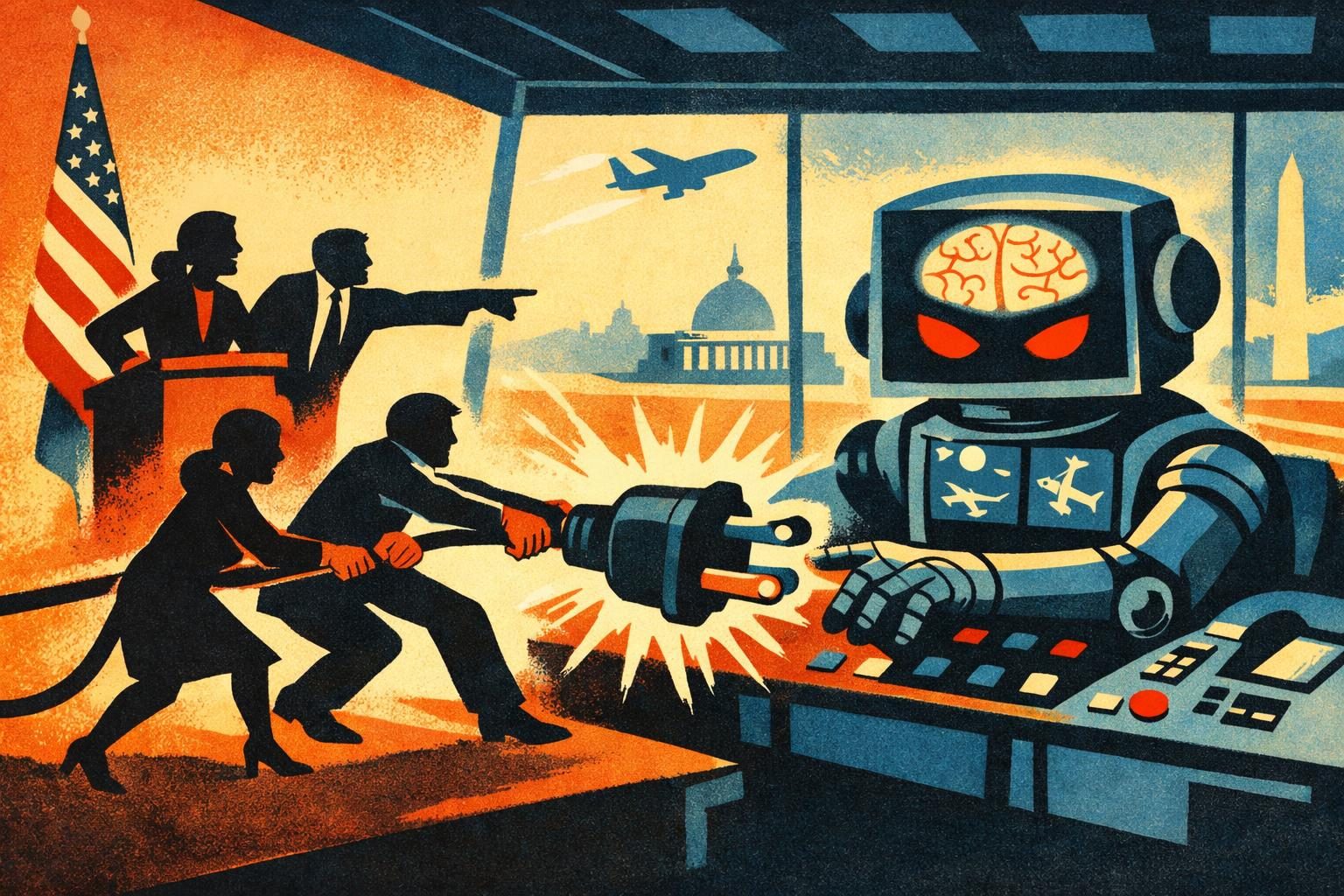
House Democrats led by Alexandria Ocasio-Cortez are pressing the Federal Aviation Administration to pump the brakes on a new artificial-intelligence-enabled air traffic management tool being used at Washington-area airports, at least until the agency can answer basic questions about how it was tested, how it is being implemented, and who is responsible if something goes wrong. The lawmakers’ message is simple enough to understand without any technical gloss: when the system involved is aviation safety, “move fast and fix it later” is not a comforting strategy. In a letter sent Tuesday, the group asked the FAA to pause the tool’s use while it explains the safeguards, oversight structure, and evaluation data behind the program. That is not an abstract policy dispute. It is an argument over whether the federal government is introducing a new layer of automation into one of the most unforgiving systems it runs before it has fully proved the case for doing so.
The concern is not that artificial intelligence is automatically unsafe, or that the FAA has already caused a catastrophe. It is that the agency appears to be advancing a tool that could affect air traffic management before the public, Congress, and even the lawmakers asking the questions have received enough clarity about how it works. In aviation, the acceptable margin for ambiguity is tiny. A tool can be innovative, efficient, and even genuinely useful, while still being a poor candidate for rapid deployment if the testing regime is thin, the oversight lines are unclear, or the fallback procedures have not been thoroughly stress-tested. The lawmakers’ demand reflects a broader principle that applies far beyond this one airport system: in critical infrastructure, technical novelty is not the same thing as readiness. That distinction matters most when the system at issue is responsible for keeping planes separated, schedules orderly, and passengers safe.
The letter also lands at a moment when federal agencies are under growing pressure to show they can modernize without letting enthusiasm outrun caution. Across Washington, there is a familiar temptation to treat automation as a cure-all, especially when it comes wrapped in the language of efficiency, optimization, and smarter decision-making. But those words can become a shield if they are used to avoid answering harder questions about auditability, human override, training, and error detection. The FAA is now being asked, in effect, to show its work. The lawmakers want to know what kind of validation was done before the tool was introduced, whether it has been evaluated under real-world conditions, what metrics were used to judge its performance, and how the agency plans to monitor it once it is in use. Those are not anti-innovation questions. They are the questions any serious regulator should expect when public safety is on the line.
The politics around the request are also revealing. The criticism is not framed as a broad anti-tech revolt; it is a demand for discipline from a government that increasingly relies on technology vendors and automated systems to do work once handled entirely by people. That makes the FAA case especially sensitive, because aviation is one of the areas where the public is least willing to accept improvisation. Supporters of the tool may argue that it is only meant to assist human operators, not replace them, and that it could improve coordination or reduce burdens in a congested system. Maybe so. But that does not end the inquiry. If an AI-enabled system is going to influence air traffic management, then the agency has to explain not only what it is intended to do, but also what happens when it misfires, how often it has been checked against failure, and who can stop or roll back its use if the evidence starts to turn. The lawmakers’ intervention suggests those answers have not yet been made convincing enough for comfort.
What happens next will be a test of whether the FAA treats congressional scrutiny as a nuisance or as a legitimate warning from its overseers. A pause would signal that the agency understands the political and operational sensitivity of deploying AI in aviation before trust is earned. Pressing ahead without a fuller explanation could deepen the impression that federal institutions are eager to showcase new technology before they have built the controls to govern it. That would be a particularly bad look in a sector where trust is not optional and where the public tends to forgive neither complacency nor preventable risk. The lawmakers are not asking the FAA to reject automation across the board. They are asking for a higher threshold, more transparency, and a slower rollout until the agency can demonstrate that the tool has been vetted as carefully as the environment it is entering. In a setting where one mistake can cascade quickly, that is not an unreasonable standard. It is the minimum standard people should expect from the institution charged with keeping the skies orderly and safe.
Comments
Threaded replies, voting, and reports are live. New users still go through screening on their first approved comments.
Log in to comment
No comments yet. Be the first reasonably on-topic person here.