
Guilfoyle finally exits after the ethics cloud got too loud to ignore
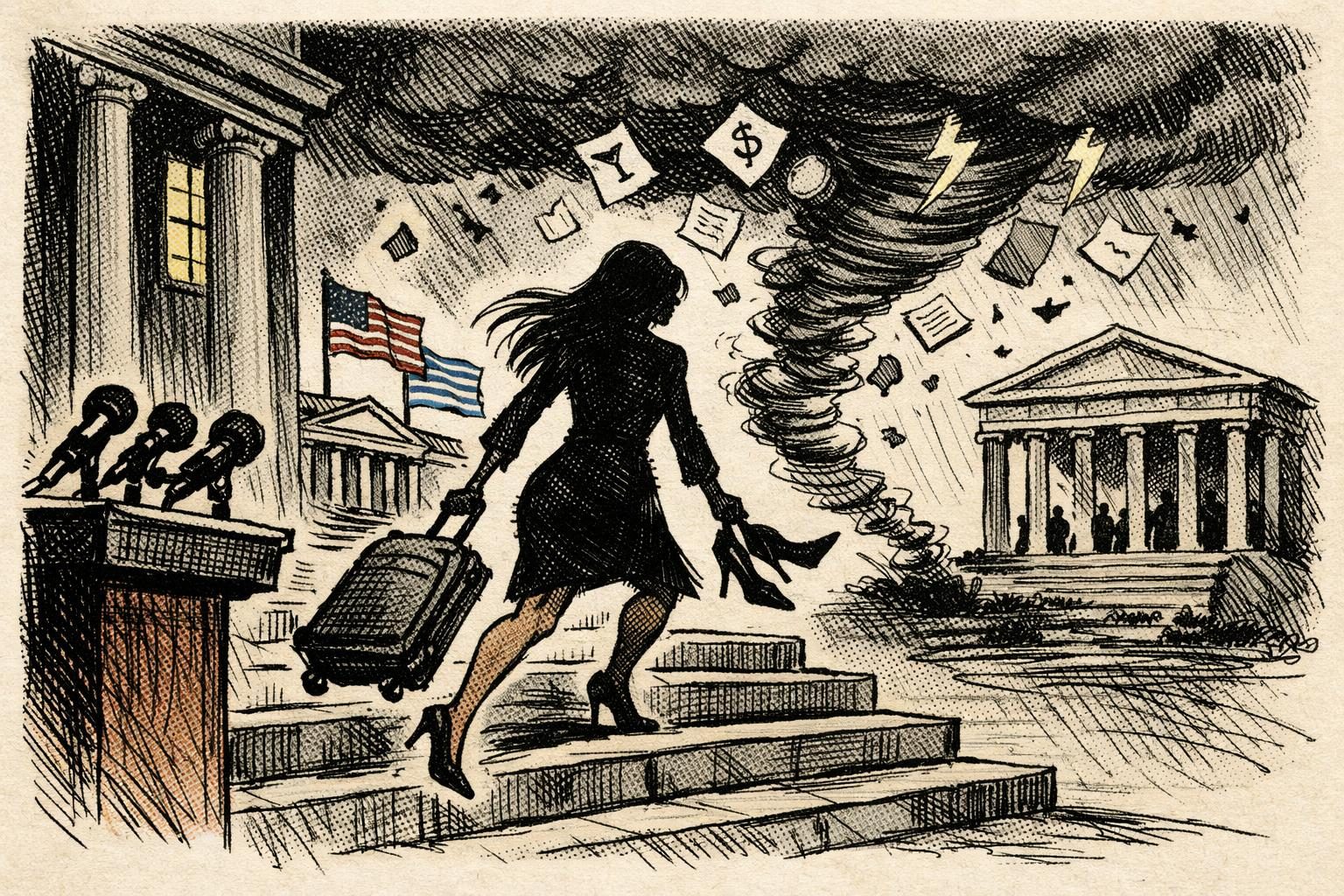
Kimberly Guilfoyle resigned on October 13 after the White House said it had asked her to step aside from her post as ambassador to Greece, ending a mounting ethics headache that had been simmering around her for days. The move turned what had been a messy internal problem into a public acknowledgment that the situation had become too loud, too distracting, and too politically costly to keep containing. Guilfoyle said she plans to vigorously defend herself, which makes clear this was not a quiet or amicable departure, even if the official line frames it as an orderly personnel decision. The administration is now left trying to present the exit as responsible governance rather than an admission that the allegations had become impossible to ignore. For a White House that likes to project discipline and loyalty, the optics are rough: one of its most recognizable allies has been pushed out under a cloud that officials apparently no longer felt they could wave away.
What makes the resignation particularly damaging is not just the allegations themselves, but who Guilfoyle was in the administration’s orbit. She was never a low-profile diplomat chosen for a long record of foreign-policy work or technocratic expertise. She arrived with a very public political identity, deep ties to Donald Trump’s circle, and the kind of insider visibility that can make an appointment look more like a reward than a recruitment. That matters because every such appointment invites scrutiny about whether the job was filled for merit, loyalty, image, or some blend of all three. When allegations of improper, and possibly illegal, conduct start to attach themselves to a figure with that profile, the story stops being only about one person’s behavior and starts becoming a broader test of the administration’s standards. At minimum, the situation reinforces the suspicion that personal relationships can still open doors into serious public office faster than process can close them. And once that perception hardens, even a resignation can look less like accountability than a belated effort to contain the fallout.
The White House has not been eager to dwell on the details, but the fact that it said it asked Guilfoyle to leave suggests the pressure had become more than mere background noise. The allegations were reportedly building over several days, and the administration’s hand appears to have been forced by the cumulative weight of the claims rather than by any single dramatic revelation. That distinction matters because it hints at how these episodes often unfold in politically loyal circles: the system tolerates discomfort until the accumulation of it becomes unmanageable. Guilfoyle’s promise to fight the accusations means the episode may not be over, and there could still be more public wrangling if she chooses to challenge what she sees as unfair treatment or false claims. But regardless of how that plays out, the practical reality is already established. An ambassador has been pushed out under a cloud, and the government is now in the awkward position of explaining why a supposedly important diplomatic posting was allowed to become a source of such embarrassment in the first place.
The larger political cost is that this resignation fits too neatly into a pattern critics have been pointing to for some time. This administration often responds to ethics scrutiny by insisting that critics are exaggerating, weaponizing process, or chasing partisan score-settling, until the facts get heavy enough that denial starts to look silly. Guilfoyle’s exit gives those critics another example to cite, especially because it comes at a moment when Trump is trying to present himself as decisive and in control. Instead of reinforcing that message, the episode pulls attention toward internal disorder, questionable judgment, and the possibility that loyalty has again been allowed to outrun competence. Even if no further misconduct is proven, the political damage is real because the administration is being forced to spend time and oxygen on damage control rather than governing. That is a bad look for any White House, but especially for one that regularly sells itself as tough, disciplined, and allergic to the messes that seem to keep arising around its own inner circle.
Comments
Threaded replies, voting, and reports are live. New users still go through screening on their first approved comments.
Log in to comment
No comments yet. Be the first reasonably on-topic person here.