
House wraps the day without solving the shutdown mess, because apparently governance can always be postponed until after the next panic
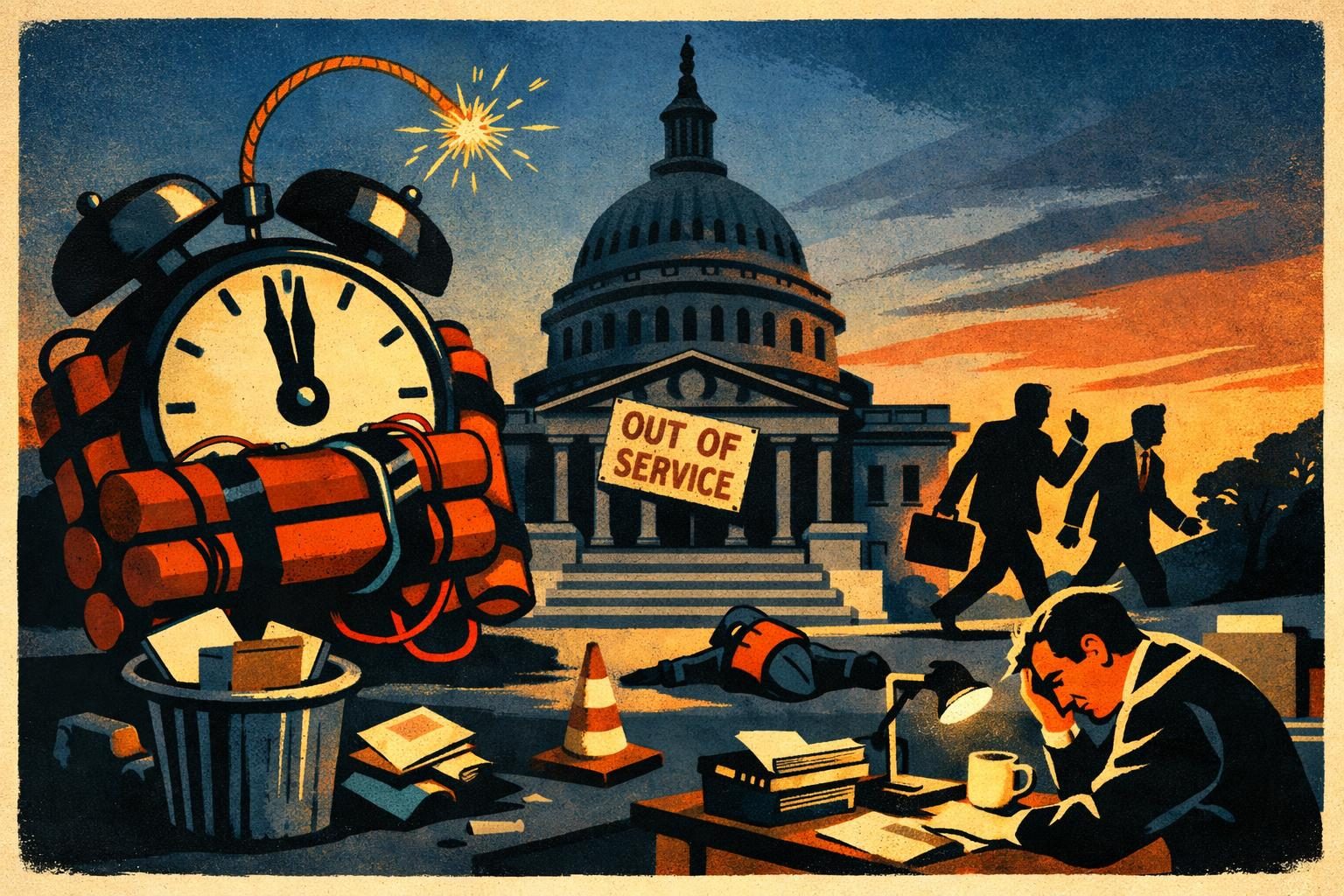
The House ended its October 13 session and then did what Congress has become far too comfortable doing whenever the budget starts to wobble: it walked away without fixing the problem. Lawmakers are scheduled to come back on October 15, but the extra day on the calendar does not magically produce a deal, and it certainly does not erase the uncertainty hanging over the government funding fight. The practical meaning of adjournment, in this case, is not rest or deliberation. It is more waiting, more brinkmanship, and more evidence that the basic machinery of governing can be set aside whenever it becomes inconvenient.
That may sound like routine Capitol Hill dysfunction, but the setting matters because the stakes are not symbolic. When Congress cannot complete the most basic job it has—keeping the government funded—it shifts the burden onto agencies, employees, contractors, and the public that depends on federal services. People who work for the government are left wondering whether their paychecks will arrive on time, and managers across the bureaucracy cannot plan with confidence for the days ahead. Even a short delay forces offices to prepare for disruptions, redirect attention away from actual work, and operate as though the most normal function of democratic government is contingency planning for political failure.
The larger problem is that shutdown drama has hardened into a political habit. What used to be treated as a dangerous last resort now often looks like a familiar bargaining tactic, deployed because lawmakers know that threat has become part of the routine. That is a deeply corrosive development, not just because it produces short-term chaos, but because it teaches everyone involved to accept chaos as a legitimate instrument of governance. Instead of building budgets through compromise and predictability, Congress keeps returning to the same grim script: manufacture pressure, let the clock run, and hope public frustration lands on the other side first. By that point, the damage is no longer theoretical. It is baked into the administrative backlog, the stress on federal workers, and the erosion of trust in whether elected officials are capable of anything as ordinary as keeping the lights on.
There is also a broader political cost that goes beyond a single missed deadline or one more adjournment. Each unresolved funding fight reinforces the idea that Congress can postpone hard decisions indefinitely and still claim the appearance of action. It cannot. A calendar can be rearranged, and a floor schedule can be updated, but none of that substitutes for actual agreement. If negotiations advance before the next meeting, then the story may shift toward the substance of a deal. If they do not, then October 13 will stand as another small but telling example of how Washington turns institutional responsibility into theater, leaving agencies to absorb the disruption and the public to absorb the consequences. For now, the headline is not that Congress solved anything. It is that it did not, and that seems to be the part of the job lawmakers keep treating as optional.
Comments
Threaded replies, voting, and reports are live. New users still go through screening on their first approved comments.
Log in to comment
No comments yet. Be the first reasonably on-topic person here.