
House calendar tees up another immigration-hardliner bill stack
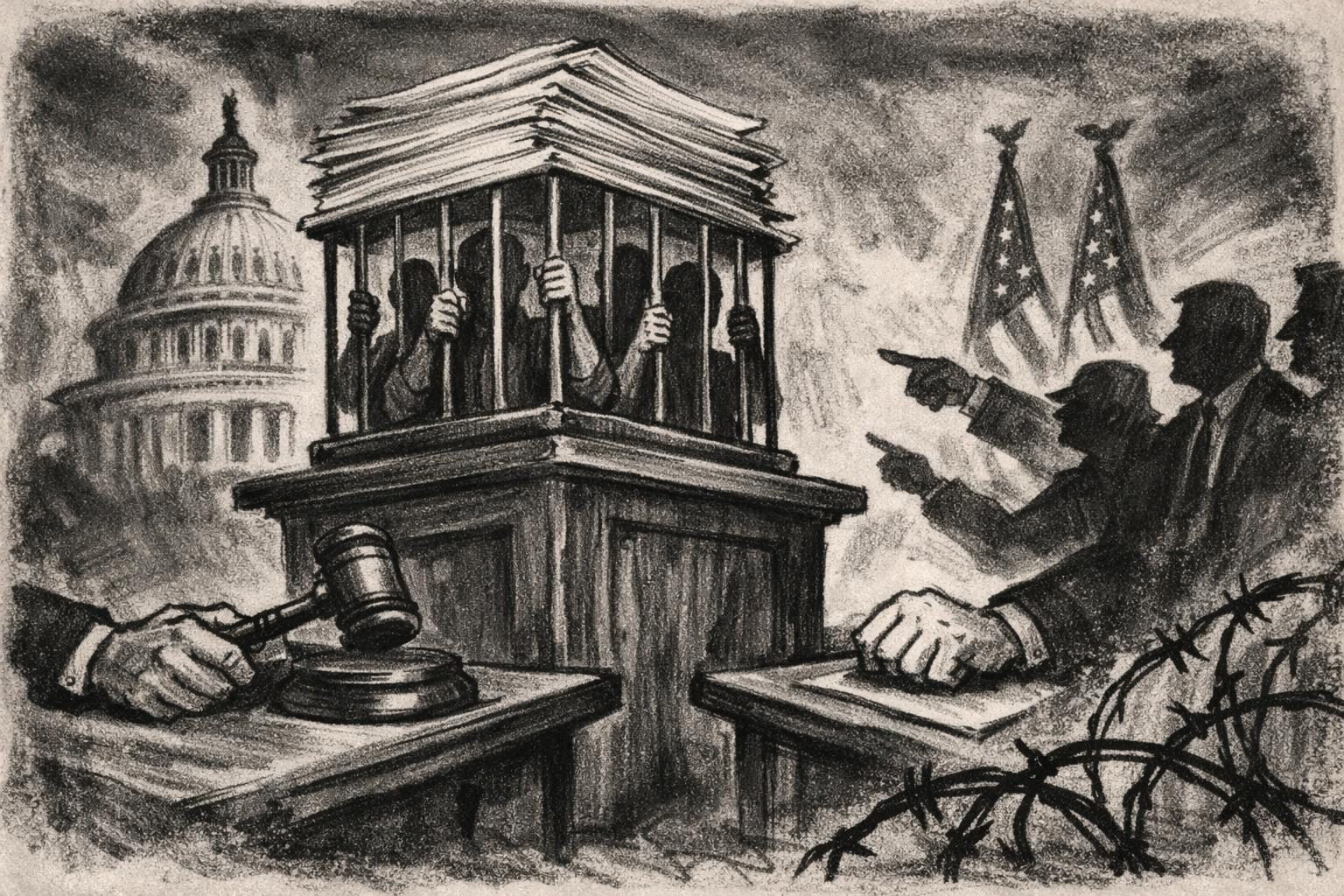
The House calendar for Oct. 13, 2026 offers another clear look at how Republican leadership is choosing to use the chamber’s limited floor time: a steady stream of immigration-hardline and national-security bills, including legislation titled the “No Immigration Benefits for Hamas Terrorists Act.” A calendar entry is not a vote and not a law, but it is not nothing either. It is the formal paper trail of what the House is willing to put in motion, what it wants members to see, and what it believes is worth elevating. In practical terms, it shows where the chamber’s energy is going and which issues are being treated as urgent enough to organize around. In political terms, it signals that the House remains comfortable presenting immigration primarily through a lens of threat, punishment, and symbolic toughness. That is a familiar pattern, but the calendar makes it visible in a way that rhetoric alone does not.
The significance of that pattern is partly procedural and partly ideological. On any given day, the House calendar can include a mix of resolutions, bills, and housekeeping items that never become law. But when the docket repeatedly leans toward restriction, enforcement, and security messaging, it tells a more durable story about the institution’s priorities. This is not just a single headline-grabbing measure drifting through the system. It is a broader rhythm of legislative staging that keeps immigrant communities, asylum seekers, and people associated with border policy in the frame as a recurring problem to be managed or punished. Supporters of this approach may argue that the chamber is responding to genuine security concerns and legitimate public anxiety. Critics are likely to see something else: a governing strategy built less on solving policy problems than on dramatizing them for partisan advantage. Either way, the calendar itself is evidence that the House is choosing to spotlight hardline politics rather than more expansive or pragmatic solutions.
That choice matters because the calendar is one of the earliest public markers of legislative intent. It does not tell the whole story of what will pass, what will stall, or what will be stripped out later in negotiations. It does, however, show what leadership is willing to advance into the conversation and what kinds of ideas are being normalized before a final vote ever happens. When the chamber routinely schedules anti-immigration and national-security bills, it helps create the impression that the central question in immigration policy is not how to manage migration humanely and effectively, but how to draw ever sharper lines between insiders and outsiders. That framing tends to crowd out other, more mundane but more consequential debates: how to process asylum claims efficiently, how to maintain due process, how to balance enforcement with labor demand, and how to avoid turning every border question into a national-security spectacle. None of those issues disappear simply because they are less useful as political theater. But they can be pushed further to the margins when the House keeps feeding the calendar with messages designed to harden the base.
The “No Immigration Benefits for Hamas Terrorists Act” is a good example of how the chamber can blend real security concerns with broad-brush political signaling. The title alone does a lot of work, and that is likely part of the point. Bills with that kind of framing are meant to communicate resolve, not just draft statutory language. They tap into a larger political mood that links migration, terrorism, and border control in ways that can be difficult to separate once they enter the legislative bloodstream. That does not mean there is no legitimate debate to be had about screening, eligibility, or national security. There is. But the House calendar suggests the debate is being staged in a way that privileges alarm and exclusion over nuance. At minimum, that is a stylistic choice. More broadly, it is a governing posture that treats immigrant communities as a permanent risk category and security politics as a reliable source of legislative identity. For Republicans who see this as a core electoral issue, the approach may be entirely intentional. For Democrats and immigration advocates, it is likely to look like another round of fear-based policymaking dressed up as seriousness. For everyone else, the calendar is a reminder that congressional priorities are not abstract. They are assembled one scheduling decision at a time, and those decisions shape the range of policies that eventually reach the floor. The immediate legal effect is limited because the calendar is only a step in the process. The political effect, though, is real. It tells the public what the House wants to normalize, what it wants to argue about, and what kind of country it is trying to imagine through legislation. At the moment, that picture still looks heavily defined by restriction, suspicion, and symbolic confrontation rather than by a serious attempt to build a calmer immigration system.
That is why this belongs in the update edition even though it is fundamentally a process story. The calendar does not settle the fate of any one bill, and it certainly does not resolve the larger fight over immigration policy. What it does is expose the chamber’s current habits and its preferred language of governance. If the House continues to load its schedule with these kinds of measures, then the message is not subtle: immigration is being treated less as a complex administrative and human challenge than as a durable culture-war battleground. That may be effective politics inside the chamber, and it may be useful for members who want to show they are being tough on the issue. But it is still a choice, and the consequences of that choice are worth noting. Legislative calendars are often easy to ignore because they do not carry the drama of a final vote. Yet they are where priorities become visible before they become law. In this case, the priority is plain enough: more enforcement, more restriction, more security theater, and not much evidence that the House is in a hurry to move toward something more balanced.
Comments
Threaded replies, voting, and reports are live. New users still go through screening on their first approved comments.
Log in to comment
No comments yet. Be the first reasonably on-topic person here.