
Republicans retreat from some battleground House districts as midterm nerves spread
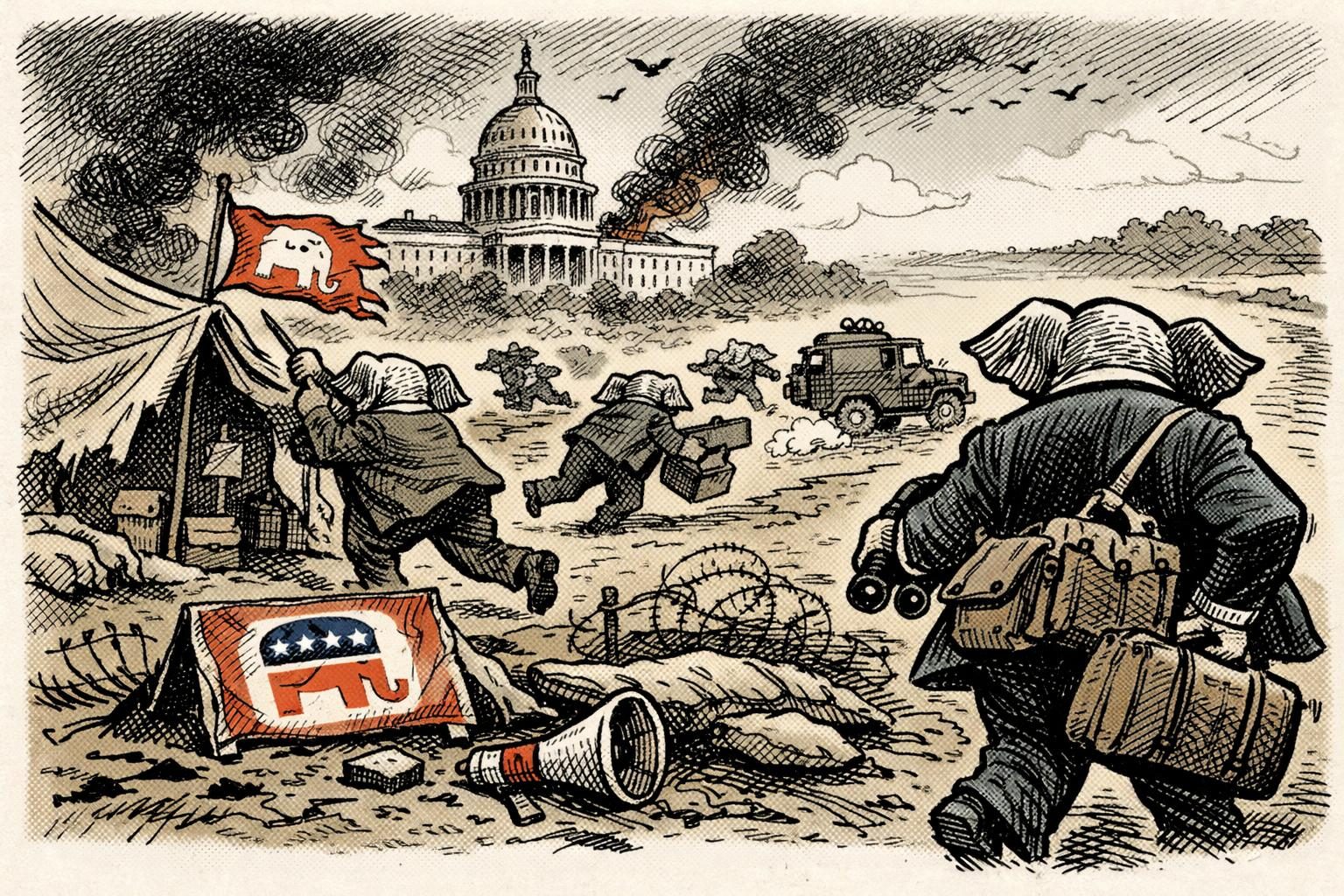
House Republicans are pulling back from several battleground congressional districts, a move that signals the party is becoming more selective about where it spends money as the midterm map starts to harden. The retreat does not amount to a formal surrender, and party strategists would no doubt describe it as normal resource management rather than a sign of weakness. But in election politics, money almost always tells a more honest story than the public slogans do. When an operation that once wanted to contest a wide field starts trimming its ambitions, it usually means the internal numbers are less comforting than the talking points. For Republicans, that change in posture suggests the road to keeping the House could be narrowing faster than the party wants to admit out loud.
The shift is especially notable because battleground races are where national parties usually try to prove confidence, not caution. Campaign committees and allied groups generally prefer to keep the appearance of momentum in as many places as possible, even when the underlying data says some districts are slipping out of reach. Pulling back from competitive seats can therefore do more than save cash; it can also quietly reshape the race itself. Candidates left with less help from Washington have to make their own case while also explaining why the money stream has slowed. That can be difficult in districts where voters are already sensitive to national winds, and it can become even harder if donors and activists begin to read the retreat as a sign that the party has started to doubt its own map. In House races, perception often feeds reality, and a reduced investment can make a district feel less competitive almost immediately.
That dynamic creates a problem for Republicans beyond the immediate budget question. A party that says it expects to compete everywhere has to keep acting like it believes that, even when the spreadsheet says otherwise. Once national resources start shifting away from front-line districts, the local campaigns left behind have to work harder to fill the gap with small-dollar fundraising, local surrogates, and borrowed enthusiasm. They also have to contend with the message problem that comes with being downgraded by their own side. Opponents can point to the retreat as evidence that Republicans are running nervous rather than strong, a line that may resonate with donors and persuadable voters alike. The pressure is not just financial; it is psychological, because candidates in neglected districts may spend as much time defending the absence of support as they do selling their own platforms.
The broader political meaning is less about any one district than about the overall shape of the House fight. When a party starts narrowing the map this early, it suggests the competition may be more fragile than its public confidence routine implies. That does not guarantee a poor outcome, and it certainly does not mean every cutback district is lost. Midterm campaigns are fluid, and parties often revisit their assumptions as polling, turnout expectations, and candidate performance change. Still, the instinct to retreat from certain battlegrounds indicates that Republicans are weighing risk more carefully than they were when they could afford to talk about fighting everywhere at once. The practical result is a leaner, more defensive strategy, one that may preserve resources but also concedes a measure of vulnerability. In House politics, caution can sometimes be smart, but it rarely sounds like momentum, and it tends to travel with a quiet admission that the map is not as friendly as the party needs it to be.
Comments
Threaded replies, voting, and reports are live. New users still go through screening on their first approved comments.
Log in to comment
No comments yet. Be the first reasonably on-topic person here.