
House Oversight Puts Jury Infiltration on the Blotter
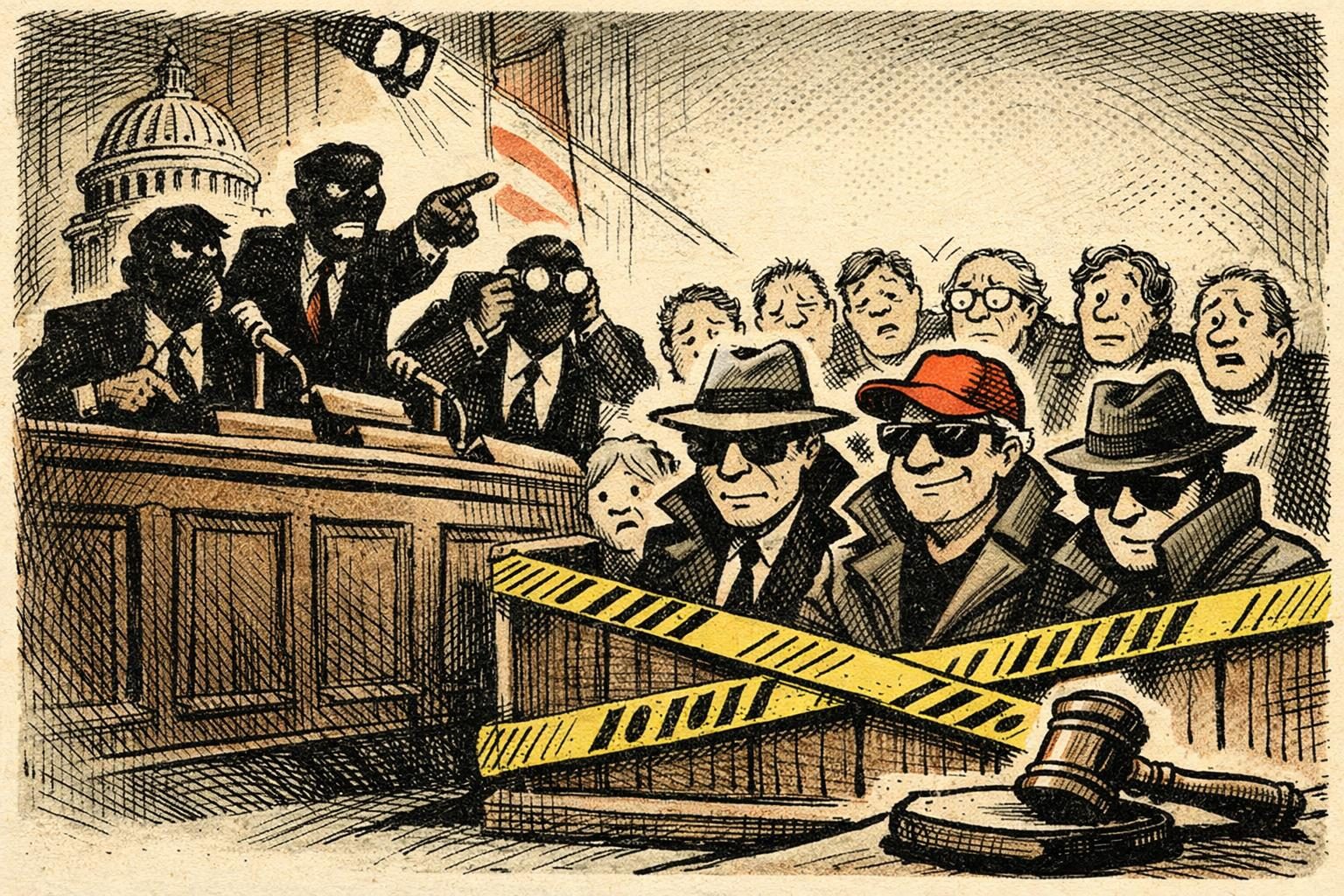
The House Oversight Committee has put a hearing on the calendar that makes its premise clear from the start: “activist groups’ efforts to infiltrate juries and subvert lawful prosecutions.” That framing is not subtle, and it is not neutral. It takes a question that could involve narrow claims about misconduct in specific cases and stretches it into a broader warning about activism, civic participation, and the integrity of criminal proceedings all at once. That is a political choice before the witnesses ever sit down. It also signals where the majority wants the story to land: not on a discrete legal concern, but on a wider suspicion that parts of the public are working against the justice system itself. In a city where hearings are often as much about message discipline as fact-finding, the title alone does a lot of work.
There is, to be clear, a real issue buried somewhere inside that language. If outside groups are truly coordinating efforts to influence juries in ways that undermine lawful prosecutions, that would be serious enough to warrant scrutiny. The justice system depends on jurors being able to do their jobs without manipulation, intimidation, or organized interference. But hearings built around expansive, alarmed rhetoric have a way of turning a narrow problem into a sweeping theory of cultural decay. That distinction matters, because legitimate defense advocacy, public commentary, protest activity, and isolated misconduct are not automatically the same thing. If lawmakers collapse those categories, they risk treating ordinary civic behavior as though it were evidence of a conspiracy. The public record available at this stage does not show a fully developed case; it shows an accusation, a chosen theme, and a committee prepared to amplify both.
That is why the hearing fits into a larger pattern rather than standing as an isolated event. Congressional Republicans have repeatedly used committee business to build a narrative about lawlessness, biased institutions, and activist interference at nearly every level of public life. In that world, the courtroom is no longer just a place where evidence is weighed; it becomes another front in a partisan struggle over legitimacy. Once that mindset takes hold, hearings about juries can start to sound less like institutional oversight and more like a campaign to redefine dissent as procedural sabotage. The logic runs outward fast. If activists can be portrayed as infiltrators in one context, then protests, organizing, and even public criticism can be recast as threats to due process rather than expressions of political disagreement. That is an especially convenient frame for a majority that wants to present itself as defending order while also keeping a wide range of opponents on the defensive.
The irony, of course, is that the same political ecosystem that tends to shrug off or excuse restrictive tactics when they are aimed at voters or activists suddenly becomes intensely concerned about integrity when the target is a prosecution or a jury. That does not automatically mean every concern raised at the hearing is illegitimate. It does mean the public should be alert to how quickly a serious but limited question can be inflated into a moral panic. If the committee has concrete evidence of organized abuse, it should put that evidence on the record and let it be examined. If it does not, then the hearing will mostly serve as a narrative machine, converting suspicion into official language and official language into political leverage. The difference between those outcomes is not trivial. One would contribute information the public can assess; the other would mainly deepen the habit of treating institutions as battlegrounds and procedural safeguards as partisan territory.
What happens next is likely to follow the familiar congressional script. Staff will continue collecting material, members will issue statements designed to define the issue before the evidence does, and any examples that surface will be treated as proof of a larger pattern. That may produce useful facts, especially if the committee uncovers real instances of improper interference. It may also produce a lot of rhetorical smoke and not much more. Either way, the hearing itself has already done some of the political work. It places jury-related anxiety onto the committee agenda and signals that the majority wants the public to think about prosecutions through a lens of infiltration and sabotage. If the claims are strong, the country should see the evidence clearly, not just the branding. If the claims are thin, then the hearing will have accomplished what many such hearings are designed to do: turn fear into procedure, procedure into spectacle, and spectacle into another talking point about a justice system supposedly under siege.
Comments
Threaded replies, voting, and reports are live. New users still go through screening on their first approved comments.
Log in to comment
No comments yet. Be the first reasonably on-topic person here.