
Omar Search Warrant Triggers Fresh Abuse-of-Power Alarm
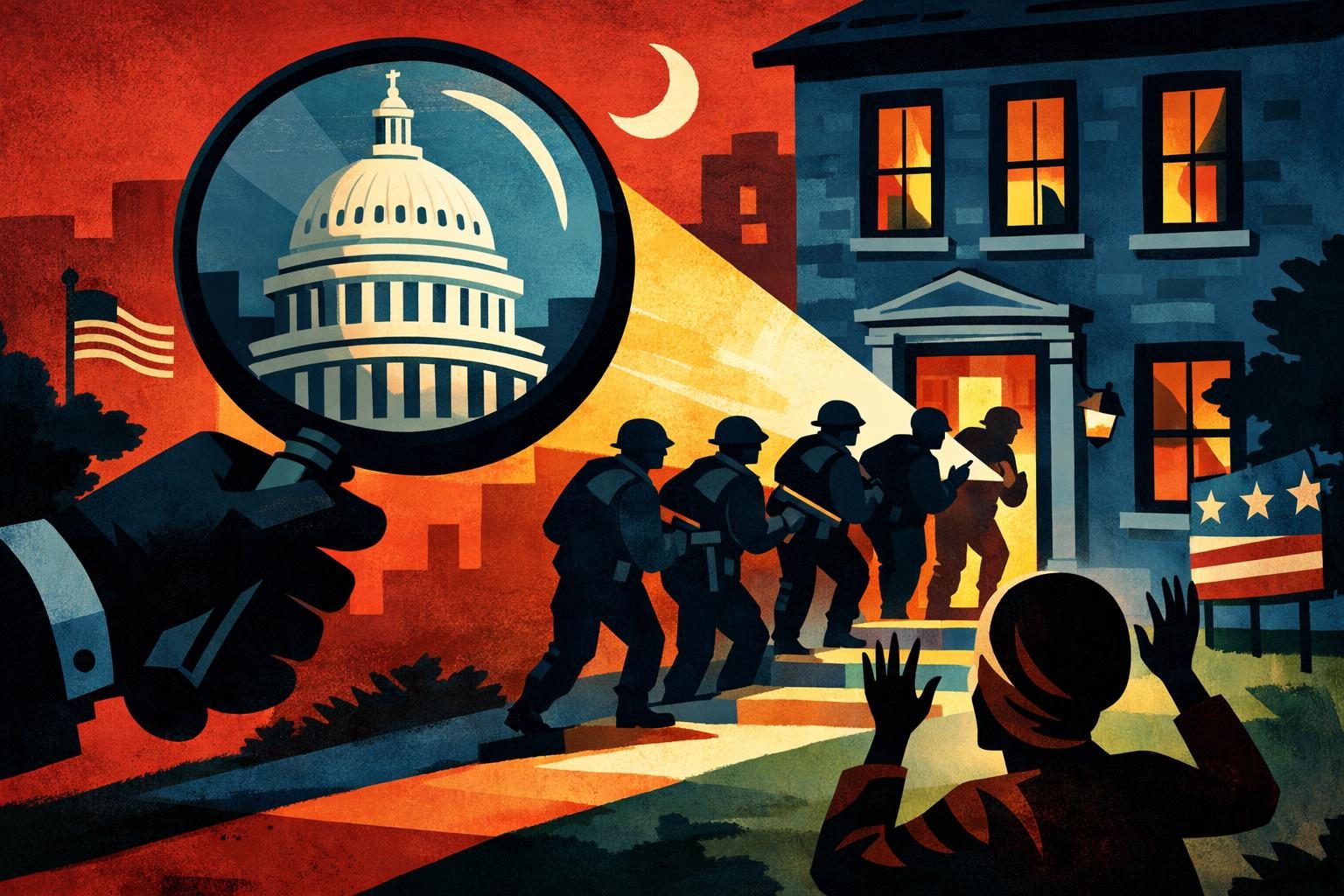
Federal agents executed a judicially authorized search warrant at Rep. Ilhan Omar’s Washington, D.C., home on Oct. 13, and that single fact was enough to ignite a new round of accusations that the federal government is leaning too hard on its power in a year already thick with political suspicion. According to a Justice Department statement, the search was tied to an immigration investigation. That matters, because a warrant is not the same thing as a finding of wrongdoing, and the existence of a probe does not prove the target has done anything improper. Still, the optics of federal law enforcement entering the home of a sitting member of Congress are unavoidable, especially when the target is a nationally recognized figure and the calendar is deep into an election cycle. In Washington, process is rarely just process, and this case immediately became a test of whether the public can still separate lawful investigative steps from political theater. The underlying question is not only whether the warrant was valid, but whether the government can carry out sensitive enforcement actions without creating the appearance that it is sending a message beyond the case itself.
That distinction is what has fueled the sharpest criticism. Democrats and other skeptics quickly framed the search as part of a larger pattern in which federal authority appears to be used in ways that feel less neutral than intimidating. Their argument is not that every high-profile investigation is improper, but that timing, target, and public perception can turn an otherwise routine action into a political event. A sitting lawmaker’s home search is never going to look ordinary, and in an election season it is especially likely to be read through a partisan lens. Critics say that is exactly why the Justice Department has to be unusually careful, not only to have a legal basis for its steps but to explain them in a way that does not invite suspicion of selective enforcement. The fear is not merely that one case may have crossed a line, but that repeated episodes like this make it easier for people to conclude the federal government is being used as a blunt instrument against opponents. Once that belief takes hold, even lawful actions can begin to corrode confidence in the institutions carrying them out. That is the political danger now hanging over this search.
The administration’s defenders, by contrast, would argue that law enforcement cannot be paralyzed by the identities of the people involved or by the political consequences of carrying out legitimate investigative work. If federal agents have probable cause, and if a judge authorizes the search, then officials will say they have a duty to act regardless of who occupies the property. That is the legal backbone of the case, and it is not a small point. But the problem for the administration is that legal authority and political legitimacy are not the same thing, and the latter can be damaged even when the former is intact. The search landed at a moment when concerns about selective punishment and politicized enforcement are already widespread, which means the burden on the Justice Department is heavier than usual. It has to persuade the public that this was the correct way to pursue an investigation involving a prominent elected official, and it has to do so while avoiding the impression that it is hiding behind formal procedure. If the explanation sounds too thin, too defensive, or too convenient, opponents will treat that as confirmation of what they already suspect. That is why this episode is not just about one warrant; it is about whether the government can still convince people that its power is being used for law enforcement rather than leverage.
The fallout from the search is still developing, but the reputational damage is already visible. The Justice Department has now created a second, unavoidable story about process and legitimacy, layered on top of the immigration investigation itself. Even those who believe the warrant was justified can see the political problem plainly: when enforcement collides with electoral politics, every move becomes vulnerable to suspicion, and every explanation sounds like an excuse if trust is already fraying. That is what makes this case so combustible. It does not have to prove misconduct to be politically damaging, and it does not have to involve wrongdoing to deepen public cynicism. The broader concern is that once federal power begins to look like a partisan weapon, the damage spreads beyond any single target. People stop judging investigations on the facts alone and start asking who the target is, who benefits, and why now. That is a corrosive way for a justice system to be understood, and it is the core reason this search has triggered such an immediate abuse-of-power alarm. Whether the administration can restore confidence will depend not just on the legal merits of this case, but on whether it can demonstrate, in a climate of extreme suspicion, that the federal government is still capable of acting without tilting the political field.
Comments
Threaded replies, voting, and reports are live. New users still go through screening on their first approved comments.
Log in to comment
No comments yet. Be the first reasonably on-topic person here.