
Justice Department hits North Korea’s remote-worker scam network, exposing how much corporate gullibility was in the mix
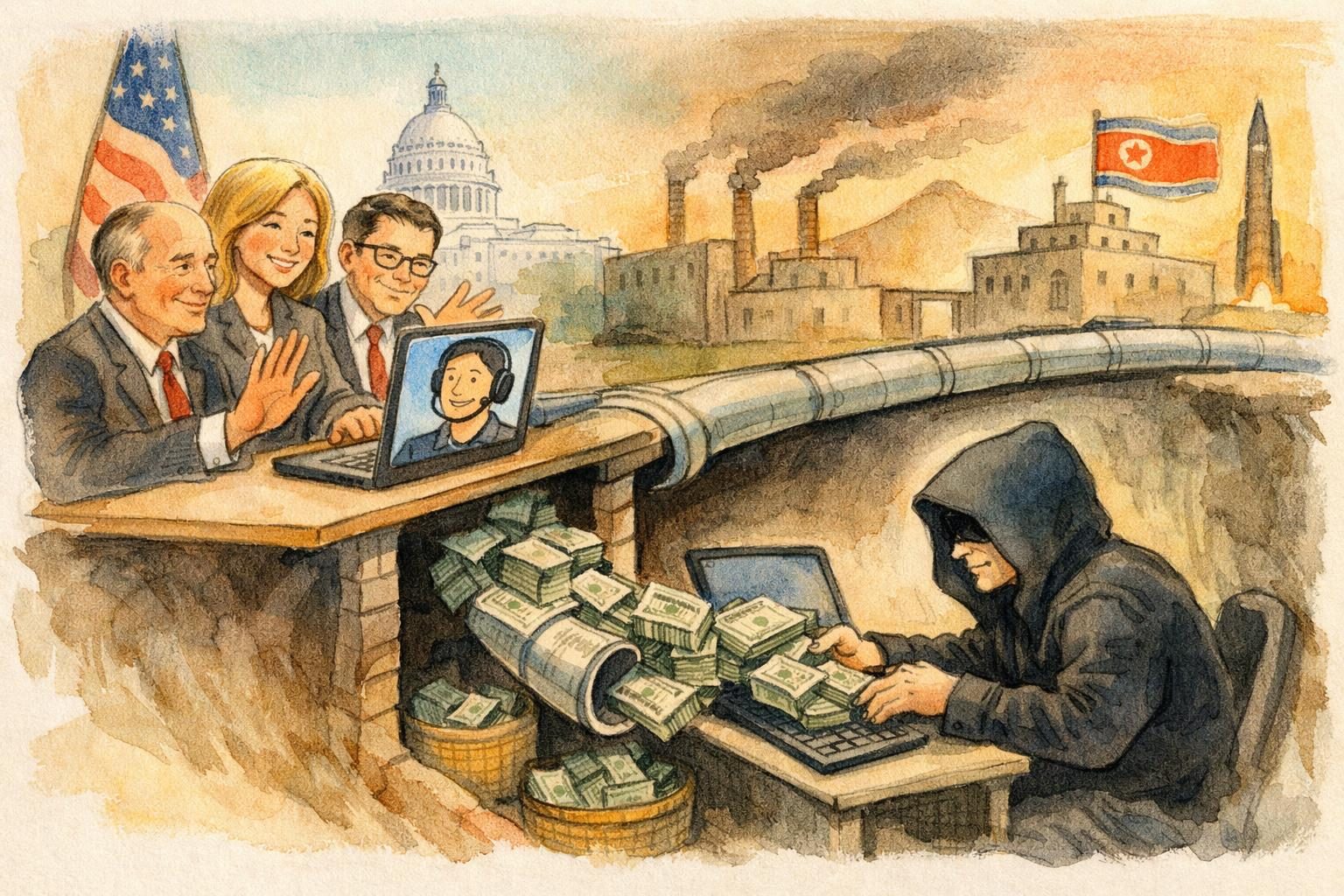
The Justice Department said on October 13 that it had coordinated a new round of actions aimed at North Korea’s remote IT worker operation, a scheme federal officials say has used fake identities, distributed work arrangements, and routine corporate blind spots to move money back toward a sanctioned regime. The announcement framed the effort as a disruption campaign, not merely a criminal case, and that distinction matters. When the government talks about disruption, it is usually signaling that the problem has spread beyond one indictment or one employer and started to look like a systemwide vulnerability. In this instance, officials said the activity touched more than 70 U.S. companies, which suggests the scheme was not a fringe nuisance but a broad attempt to exploit the ordinary machinery of hiring and contracting. The most unsettling part is how unremarkable the entry point can be: a resume, a video call, a remote assignment, and a company that wants the role filled yesterday.
That is why the case lands in the awkward space between sanctions enforcement and corporate governance. North Korea has long been a target of financial restrictions, but sanctions only bite when the money trail can be interrupted, and that is harder when the labor market itself has become remote, outsourced, and fragmented. Federal officials are effectively saying that hostile actors found a way to convert ordinary employment processes into a revenue stream for a sanctioned state. The companies involved may not have intended to facilitate anything like that, but intent is not the whole story when weak verification procedures leave the front door open. Hiring teams under pressure to move fast can treat identity checks as administrative chores instead of security controls, and the scam depends on that exact mindset. If the people reviewing applications assume a polished profile and a professional email are enough, the result can be payroll payments, access credentials, or contract fees flowing to someone who is not who they claim to be.
The government’s response also reflects how complex these cases have become. Prosecutors, investigators, sanctions specialists, and private-sector partners all appear to have been part of the effort, which is a clue that no single agency can handle this kind of problem alone. The action was presented as coordinated because the threat itself is coordinated: it sits at the intersection of cyber deception, financial evasion, and the modern labor market’s obsession with speed and convenience. That coordination is useful, but it also tells a less flattering story about how far the problem had already spread before the crackdown. When officials say the scheme affected more than 70 companies, the implication is not just that a number of employers were fooled. It is that a repeatable method had enough room to scale across sectors and keep generating value long enough to demand a federal response. In other words, the operation was not merely about catching bad actors after the fact. It was about cutting off a pipeline that had apparently proved durable enough to survive routine oversight.
The broader lesson is uncomfortable for companies that like to think of sanctions and national security as problems for diplomats and intelligence agencies rather than payroll departments and HR software. Remote work has made it easier for legitimate businesses to recruit talent across borders, but it has also made it easier for impostors to hide behind geography, screen names, and contractors who never walk into an office. That does not mean every remote hire is a security risk, only that verification now has to be treated as part of the job instead of an afterthought. The federal action is a reminder that some national-security threats arrive wearing the ordinary costume of commercial convenience. No explosive breach, no cinematic intrusion, just paperwork that was too easy to fake and too profitable to ignore. The public may never see the full accounting of every company touched by the scheme, and the case may still evolve as investigators follow money and identity trails, but the basic message is already clear: sanctions enforcement fails when business process failures do the heavy lifting for the regime on the other side.
Comments
Threaded replies, voting, and reports are live. New users still go through screening on their first approved comments.
Log in to comment
No comments yet. Be the first reasonably on-topic person here.