
Justice Department targets North Korean IT worker pipeline
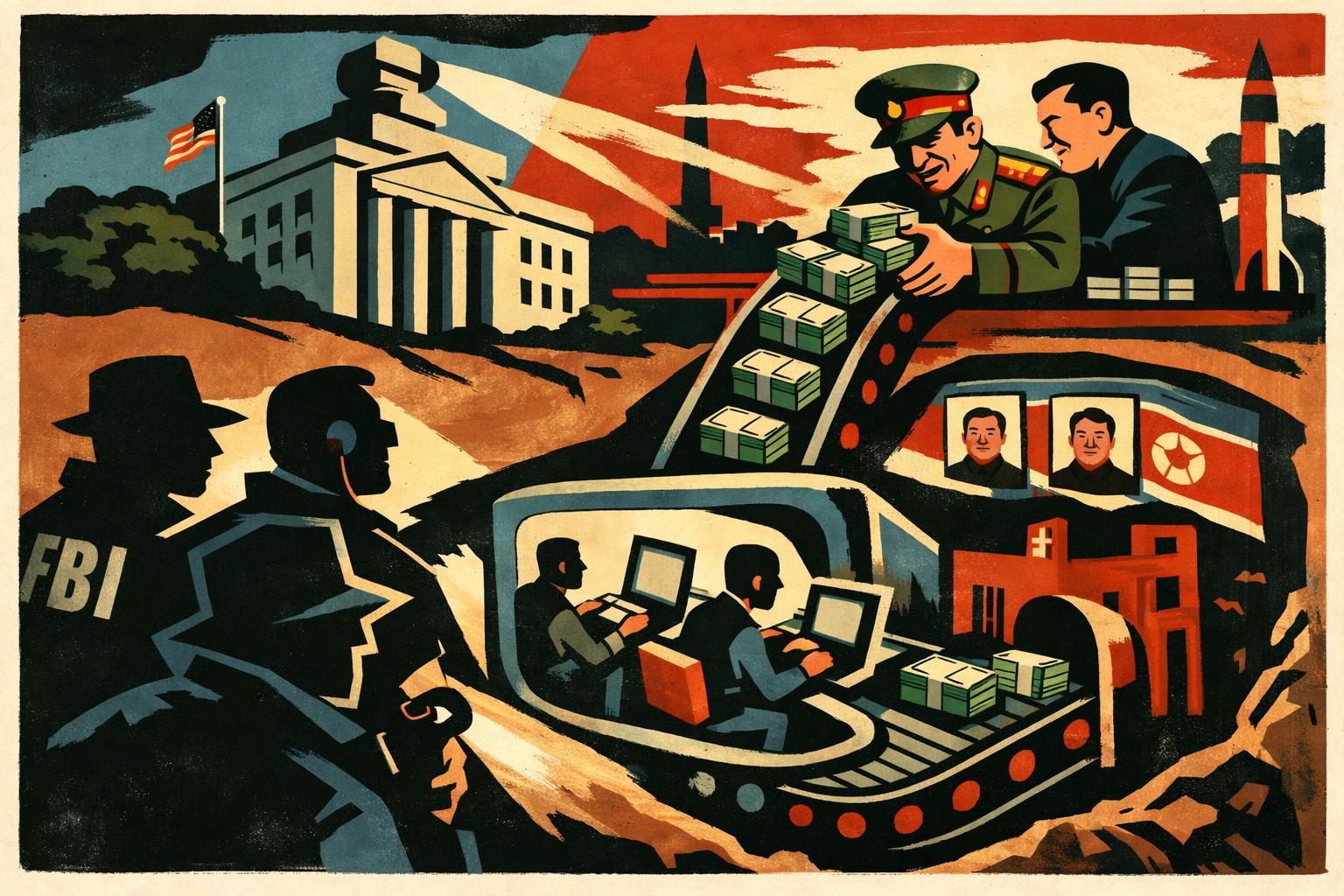
Federal prosecutors on Tuesday announced a sweeping set of coordinated actions aimed at what they describe as a North Korean remote-IT-worker pipeline that has been used to siphon money back to the regime. The package includes an indictment, two arrests, searches of suspected laptop farms in Texas, and the seizure of roughly 187 devices, according to the Justice Department. Officials say the operation relied on North Korean actors presenting themselves as ordinary remote workers to American companies, then collecting paychecks that were ultimately used to help finance Pyongyang. The government says more than 70 U.S. companies were touched by the scheme, making this far more than a narrow fraud case. It lands at the intersection of national security, sanctions enforcement, identity theft, and a labor market that has become increasingly dependent on hiring people no one in the office ever meets in person. What makes the announcement notable is not just the scale of the response, but the picture it paints of how easily routine business practices can be exploited when companies treat remote onboarding as a box-checking exercise.
The allegations fit a growing pattern that intelligence and law enforcement officials have been warning about for years: hostile states no longer need to penetrate corporate systems the old-fashioned way if they can simply get hired. In this case, the government says the scheme allowed North Korean workers to disguise themselves as legitimate remote employees while earning salaries from U.S. firms. That money, prosecutors say, did not stay in the normal channels of commerce but instead helped sustain a sanctioned regime that depends on creative ways to pull in hard currency. The mechanics are chilling precisely because they sound mundane. A résumé arrives, a video interview may or may not be convincing, a laptop is mailed, and the new hire is eventually trusted with access that can reach well beyond payroll. By the time fraud is detected, the worker may already have copied data, opened privileged access, or simply collected several paychecks under a false identity. The Justice Department has not suggested that every affected company suffered the same harm, but the breadth of the operation suggests a scheme designed for volume, not subtlety.
There is also a broader national-security story here that goes beyond one indictment or a handful of arrests. Remote work created a world in which geography matters less than credentials, and that shift has given sanctioned actors and criminal networks a much larger surface area to exploit. The North Korean playbook described by prosecutors turns the hiring process into both a revenue stream and a disguise: if the worker can appear credible enough, the company itself becomes the delivery system. That is why this case resonates as a cybersecurity story, a sanctions case, and an identity-theft matter all at once. It also underscores how hard it can be for employers to distinguish between a legitimate contractor and someone operating behind layers of proxies, false documents, and intermediaries. Even companies that do background checks and follow standard onboarding procedures can still miss a coordinated effort that is built to defeat routine screening. For policy makers, the case reinforces an uncomfortable point: the modern economy has created new ways to recruit talent, but it has also created new ways for adversaries to embed themselves in plain sight.
The immediate consequences are likely to fall on the people accused in the case, but the pressure will not stop there. Companies named or affected by the scheme may face hard questions about how fake workers managed to get far enough inside their systems to justify searches in multiple states and a seizure of that many devices. Employers will also be hearing a familiar warning in a more urgent form: remote onboarding is not just an HR function, but a security function with consequences that can reach into sanctions enforcement and foreign-policy risk. The administration, meanwhile, gets to present the operation as proof that it is willing to go after foreign schemes that use American businesses as a cash machine. At the same time, the scale of the case is an implicit admission that the system has already been porous enough to support a sprawling fraud network. If the government’s account stands up in court, it will be another reminder that the threat landscape now includes adversaries who do not need to break down the door when they can get hired through it. That is the political and practical sting of the announcement: it looks like a law-enforcement win, but it is also evidence of how much work still needs to be done to keep ordinary corporate processes from becoming national-security vulnerabilities.
Comments
Threaded replies, voting, and reports are live. New users still go through screening on their first approved comments.
Log in to comment
No comments yet. Be the first reasonably on-topic person here.