
Justice Says North Korea Ran a Remote-Work Fraud Farm
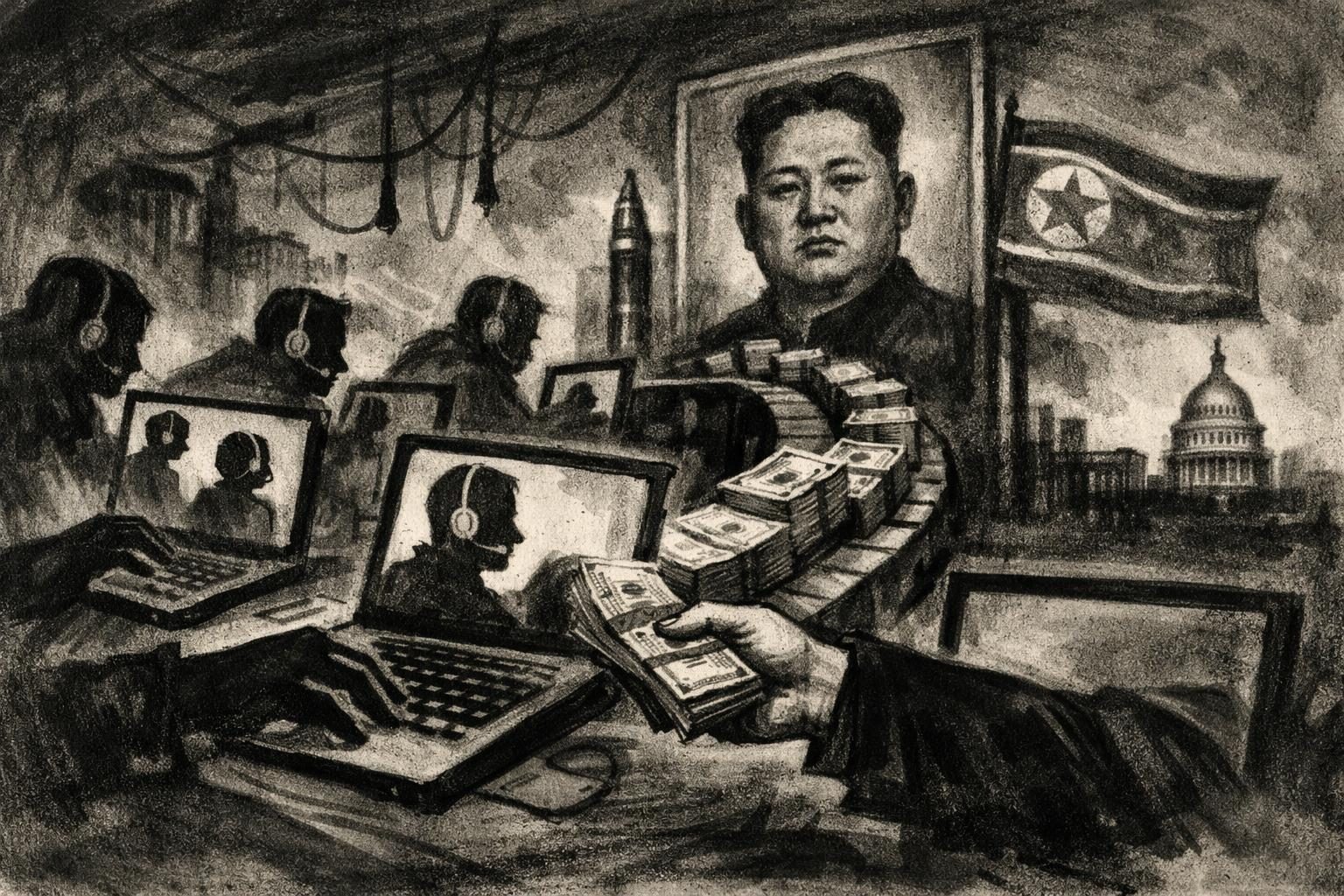
Federal prosecutors on Oct. 13 announced indictments against 14 people they say were part of a North Korean remote IT-worker scheme that reached into more than 70 U.S. companies and generated about $3 million for workers linked to the Democratic People’s Republic of Korea. On paper, the operation looks like a labor scam. In practice, it reads more like a sanctions-evasion pipeline disguised as normal hiring, with fake identities, stolen or borrowed credentials, remote access tools, and enough corporate trust to get paid before the fraud was fully noticed. The government’s allegation is not simply that someone lied on a résumé or faked a background check. It is that a hostile state found a way to turn routine remote-work onboarding into a revenue stream. That makes the case embarrassing for the companies involved, but also useful as a map of where modern business processes can be exploited.
What makes this case especially notable is how ordinary the mechanics sound. Prosecutors say the defendants used concealment tactics to mask who they really were and where the work was actually being done, which is the kind of scheme that can survive precisely because it resembles legitimate outsourced labor at a glance. A hiring manager sees a qualified applicant, a contractor platform sees a person who can be paid, and a company sees a new worker on a remote team. If the identity checks are weak enough, those three impressions can all be wrong at once. The result is not a dramatic intrusion in the old hacking sense, but a slow administrative failure that lets an adversary slip into the payroll and remain there long enough to matter. That is the real lesson here: the front door of a company is no longer just a front desk or a badge reader. It is every form, call, chat, and identity verification step that decides who gets access to systems, salaries, and sensitive internal work.
The national-security angle is impossible to ignore. Prosecutors say the money helped workers tied to North Korea, which means the fraud did not merely enrich criminals in the abstract; it allegedly fed a regime already under heavy sanctions pressure. That is why this is more than a remote-work story and more than a cybercrime story. It sits at the intersection of labor fraud, identity abuse, financial controls, and sanctions enforcement, all bundled together inside the same supposedly mundane hiring process. The case also underscores a broader problem for U.S. companies that have embraced distributed workforces with minimal friction. Remote hiring can widen the talent pool and reduce overhead, but it also removes some of the physical and social checks that used to make impersonation harder. When the only barrier between a foreign operator and a company’s internal tools is a video call and a stack of documents, the company is relying heavily on the attacker’s mistakes. That is a risky business model for any employer, and a particularly bad one when the adversary has state support or state tolerance.
The likely fallout is a renewed push for stronger identity controls, tighter contractor verification, and better scrutiny of payment channels and access patterns. Companies that outsourced onboarding to vendors or treated remote hiring as a paperwork issue are likely to face uncomfortable questions about how these workers got through in the first place. Security teams may use this case to argue for more aggressive verification steps, including cross-checking identity documents, monitoring unusual login behavior, limiting early access, and making sure compensation flows line up with actual work being performed. None of that guarantees a clean defense, and prosecutors’ announcement does not mean this tactic disappears tomorrow. It probably means the next version gets more careful and more expensive for the people running it. But that is still a meaningful outcome. The government has now put a sharper label on the problem: this is not just employment fraud with a geopolitical accent. It is a national-security threat hiding inside ordinary corporate workflow, and the companies that keep treating onboarding like a box-checking exercise are the ones most likely to help it succeed again.
Comments
Threaded replies, voting, and reports are live. New users still go through screening on their first approved comments.
Log in to comment
No comments yet. Be the first reasonably on-topic person here.