
Treasury says it hit Bank of America with record enforcement actions
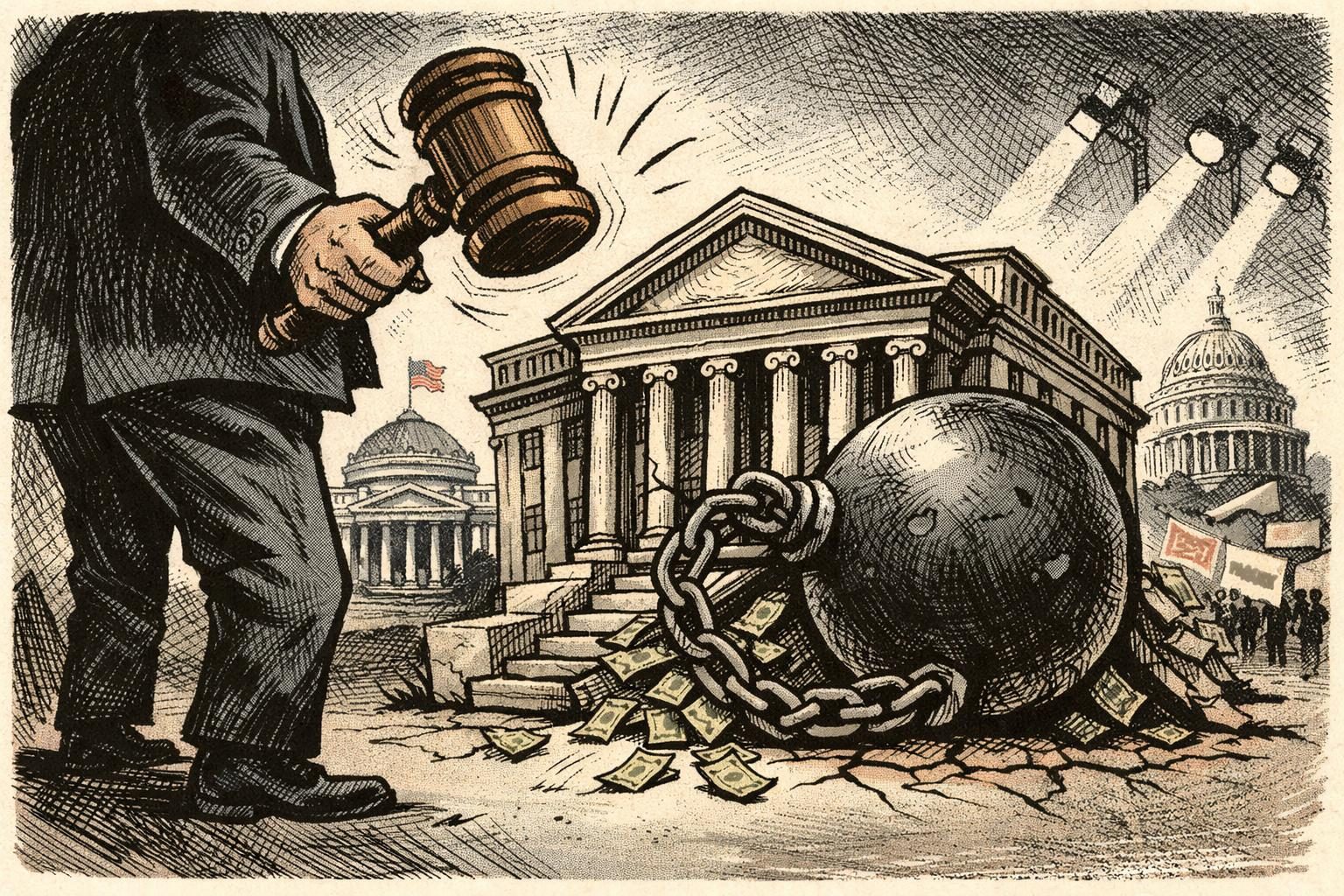
The Treasury Department said on October 13 that it had imposed what it described as record enforcement actions against Bank of America, putting one of the country’s largest financial institutions squarely in the federal crosshairs. The announcement was notable not just because of the size of the penalty, but because it signaled that regulators are still willing to apply real pressure to a giant bank at a moment when Washington is otherwise consumed by election noise, shutdown threats, and endless procedural drama. Treasury paired the Bank of America action with additional enforcement announcements on the same day, which gives the move the feel of a broader supervisory push rather than an isolated correction. That matters because when a department deliberately stages multiple enforcement actions together, it is usually trying to send a message that oversight is active, not ceremonial. In plain terms, the government wanted the financial industry to notice.
Even without every underlying detail spelled out in the public announcement, the scale alone is enough to make the case significant. Treasury’s own framing suggests the action is unusually large, and that alone can trigger a cascade of consequences inside a major bank, from emergency legal reviews to new risk assessments to executive-level questions about where the exposure came from and how it should be contained. Record-level enforcement actions can also shape the way a bank is treated by investors, counterparties, and regulators who are already watching for signs of weakness or repeated compliance failures. If the penalty is as substantial as Treasury is implying, then the institution is not dealing with a routine slap on the wrist. It is dealing with a reminder that even the biggest players can be forced to absorb real pain when federal regulators decide the moment is right. The exact mechanics matter, but so does the signal: size does not buy immunity.
For critics of the banking system, the significance goes beyond one institution’s balance sheet. A large enforcement action against Bank of America immediately raises the broader question of whether regulators are finally willing to punish misconduct in a way that ordinary Americans would recognize as serious. Big banks have spent years presenting themselves as indispensable parts of the financial system, which often seems to translate into a presumption that punishment should be managed carefully so as not to disturb markets too much. That logic has long frustrated people who see the system as tilted toward institutions that can absorb fines as a cost of doing business while consumers are left with fees, foreclosures, and the aftershocks of bad behavior. Treasury’s move does not resolve that tension, but it does show that the federal government can still act against a powerhouse lender when it chooses to. Whether the action reflects a particularly egregious finding, a long-running enforcement case reaching its conclusion, or a broader desire to demonstrate toughness is less clear from the announcement alone. What is clear is that the department wanted the market to understand this was not routine.
The political implications are almost as important as the financial ones. Any administration that wants to claim it is serious about accountability will inevitably point to a major enforcement action like this as evidence that the rules still apply at the top of the economic ladder. Critics, meanwhile, are likely to ask whether one high-profile penalty actually changes the broader structure that keeps large banks powerful, concentrated, and deeply entwined with the state’s own financial machinery. That is the credibility test hiding behind every announcement of this kind. If Treasury intends to present this as proof of a tougher enforcement posture, it will need to show that the action is part of a consistent pattern and not just a strategically convenient burst of toughness. Bank executives, for their part, now have every reason to assume more scrutiny is coming, whether through examinations, internal reviews, or additional enforcement inquiries. The immediate aftermath will likely involve the familiar machinery of compliance clean-up, lawyerly containment, and public reassurances about cooperation, but the broader political message is harder to miss. The government can still make a giant bank feel small when it wants to, and that is what makes this episode newsworthy in the first place.
Comments
Threaded replies, voting, and reports are live. New users still go through screening on their first approved comments.
Log in to comment
No comments yet. Be the first reasonably on-topic person here.