
White House doubles down on Columbus Day, because apparently we needed that fight again
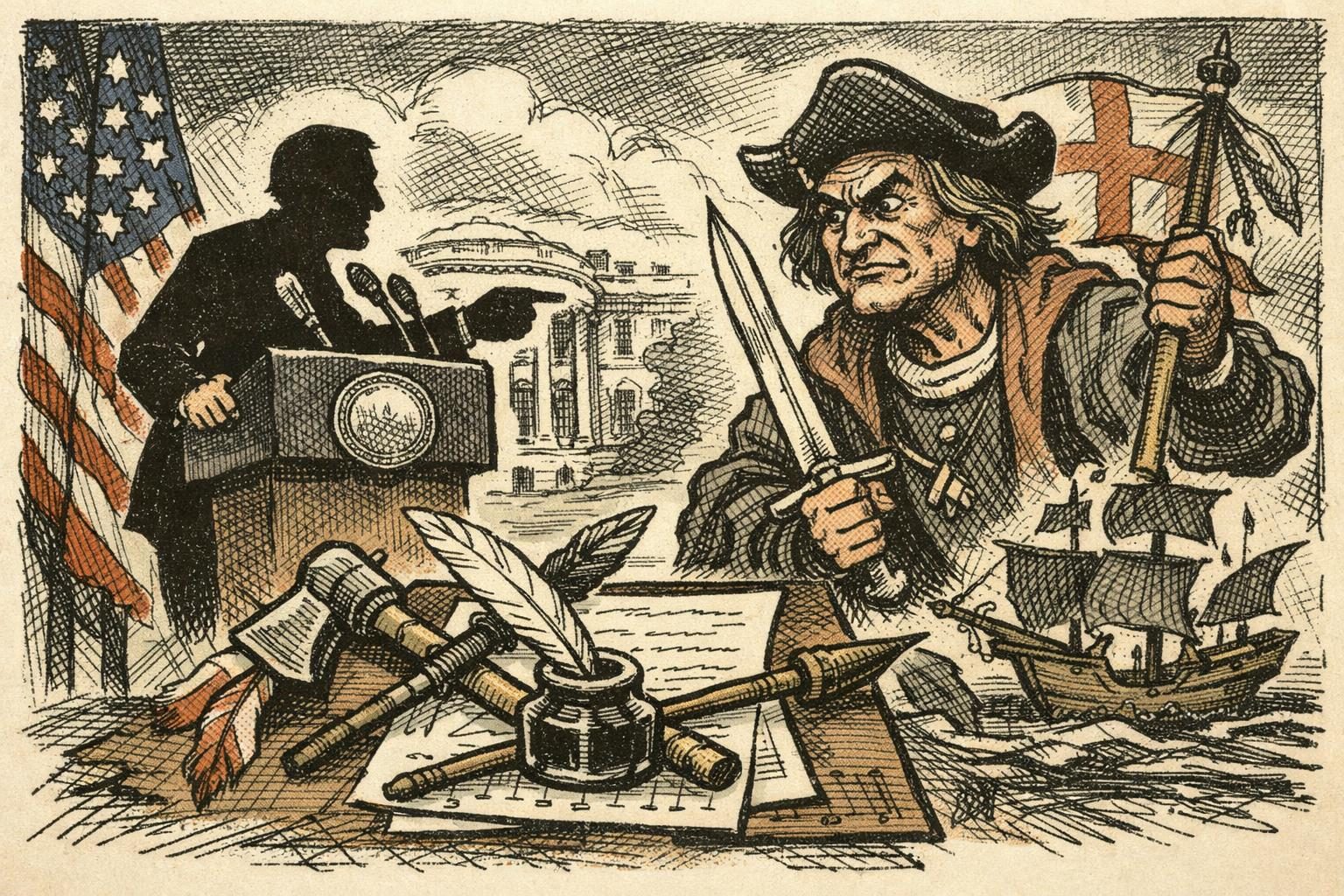
The White House quietly put out a Columbus Day proclamation this week, and for a document that is mostly ceremonial, it managed to arrive with just enough timing and just enough baggage to make itself impossible to ignore. The proclamation is dated October 7, 2026, and it designates October 12, 2026, as Columbus Day, while urging Americans to observe the day with the kinds of ceremonies and activities that usually accompany this kind of federal ritual. It appeared on the public presidential-actions page on Tuesday, October 13, which means it landed in the category of current White House action even if its practical effect is closer to pageantry than policy. That distinction matters, because the administration did not need to make a meaningful legal move here in order to make a very clear political one. In the modern White House, the symbolic stuff often does the work that legislation does not. This is one of those cases where the message is the point, and the calendar is just the delivery system.
The proclamation’s importance lies less in what it changes than in what it chooses to elevate. Columbus Day has long been a flashpoint in American public life, in part because it sits at the intersection of heritage, identity, and a far uglier history of conquest, displacement, and violence against Indigenous peoples. By issuing a formal proclamation and doing so in a plainly affirming register, the White House is not merely acknowledging a date on the federal calendar. It is signaling that it wants to place itself on the side of a tradition many Americans still associate with national pride, while leaving critics to read the same gesture as a deliberate refusal to soften or reinterpret that tradition. The language leaves little room for ambiguity, which is exactly why the move resonates politically. Even a ceremonial proclamation can serve as an ideological marker when the country is already divided over whose history gets the seal of federal approval. In that sense, the document functions as a kind of cultural shorthand, telling supporters that their version of the national story still counts as official. The administration does not need to spell that out explicitly for the message to land.
That is why the reaction to a proclamation like this is so predictable, and why it was probably always going to be issued anyway. Critics will see a familiar kind of performative politics: a low-cost, high-noise gesture that rewards one audience by reminding another that its objections are not being prioritized. Supporters, by contrast, are likely to frame it as a defense of tradition, heritage, and continuity, with the underlying argument being that there is nothing inherently controversial about honoring a figure who has long been embedded in the country’s civic calendar. Both responses are easy to anticipate, and both are in some sense the intended outcome. The proclamation does not resolve the historical dispute; it reopens it in a way that is useful to an administration that wants to show it is willing to make cultural choices with its chest out. That kind of signaling is especially potent in an election-adjacent environment, when symbolic acts are often treated as proxies for broader commitments. No budget line changes because of this. No federal program starts or stops. But the administration still gets to send a message about who it is prepared to reassure and who it is prepared to annoy.
The timing also gives the move extra weight, because posting the proclamation publicly after the date it commemorates does not diminish the political signal so much as underline that the White House wanted the document visible in the archive whether or not it was read in real time. The presidential-actions page is where these kinds of gestures become part of the administration’s official record, and once they are there, they tell a story beyond the text itself. In a year when symbolism is doing a lot of policy work, a proclamation like this becomes part of the broader governing style. It suggests an administration comfortable using ceremonial authority to draw lines in a culture fight, even when the practical stakes are limited. That may frustrate critics who think such actions are distractions from more consequential problems, but it also serves a political purpose by reinforcing identity and loyalty. The White House is not simply honoring a holiday here; it is making a choice about the version of national memory it wants associated with its name. That choice will read as harmless tradition to some people and as a pointed provocation to others, which is exactly why it matters. The fallout is mostly rhetorical, but the rhetoric itself is the point, and the administration appears to know it.
Comments
Threaded replies, voting, and reports are live. New users still go through screening on their first approved comments.
Log in to comment
No comments yet. Be the first reasonably on-topic person here.