
Court Blocks Trump Administration’s Taxpayer-Funded Ads in Latest Propaganda Fight
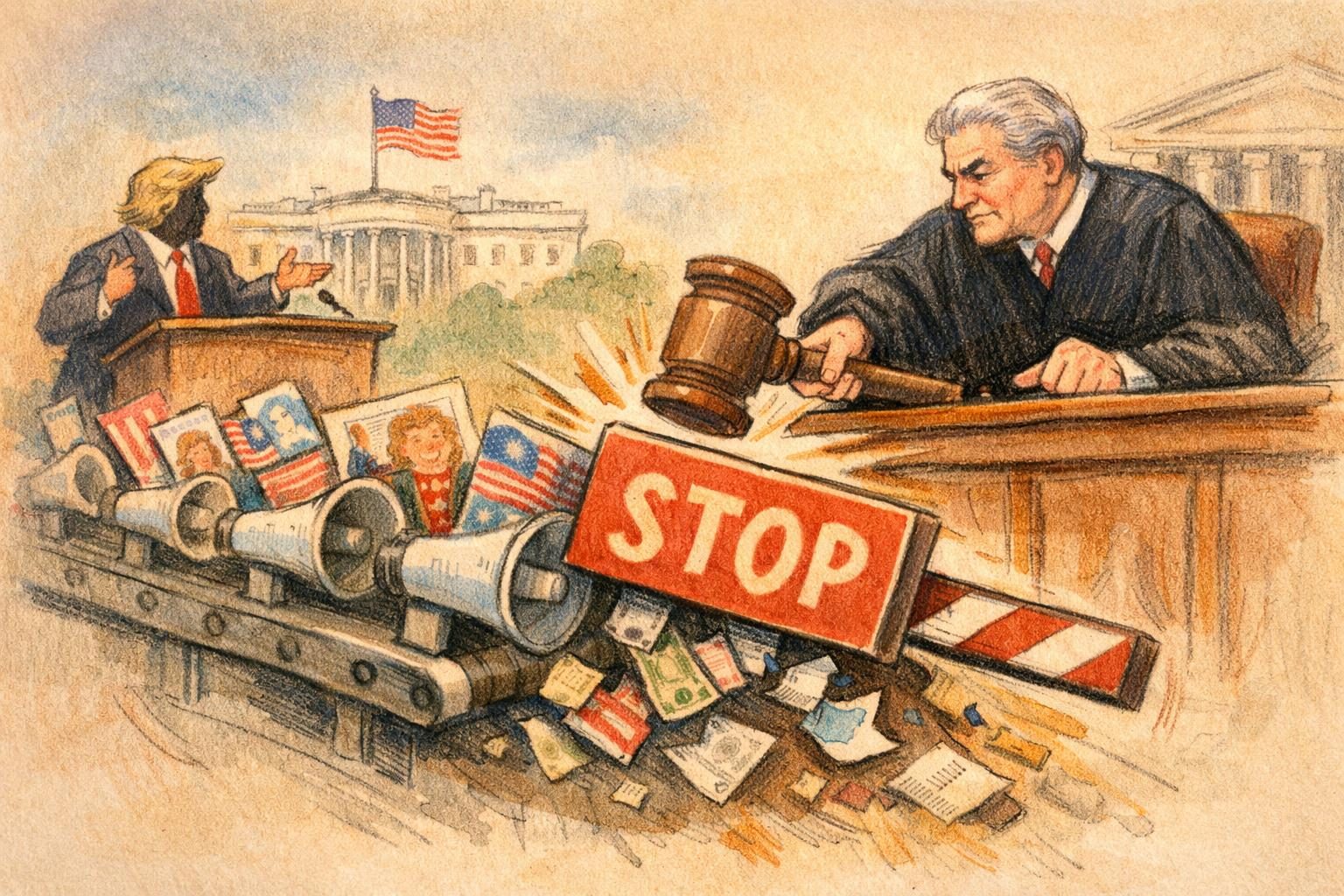
A federal judge on October 13 halted the Trump administration’s taxpayer-funded advertising effort, dealing a fresh legal setback to a White House that has repeatedly pushed the edges of what can be sold as public messaging and what looks more like political promotion. The ruling stopped the program after challengers argued that it crossed a basic constitutional and statutory line by using public money for material they said amounted to unlawful publicity and propaganda. On the administration’s side, the ads were presented as ordinary government communication, the kind officials often defend as informing the public about programs, services, or policy goals. But the court was not persuaded enough to let the spending continue while the case plays out, and that alone makes the order another marker of how much skepticism the judiciary is showing toward this brand of messaging. The immediate effect is simple: the ad push is blocked for now, and the White House will have to justify why this spending should be treated as routine governance rather than something more politically loaded.
The fight centers on a question that is easy to describe and hard to police in practice: when does a government advertisement stop being information and start becoming advocacy? Administrations of both parties have long used public-facing campaigns to explain policy, promote benefits, and encourage participation in programs, and that category is not automatically improper. The challengers in this case, however, argued that the Trump administration’s effort went beyond education and into territory that Congress never approved, particularly because taxpayer money was involved. Their claim was not just that the ads were distasteful or overly polished, but that they were legally unauthorized publicity designed to shape perception in a way the law does not permit. That is the kind of allegation courts tend to take seriously when public funds are being used, because the boundary between civic information and political messaging can be thin enough to disappear if no one enforces it. The judge’s order suggests the court saw enough of a risk to stop the program rather than allow the administration to keep spending while the dispute winds through further proceedings.
The larger significance here is not limited to one advertising initiative. This ruling fits a broader pattern in which the White House keeps testing how far it can go in wrapping political communication in the language of government administration, only to meet resistance once lawyers and judges examine the details. Taxpayer-funded ads are especially sensitive because they can operate like a quiet political subsidy if the content is directed at shaping public opinion instead of conveying neutral information. That does not mean every government-sponsored campaign is improper, but it does mean the burden gets heavier when the messaging appears designed to burnish the administration’s image or advance a political narrative. Critics of this kind of spending argue that the danger is less about one splashy ad buy than about the precedent it sets: if officials can repeatedly classify promotional efforts as public service announcements, the line between public business and campaign-style messaging gets steadily weaker. The court’s intervention matters because it interrupts that process before it hardens into a new normal. It also signals that judges may not be willing to let the administration define the rules for itself simply by calling a message informational.
The decision also carries a practical warning for agencies and officials trying to move fast with public messaging. Once taxpayer money is committed to an ad campaign, it can be difficult to claw back the political advantage it creates, even if a court later finds the spending unlawful. That is why challengers often seek immediate relief rather than waiting for a final judgment after the campaign has already run its course. In this case, the early block means the administration cannot keep pressing forward while arguing that the dispute is merely academic or that the ads should be judged only after the fact. It also means the court may be signaling that the legal claims are substantial enough to justify intervention before more money is spent. The broader takeaway is that the administration appears to be encountering a recurring limit: public funds are not a blank check for messaging, and the courts remain willing to say no when officials seem to be drifting from informing the public toward shaping the public mood. Whether the White House revises the effort, appeals the ruling, or tries a different framing, the episode reinforces a basic point that keeps coming up in these fights. If the government wants to advertise, it may need to prove, again and again, that it is serving the public rather than advertising the people in power.
Comments
Threaded replies, voting, and reports are live. New users still go through screening on their first approved comments.
Log in to comment
No comments yet. Be the first reasonably on-topic person here.