
Appeals court hears challenge to Trump’s long-running Guard deployment in D.C.
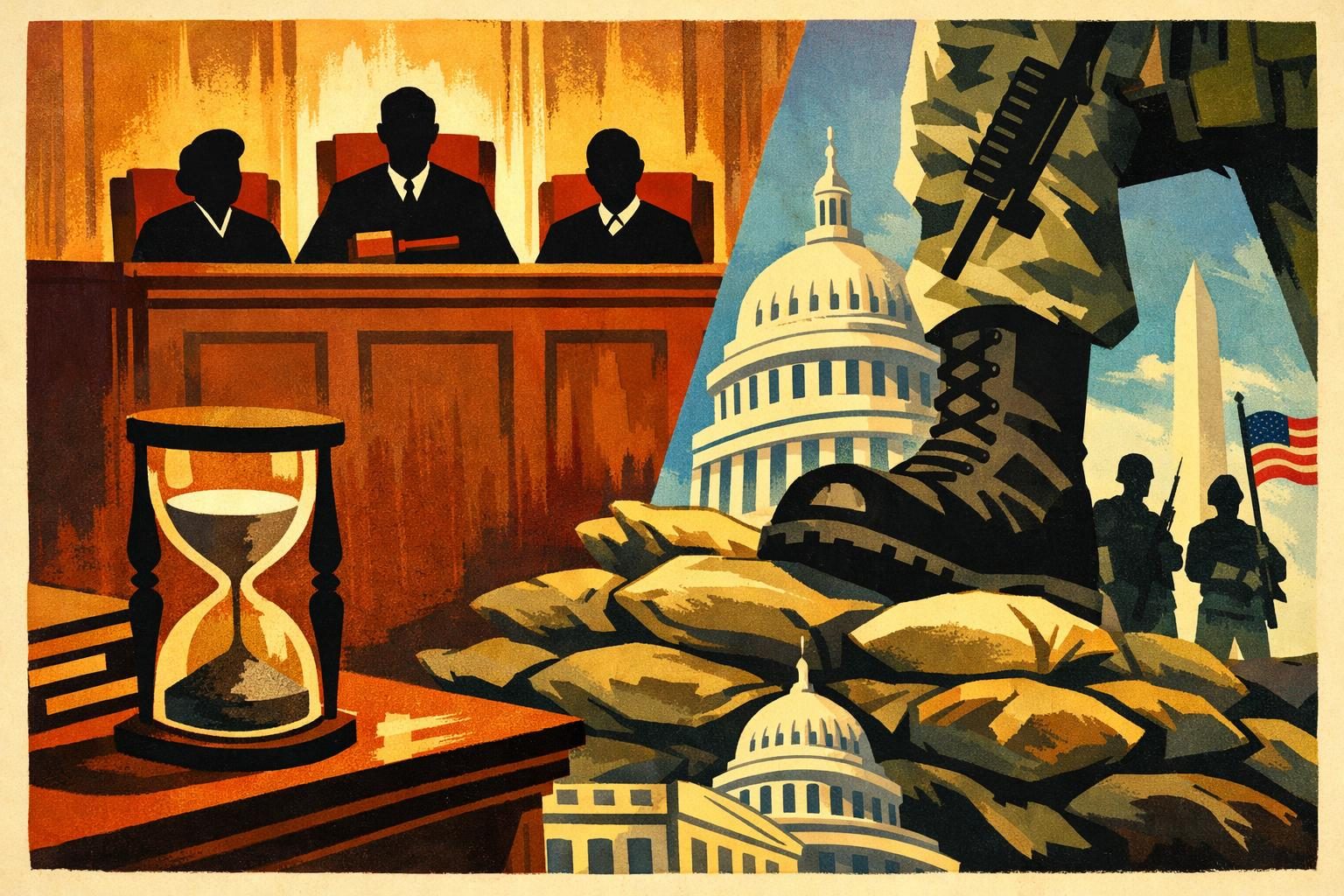
A federal appeals court on Wednesday heard arguments over President Trump’s long-running deployment of the National Guard in Washington, a case that has become far more than a dispute over street patrols. What began as a claimed public-safety measure has stretched for more than 14 months, drawing the courts into a blunt argument over how far the president can go when he says the capital needs to be secured. The issue now is whether that deployment should finally come to an end or whether the government can keep the Guard in place while the legal fight grinds on. A lower court had already ruled the deployment illegal, but that decision was put on hold while the appeals court takes up the case. For now, the troops remain a visible reminder that a supposed emergency measure has turned into a durable feature of daily life in the capital.
The case is especially sensitive because it sits at the intersection of law, politics, and the president’s authority over the federal district. Washington is not just another city, and that makes every decision about troop presence feel larger than the immediate security questions at issue. Supporters of the deployment argue that the president is responding to disorder, protecting federal property, and ensuring that government operations are not disrupted by unrest or instability. Critics say that logic is too elastic, warning that it turns ordinary political unease into a justification for extraordinary force. They also argue that once the government treats the presence of troops as normal, it becomes easier to stretch emergency powers beyond anything the law was meant to permit.
That is what makes the appeals court hearing more consequential than a routine procedural step. The earlier ruling suggested that the administration may have crossed a legal line, and the fact that the decision was paused did not erase the underlying question of whether the deployment itself is lawful. Opponents of the Guard presence are trying to convince the judges that the arrangement is not just excessive but fundamentally mistaken in how it treats the capital and its residents. The administration, meanwhile, is leaning on the idea that the president must have room to act when public safety and federal functions are at stake, especially in a city where national institutions are concentrated. The tension is familiar in Washington: one side calls it necessary protection, the other calls it overreach, and the courts are left to decide where the line actually lies.
The length of the deployment is a major part of why the dispute has hardened into a broader constitutional argument. If troops remain in place for well over a year, what was described as a temporary measure starts to look like a standing arrangement, and that changes the character of the power being exercised. It also raises the political cost of backing down, because the longer a show of force lasts, the more difficult it becomes for the government to admit that the original rationale was limited. The optics are not subtle: in a city where symbols matter, armed personnel posted for months on end send a message about who is in charge and how expansively that authority is being used. If the appeals court eventually orders the Guard out, the decision would amount to a direct warning that even the presidency has legal limits when it comes to turning the capital into a permanent stage for emergency power. If the court allows the deployment to continue, the administration will have won another round, but it will also have reinforced the idea that once such a measure begins, it can be extremely difficult to unwind."}]}
Comments
Threaded replies, voting, and reports are live. New users still go through screening on their first approved comments.
Log in to comment
No comments yet. Be the first reasonably on-topic person here.