
Justice Department closes more than 50 old desegregation cases, reviving fresh questions about what “finished” really means
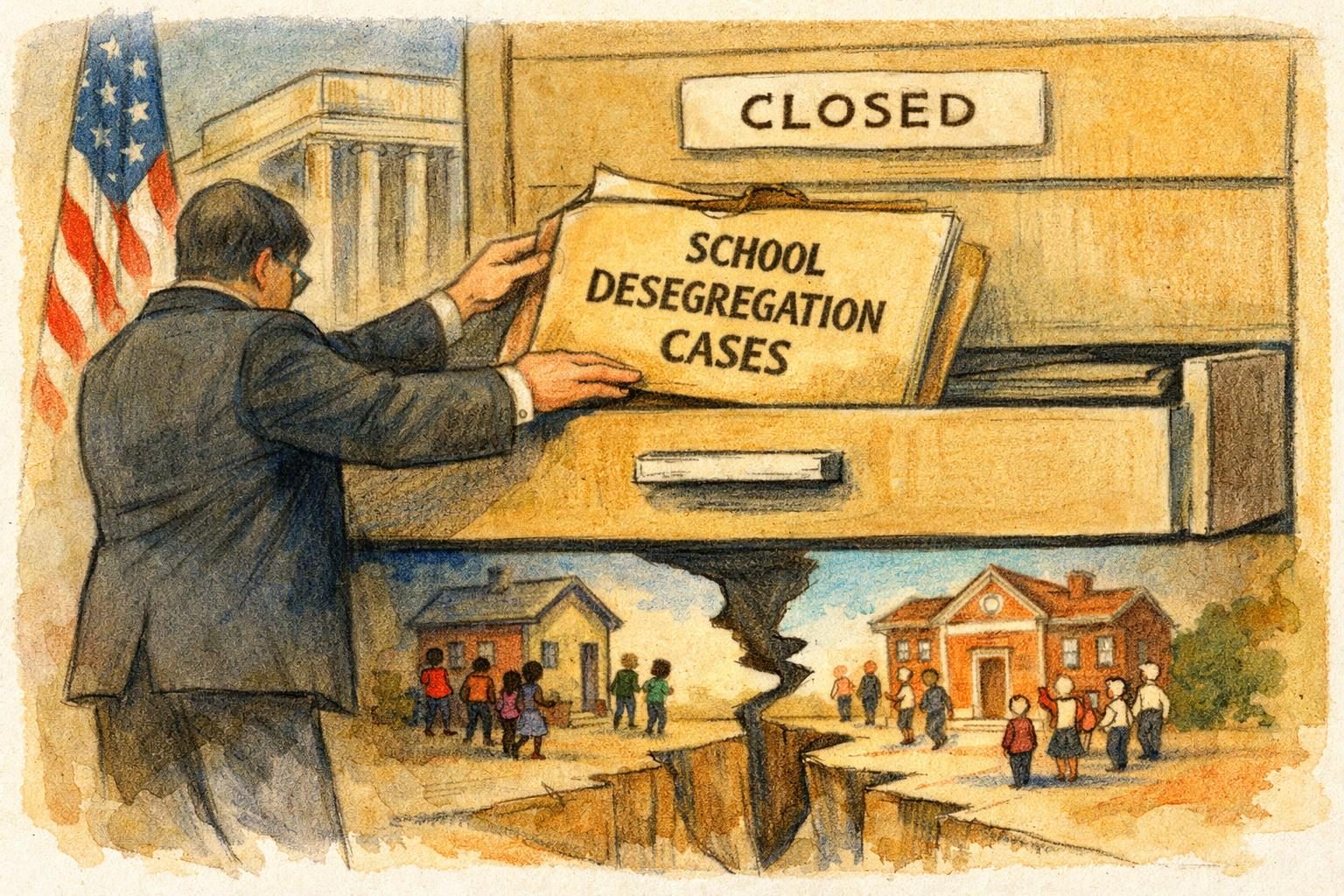
The Justice Department has moved to close more than 50 long-running school desegregation cases, a decision that marks a significant reduction in federal oversight of districts that were once ordered to dismantle segregation. On paper, many of these cases are decades old, and some have been lingering far longer than the original lawyers who filed them ever expected. But the practical meaning of the move is less tidy than the paperwork suggests. Ending a case does not automatically mean a district has become fully equitable, and it certainly does not mean that the underlying patterns that made the litigation necessary have disappeared. What the department is signaling, in effect, is that it believes a large batch of these matters has reached the point where Washington no longer needs to keep watch.
That framing may satisfy officials eager to portray the civil-rights docket as a story of long-delayed completion, but it is also likely to invite scrutiny from lawyers, educators, and civil-rights advocates who have spent years warning against declaring victory too soon. School desegregation cases were never just symbolic. They have been one of the few remaining federal mechanisms for ensuring that districts follow through on obligations tied to court orders, including the basic promise that students should not be trapped in systems shaped by race and isolation. In many places, the old legal fight over whether a district had formally complied with an order has always been different from the harder question of whether students in practice still attend schools divided by neighborhood lines, housing patterns, resource disparities, and selective policy choices. That is why closing a case can feel, to critics, less like the end of a process than the moment the process becomes easier to ignore.
The department’s own civil-rights materials make the move look official and deliberate, not merely symbolic. That matters because it turns the action into something more concrete than a speech or a political signal. It is an enforcement decision, which means it reflects an internal judgment that the cases no longer require federal supervision. Supporters of the decision are likely to argue that long-running litigation should not become permanent administration by default, and that districts that have genuinely satisfied their obligations should not remain under federal control forever. That argument is not frivolous. Some cases do reach a point where continued oversight is more burden than benefit, and there is a legitimate legal distinction between monitoring compliance and endlessly preserving old litigation because it carries moral weight. Still, the scale of this announcement makes it impossible to treat each case as an isolated technical file. More than 50 closures at once suggests a broader shift in how the department views its role, and that shift is precisely what makes the move politically loaded.
The larger concern is what this says about the federal government’s posture toward civil-rights enforcement at a time when school segregation has not vanished from American life. Even without formal dual systems, many communities remain deeply divided in practice, and students continue to experience schools that are separated by race and class in ways that old court orders were designed to prevent. Ending the cases does not erase the history that produced them, nor does it remove the obligations that still exist under law where they remain in force. It does, however, reduce one of the clearest federal tools for checking whether districts are complying with those obligations and for reminding local officials that the country once decided segregation was not a local preference but a constitutional wrong. That is why the move reads to critics as more than housekeeping. It looks like a retreat from a foundational federal responsibility, dressed up as administrative finality. If the department is right that these cases are truly finished, the record will need to show that clearly. If not, then the announcement may come to be seen as less a closing of history than a decision to stop looking at what history left behind.
Comments
Threaded replies, voting, and reports are live. New users still go through screening on their first approved comments.
Log in to comment
No comments yet. Be the first reasonably on-topic person here.