
DOJ opens a probe into the White House TV pool blowup
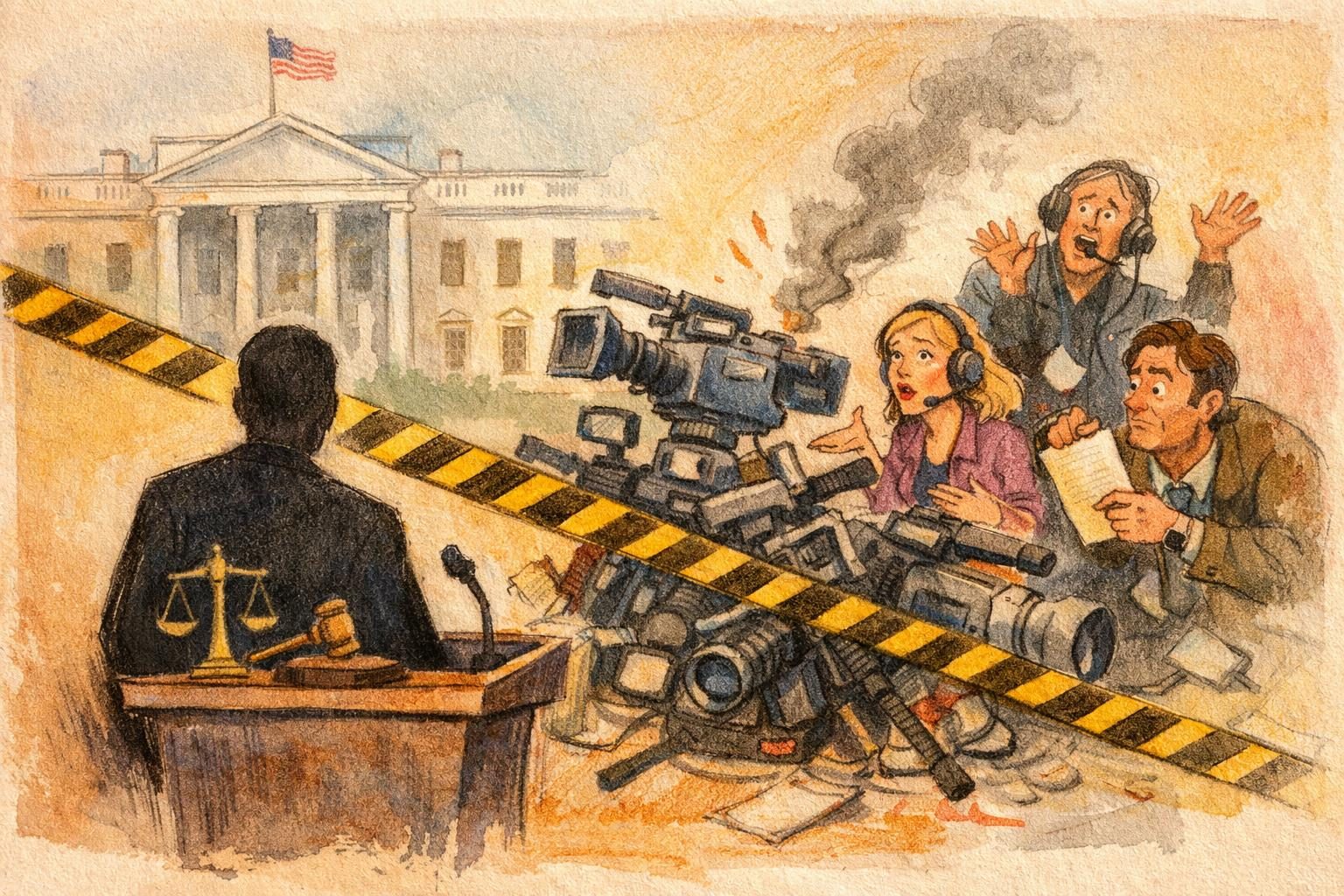
The White House’s fight with the press pool has now spilled into a new arena, and it is one the administration probably did not want. The Justice Department has opened an investigation into whether the collapse of the White House television pool’s coverage arrangement may have run afoul of antitrust law. That turns what began as a dispute over access into a legal and regulatory mess with consequences well beyond daily press briefings. Broadcasters pulled back from the pool after the administration barred three outlets from White House access, and the resulting breakdown left an ordinary piece of Washington machinery sputtering in public. A pool is supposed to be a dull logistical solution, a way to make sure presidential events can be covered without every outlet sending a full crew, but in this case it has become evidence in a much larger argument about power, retaliation, and who gets to decide how the press does its job.
The broad outline is straightforward enough. The administration imposed limits on three outlets, and broadcasters then stopped participating in the pool arrangement rather than continue under those conditions. That reaction created a disruption in the collective coverage system that has long helped shape how the president is seen and heard. Now the Justice Department is looking at whether that collapse implicated competition rules, which gives the episode a second life outside the familiar press-freedom debate. The question is not simply whether the White House acted aggressively toward reporters, though that is clearly part of the story. It is also whether the knock-on effect of that decision created a situation the government itself believes may have crossed a legal line. That is a remarkable place for a press access fight to land, and it suggests the dispute has become more than a symbolic clash over message discipline.
The White House may argue that the whole episode is being inflated by its critics and that the real issue is administrative order, not censorship or coercion. But that explanation gets harder to sustain when the consequences spread to the broader press corps and into federal scrutiny. The pool exists because presidential coverage requires coordination, and any disruption to that arrangement immediately affects who can see what and how quickly information reaches the public. If outlets conclude that participating in the system means endorsing a selective punishment scheme, they have an incentive to step back. Once enough of them do, the problem stops being about a few disfavored outlets and becomes a structural breakdown in how presidential events are covered at all. That is why the administration’s attempt to pressure coverage can end up looking self-defeating: a narrow move intended to impose discipline can instead destabilize the very mechanisms that make day-to-day access possible.
There is also a broader political cost here, and it is not subtle. The White House has spent years projecting the image of a team that values control, clarity, and results, yet this episode makes the administration look as if it has created a dispute it can no longer easily contain. Critics will say the lesson is obvious: if you treat press access like a loyalty test, you invite the rest of the system to react in kind. Broadcasters are not simply passive carriers of whatever terms the government prefers; they have their own incentives, reputations, and legal concerns. When those incentives collide with selective exclusion from the White House, the fallout can reach far beyond the outlets directly targeted. The result is not only a fight over access but a public test of whether the administration can pressure the press without triggering backlash that harms everyone involved, including its own message operation.
For now, the biggest immediate effect is simply more scrutiny. The Justice Department’s interest suggests that the issue has become serious enough to examine through a competition-law lens, not just a political one. That does not mean a violation will be found, and it does not mean every unhappy broadcaster suddenly has a monopoly case. But it does mean the administration’s media conflict is no longer confined to the daily cycle of statements, protests, and bad headlines. It has entered the realm of legal exposure, where the facts of how the pool broke down matter, and where the government’s own actions may be examined as part of the problem. The irony is hard to miss: a move meant to increase leverage over coverage may have created a compliance headache and a new front in an already ugly standoff. The White House wanted control over the narrative, but what it may have bought instead is a lasting fight over whether it pushed the system too far.
Comments
Threaded replies, voting, and reports are live. New users still go through screening on their first approved comments.
Log in to comment
No comments yet. Be the first reasonably on-topic person here.