
FBI trumpets a giant crime sweep — and the numbers invite their own side-eye
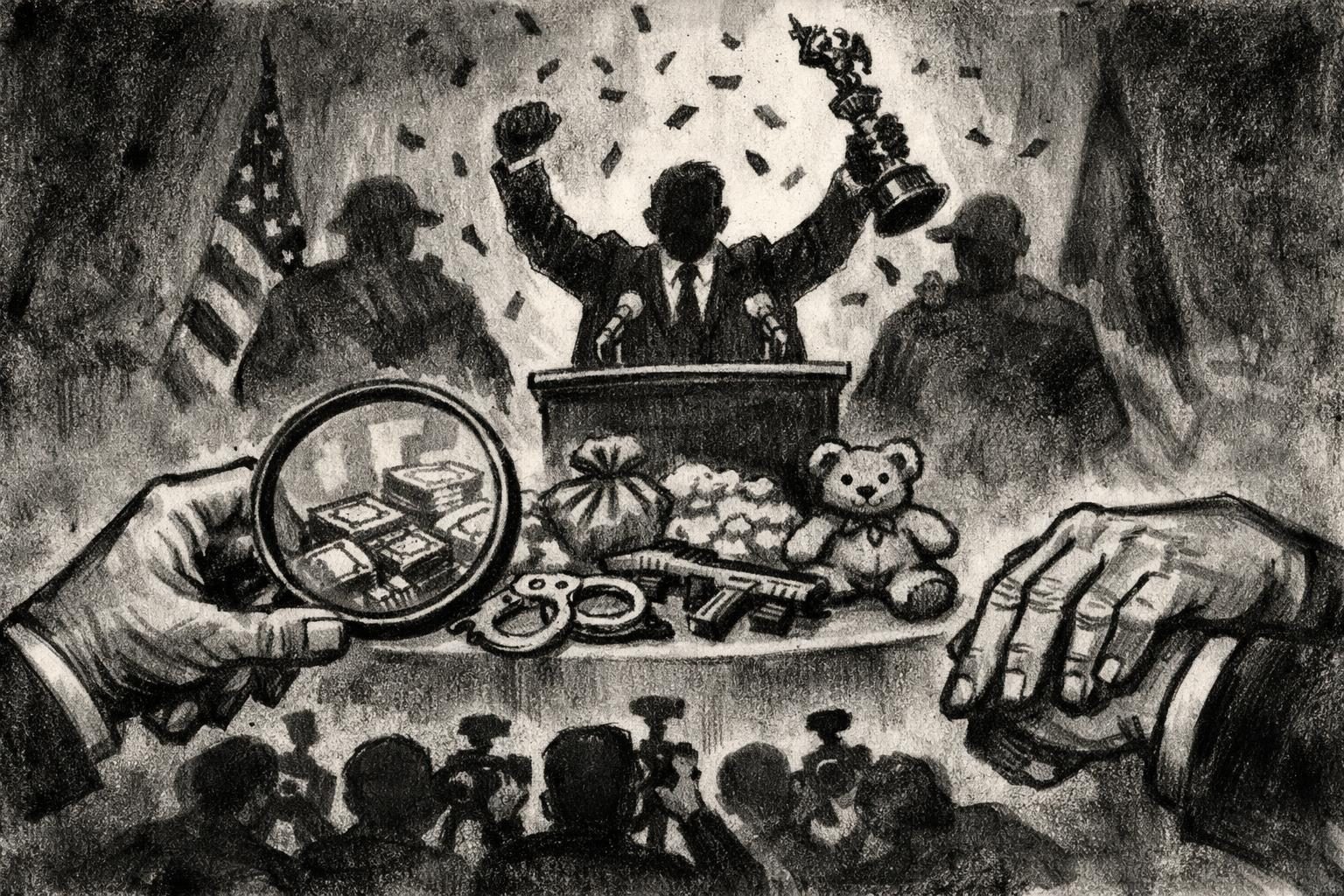
The FBI spent Tuesday sounding the kind of victory note that practically dares readers to check the fine print. In a sprawling announcement tied to its Summer Heat 2.0 operation, the bureau said it logged 8,927 arrests over a four-month stretch, seized large quantities of fentanyl and cocaine, and helped recover or locate 1,410 children. The operation, according to the agency, was aimed at violent crime, gangs, fugitives, and trafficking networks across the country. On paper, that is a big law-enforcement haul by almost any standard. Politically, it is also exactly the kind of data dump that invites applause from supporters, side-eye from skeptics, and immediate questions about what those numbers actually prove.
The agency’s framing matters because this was not a quiet internal memo about casework. It was a public rollout built to communicate momentum, competence, and reach. The message was simple enough: federal law enforcement is moving aggressively, and the results are visible in arrests, seizures, and recovered children. That is not nothing. Drug interdictions can remove dangerous substances from circulation, and arrests can disrupt violent networks when they lead to real prosecutions. Recovering missing children is plainly consequential in its own right. But the way the totals were presented suggests that the bureau also wanted the operation to function as a demonstration project for a broader political idea — that hard-line policing, if applied with enough force and enough visibility, can serve as proof that the government is getting crime under control.
That is where the numbers start to raise as many questions as they answer. Big totals are easy to trumpet and difficult to interpret. An arrest count does not, by itself, tell the public whether the people taken into custody were the most dangerous offenders in the system, whether the cases are likely to result in convictions, or whether the operation focused on the kinds of crimes that do the most harm in a given community. Likewise, a seizure statistic can sound dramatic without revealing the scale of the underlying market or whether another organization quickly fills the gap. And while the recovery of more than 1,400 children is an unquestionably serious outcome, the public still does not learn from a press release how many of those cases involved active trafficking, how many children were endangered in the first place, or how much of the operation’s success came from coordinated local work that was already underway. In other words, the bureau is offering a scoreboard, not a full accounting.
That distinction is especially important in an administration that has made policing and public order a central part of its political identity. Crime messaging is useful because it lets officials cast themselves as decisive, practical, and aligned with the public’s most basic anxieties. A headline number like 8,927 arrests is tailor-made for that purpose. It can be cited as evidence that a crackdown model is working, and it can be folded into a larger narrative about restoring order through toughness and enforcement. But those narratives tend to flatten the real complexity of crime reduction. Street-level enforcement can matter a great deal, yet broad public-safety problems are shaped by local capacity, prosecutorial decisions, social conditions, intelligence sharing, and the sheer adaptability of criminal networks. A successful operation may reflect all of that, not just the force of federal will. The danger is that a press release can make the process look simpler, cleaner, and more final than it really is.
That is why the announcement lands as both a substantive law-enforcement update and a political self-portrait. The FBI director praised the totals publicly, which only heightens the sense that the bureau was not merely reporting activity but celebrating a narrative. Supporters of the administration will see exactly what they want to see: a large, tangible demonstration that a tougher approach produces measurable results. Critics will see a familiar pattern in which federal law enforcement becomes part of a broader branding exercise, with public safety serving as both policy goal and campaign-style message. Both reactions can coexist because the facts are real, but the interpretation is unresolved. The arrests happened. The drugs were seized. Children were located. The unanswered question is whether those gains reflect a durable shift in safety or a temporary surge that looks more impressive in a statement than it does in a long-term trend.
That is where the political stakes begin to outrun the operational ones. If the administration keeps pointing to Summer Heat 2.0 as evidence that it knows how to fight crime, then the burden does not end with announcing a huge number. It shifts to showing whether the operation meaningfully reduces violence, disrupts trafficking in a lasting way, and produces cases that hold up in court. It also means the White House has tied its credibility to a set of enforcement outcomes that can be celebrated immediately but judged only later. If the results are sustained, officials will have a ready-made argument that the crackdown model works. If they are not, the same numbers will start to look like a flashy press event attached to a more complicated reality. For now, the bureau has given the country a giant tally sheet and asked everyone to treat it as a sign of progress. Whether that is progress in the deeper sense, or just a well-marketed burst of activity, is a question the headline numbers alone cannot settle.
Comments
Threaded replies, voting, and reports are live. New users still go through screening on their first approved comments.
Log in to comment
No comments yet. Be the first reasonably on-topic person here.