
Federal immigration rulemaking keeps pushing the economy toward a worker-squeeze model
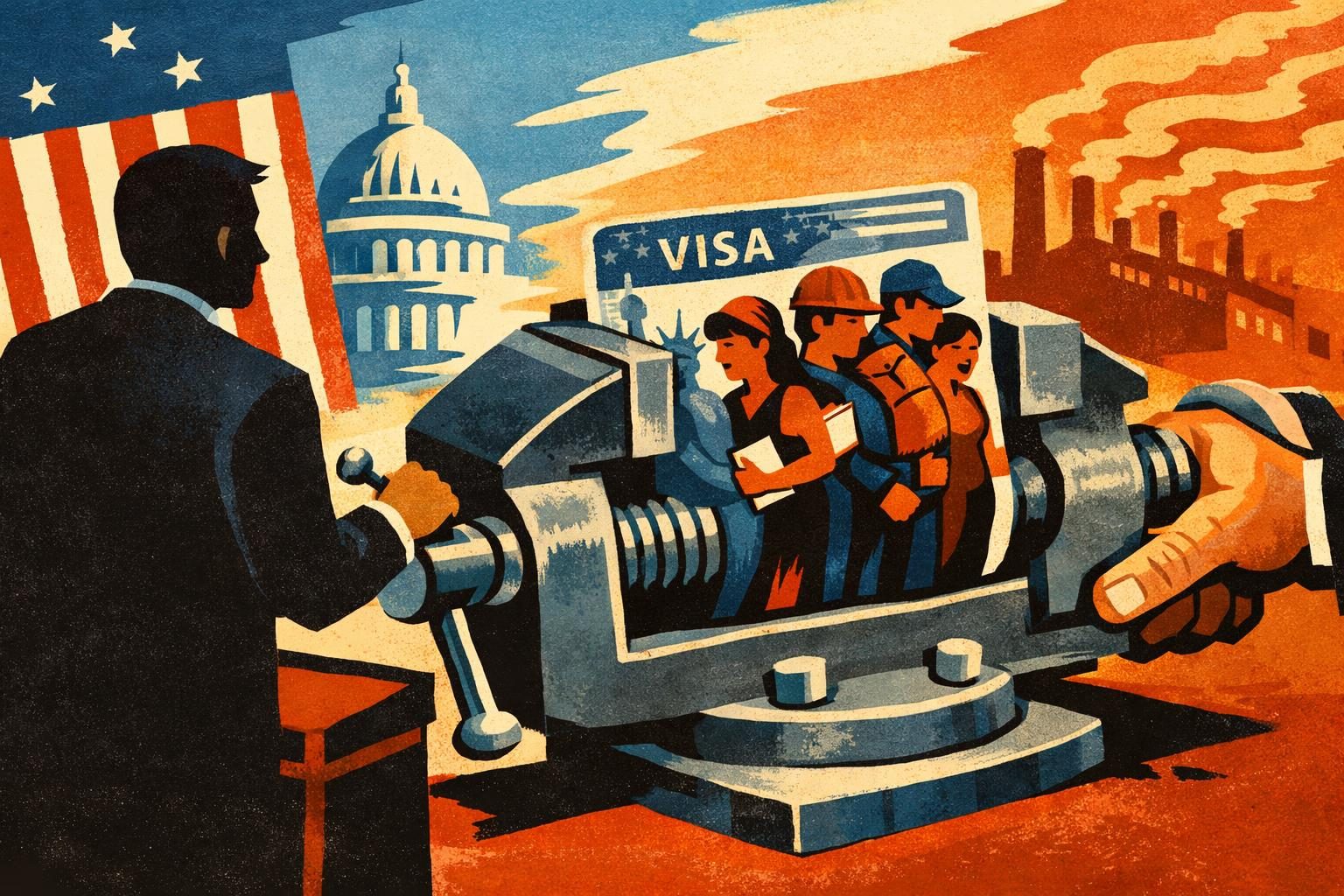
The Federal Register on Oct. 14 added another immigration-related rulemaking to a growing stack of administrative actions that point in the same direction: fewer easy pathways, tighter screening, and a labor system that becomes more restrictive by design. On its face, the document is a procedural item, the kind of thing most people will never read and most voters will never see. In practice, these notices and rules are where broad political promises get converted into operating instructions for agencies, employers, schools, and applicants. The administration has increasingly framed that work as a matter of integrity, fraud prevention, and protection of U.S. workers. But the practical effect is to narrow access, raise the cost of compliance, and make the system less forgiving for anyone who depends on fast, predictable processing.
That matters because immigration rulemaking is not just symbolic. It reaches into the mechanics of hiring, school enrollment, work authorization, and the ability of firms to staff positions that are already hard to fill. Universities, hospitals, technology firms, seasonal employers, and small businesses all live with the consequences when a rule changes the way applications are reviewed or when new hurdles slow the flow of paperwork. Even when the stated rationale is legitimate enforcement, the operational result can still be a bottleneck. A delay that looks small in Washington can mean a lost term, a missed start date, or an empty seat in a job that requires specialized skills. The bigger the system becomes and the more aggressively it is policed, the more likely it is that legitimate applicants get caught in the same net as bad actors.
The political logic behind the latest action is familiar. It is the old “not anti-immigrant, anti-abuse” argument, presented in a way that allows the administration to claim it is simply restoring order while it steadily reduces access. Supporters are likely to say the government is cleaning up loopholes, stopping fraud, and ensuring that benefits and work authorization go only to people who qualify. Critics will see something else: a deliberate effort to make lawful immigration and lawful hiring more expensive, more uncertain, and more vulnerable to denial. That tension has become central to the administration’s broader regulatory approach. Rather than announcing a single dramatic shutdown, it appears to be using a series of smaller moves that cumulatively push the system toward a worker-squeeze model, one in which legal pathways remain open in theory but harder to use in practice.
The economic consequences are not abstract. Employers that depend on foreign talent or on immigrant labor already operate in an environment where timing matters and uncertainty carries real costs. If the government tightens eligibility standards, adds friction to processing, or makes the rules harder to interpret, businesses will respond by delaying hiring, shifting plans, or absorbing higher legal and administrative costs. Workers already inside the system can be left waiting on decisions that affect their status, paychecks, and mobility. Advocacy groups that focus on labor rights are likely to argue that the people who can least absorb these delays are the ones who pay the highest price. Business groups, meanwhile, are likely to complain that the government is substituting ideology for operational reliability and undermining access to talent at the exact moment when many industries already say labor is tight. Immigration hardliners will probably welcome the shift as overdue cleanup and insist that any short-term pain is a fair price for stronger enforcement.
What makes the current moment especially important is that the real fight now moves from rhetoric to implementation. A Federal Register notice is only the beginning of the process. Agencies still have to write the guidance, train the staff, process the cases, and defend the rule if it is challenged. Lawyers and compliance officers will read the language line by line, looking for deadlines, exceptions, definitions, and weak points that could be used in court. That is where these policy shifts become concrete, because the downstream consequences are often felt long before a judge rules on them. The administration seems committed to the idea that restriction itself counts as reform, even if the practical result is a more brittle system with fewer buffers and more choke points. In that sense, the Oct. 14 rulemaking is less a one-off event than another step in an ongoing effort to remake immigration policy as a tool of labor-market control, with the costs pushed onto applicants, employers, and institutions that depend on a more predictable system.
Comments
Threaded replies, voting, and reports are live. New users still go through screening on their first approved comments.
Log in to comment
No comments yet. Be the first reasonably on-topic person here.