
Florida gets a court win for its under-14 social media ban
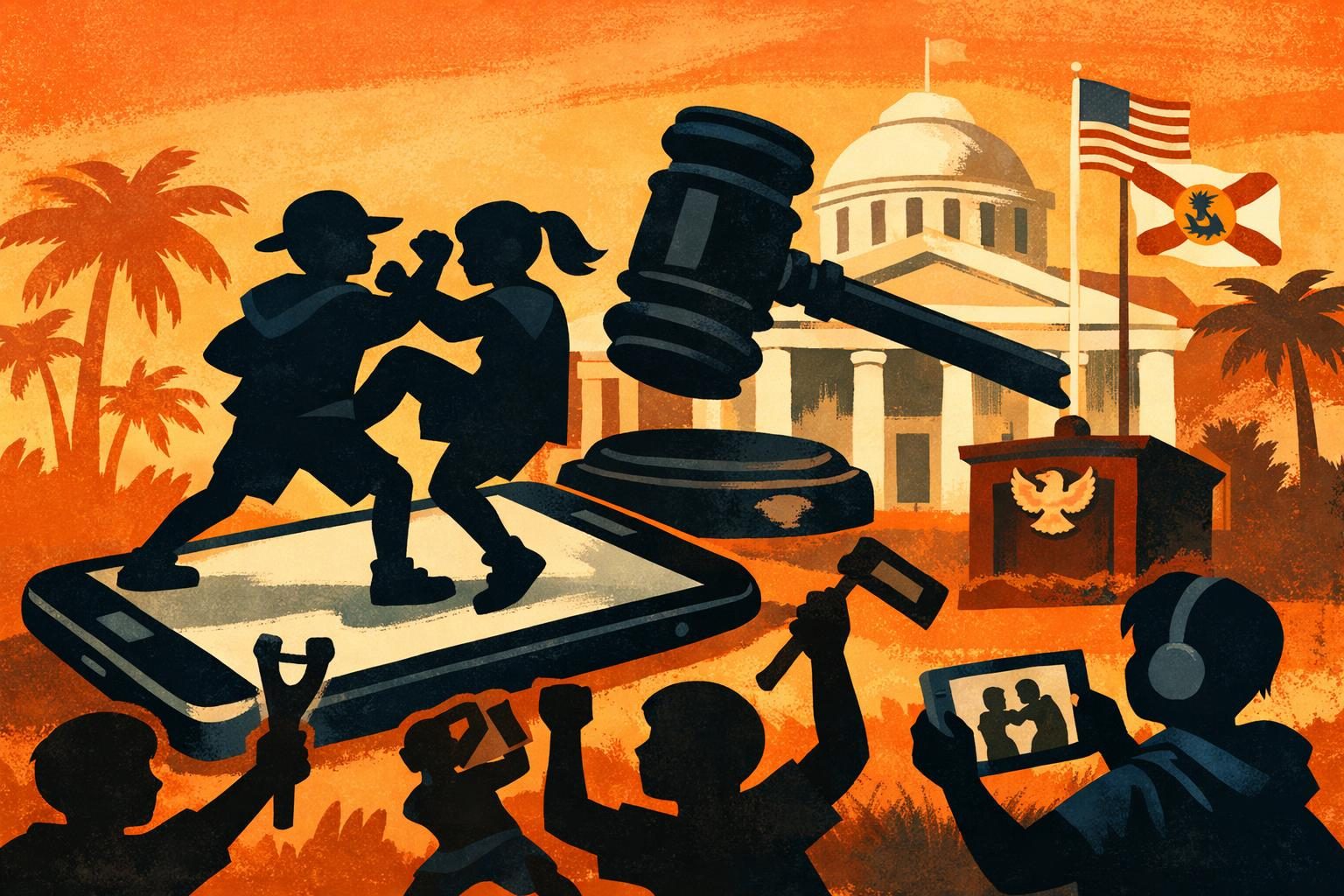
Florida scored a major courtroom win on Wednesday in its bid to police how children use social media, after a federal appeals court said the state may keep enforcing a law that bars accounts for users under 14 and requires parental permission for 14- and 15-year-olds. The decision does not end the fight, but it gives state officials what they wanted most for now: permission to move ahead while the broader constitutional challenge continues. A lower court had already put the measure on hold, finding enough reason to pause it before it could take effect. The appellate panel’s ruling reverses that immediate setback and suggests the law is likely to survive at least the next round of legal scrutiny. For a state that has made a habit of pushing aggressive online-safety rules, the ruling is a significant green light.
The law sits at the center of a broader national argument about whether governments can limit access to social platforms in the name of child protection without running afoul of the First Amendment. Florida’s measure is among the most restrictive in the country because it does not merely ask companies to do more age screening or offer families better controls. It draws a hard line: no social media accounts for children younger than 14, and a parental consent requirement for early teens. That puts it squarely in the path of the platforms’ core business model, which is built around keeping users engaged through recommendation systems, endless feeds, and design choices that critics say are built to hold attention for as long as possible. The state argues that those features can be harmful to young users, especially if they are exposed to addictive behavior patterns, and that lawmakers have an obligation to step in. Critics counter that broad age bans are a blunt instrument that punish speech and online participation rather than addressing narrower harms. The appeals court did not settle that policy debate, but it accepted enough of the state’s argument to let the law stand while litigation continues.
In doing so, the court embraced a view that the law is likely content-neutral, meaning it regulates access and use rather than targeting specific viewpoints or messages. That matters because content-neutral laws are often easier for governments to defend under constitutional review than rules that single out speech based on what it says. The panel also indicated that the state likely did not burden more speech than necessary in its effort to protect minors from what lawmakers describe as social media addiction. That is a meaningful conclusion, even if it is not a final one, because it signals that judges were persuaded the state has at least a plausible case that the law is tied to a public-health style concern rather than an attempt to censor expression. Still, the judges also recognized that the law reaches conduct with First Amendment implications, which means the constitutional questions are far from closed. The case will now return to federal court in Tallahassee, where the challengers will keep pressing their argument that Florida crossed the line. In practical terms, that means the law can advance, but its future is still very much unsettled.
The political stakes extend well beyond one state’s borders. Conservative governors and legislatures have increasingly moved to frame sweeping platform restrictions as child-safety measures, a framing that gives such efforts broad appeal even when the details collide with established free-speech protections. That tactic has proved useful because it shifts the public debate away from abstract constitutional doctrine and toward highly relatable concerns about kids, screens, and online addiction. It also creates a dilemma for technology companies, which are left to build age-verification systems, parental-consent tools, and enforcement mechanisms that may be costly, inconsistent, or easy to evade. Families, meanwhile, are pulled into the middle, with parents expected to make decisions about when and how children should be allowed into digital spaces that are now central to social life, school culture, and peer communication. Supporters of Florida’s approach will likely describe the ruling as common-sense guardrails finally being allowed to work. Opponents will argue that government is using the language of safety to justify a broad intrusion into how minors communicate online. For now, both sides have enough reason to keep fighting. The immediate effect is that Florida can keep pressing ahead, and the rest of the country can watch to see whether this experiment becomes a template, a warning, or both.
Comments
Threaded replies, voting, and reports are live. New users still go through screening on their first approved comments.
Log in to comment
No comments yet. Be the first reasonably on-topic person here.