
ICE gets scolded again over body-camera failures
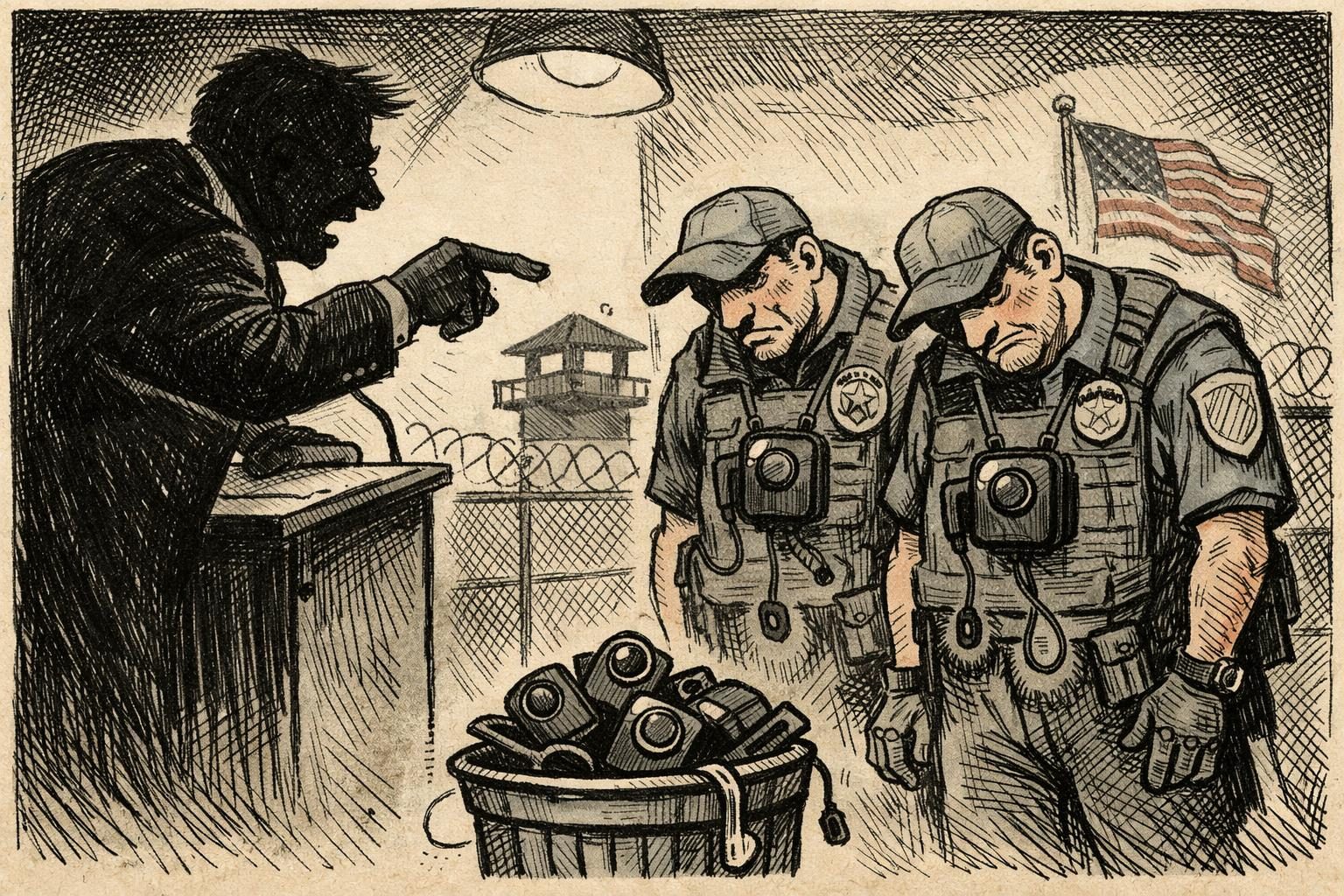
A new federal watchdog report has put Immigration and Customs Enforcement back under an uncomfortable spotlight, saying the agency needs to do a better job making sure body cameras are actually turned on when policy requires them to be. On its face, that sounds like a simple compliance issue, the kind of basic housekeeping that ought to be settled long before a force carries out high-stakes arrests and removals. In practice, the report lands like another warning flare over an agency whose enforcement actions have repeatedly prompted questions about how much of those encounters is being captured and how much is being left to official recollection. The timing matters because the critique comes after a string of violent or otherwise contentious operations in which cameras were missing, not activated, or later found to be of limited use in reconstructing what happened. That is exactly the sort of gap that leaves the public with fragments rather than a record, and those fragments are often all that exist when a confrontation becomes a legal or political fight.
The core problem identified by the report is not difficult to understand. A camera program does little good if officers are wearing the devices but fail to activate them at the moments when the public most needs a reliable record. When that happens, the agency effectively controls the evidence by omission, and the version of events that survives is whatever can be pieced together after the fact from internal accounts, witness statements, and whatever footage does exist. That is a recipe for mistrust in any police setting, and it is especially corrosive in immigration enforcement, where the people involved often already view the government with deep suspicion. Body cameras were sold as a way to increase transparency, improve accountability, and reduce disputes over force. If they are not consistently used as intended, they become less a safeguard than a symbol of the agency’s inability to police itself in real time. The report does not solve that problem, but it does make harder for officials to pretend the problem is isolated or minor.
The broader political context is hard to ignore. Immigration enforcement has become one of the most charged domestic functions of the federal government, and every allegation of excessive force tends to reverberate far beyond the individual case. Civil-rights advocates have argued for years that aggressive tactics without meaningful transparency predictably lead to abuse, or at minimum to the perception of abuse that is impossible to dislodge once trust has collapsed. Communities that live with the daily possibility of detention or family separation are not likely to see unrecorded encounters as harmless procedural lapses. They are more likely to see them as evidence that accountability is conditional, optional, or reserved for the rare occasions when the agency wants to demonstrate it. The latest report gives those critics a fresh opening to argue that the system remains built to favor enforcement speed over careful documentation. It also puts pressure on officials who insist that tough immigration policy can still be managed in an orderly and disciplined way, because discipline is easier to claim than to prove when the camera is off.
What happens next will likely depend on how seriously the agency treats the report’s findings and whether outside overseers decide that reminders are no longer enough. At minimum, the report is likely to intensify calls for stricter supervision, more training, and tighter controls to ensure cameras are activated whenever policy says they should be. It may also feed ongoing litigation or complaints tied to specific arrests and use-of-force incidents, especially if the absence of footage continues to leave critical questions unresolved. For the agency, the embarrassment is not just that it is being criticized again, but that the criticism is about a technology meant to prevent exactly this kind of controversy. If the official answer to a violent or disputed encounter is that the camera was there but not turned on, then the accountability system is failing at its most basic task. And once that happens repeatedly enough, every future use-of-force claim is forced to compete with the same damaging suspicion: that the public is being asked to trust a record the agency itself did not bother to create.
Comments
Threaded replies, voting, and reports are live. New users still go through screening on their first approved comments.
Log in to comment
No comments yet. Be the first reasonably on-topic person here.