
New immigration civil-penalty rule takes effect, adding another blunt instrument to the enforcement stack
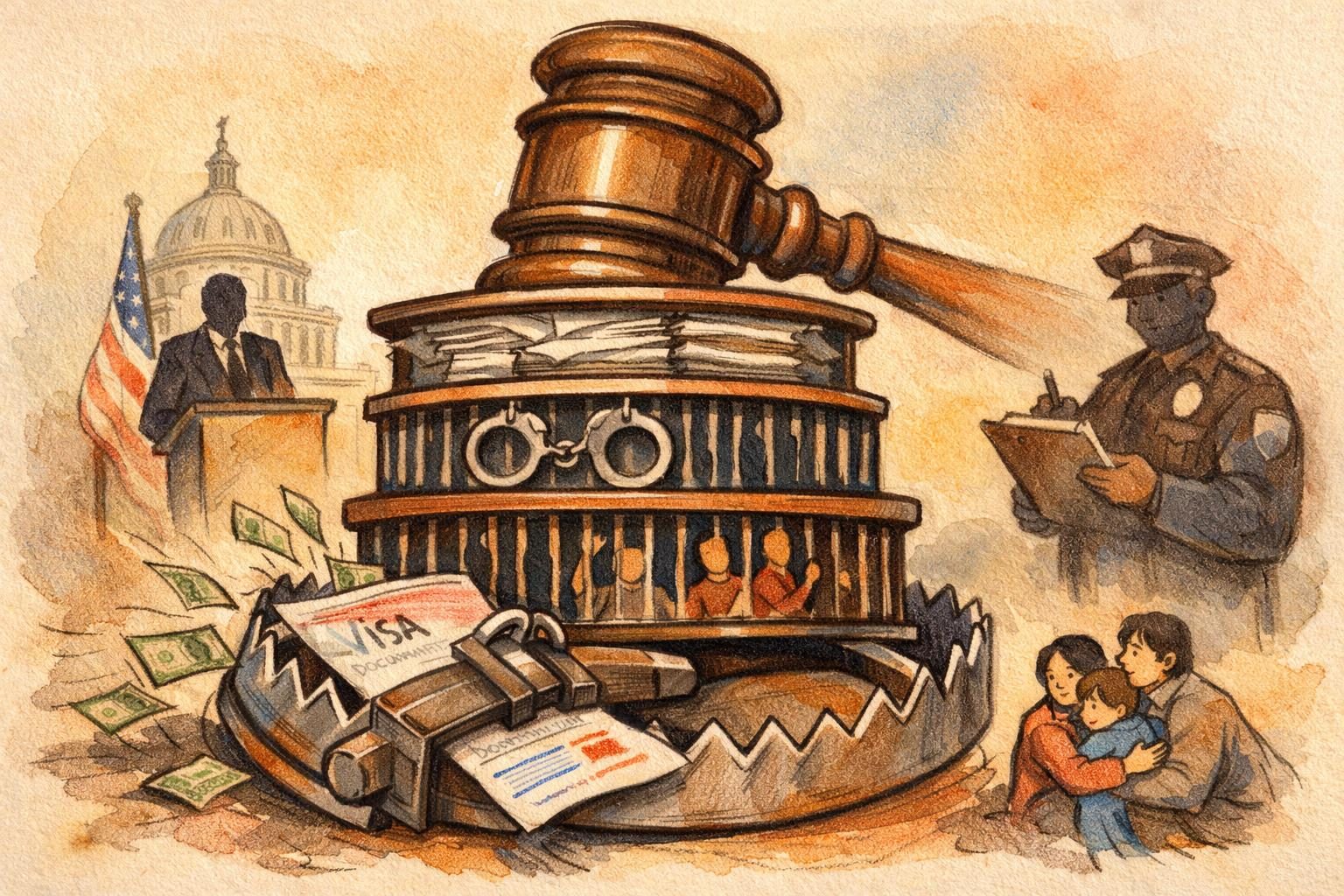
A new immigration enforcement rule took effect on October 14, putting a more formal civil-penalty framework behind certain violations tied to the immigration system. The rule was issued jointly by DHS, DOJ, and the Executive Office for Immigration Review, and it finalizes an earlier interim approach with only limited adjustments after the comment period. In practical terms, it gives the government a cleaner legal mechanism for assessing and collecting penalties in cases involving immigration-related violations and court-order problems. That may sound bureaucratic, but the consequence is straightforward: what was once largely an administrative or procedural dispute can now carry a monetary punishment layered on top of detention, removal, and court deadlines. The new rule is not a flashy policy shift, but it is a consequential one because it makes the punishment structure easier to deploy and harder to ignore.
The administration’s public posture is that this is just an enforcement housekeeping measure, a way to make the system function more smoothly and consistently. That framing is technically true in the narrowest sense, but it leaves out the more important reality that the rule strengthens an already punishing machinery. The agencies’ own regulatory record suggests they want a faster, more efficient way to impose penalties tied to immigration court orders and other listed violations. Efficiency is the sales pitch; pressure is the product. The state has long had the ability to detain, remove, and supervise people in immigration proceedings, but this rule expands the leverage by introducing another financial threat that can follow people through an already hostile process. For anyone already caught in the system, the difference between a court order and a court order plus a civil penalty is not abstract. It is another layer of consequences attached to a process that is already expensive, confusing, and unforgiving.
That is why critics are likely to see the rule as punishment dressed up as procedure. Immigration advocates have repeatedly argued that people in the system are often dealing with opaque requirements, shifting deadlines, limited access to counsel, and an adjudicatory structure that heavily favors enforcement. Labor groups and civil-liberties lawyers have made similar arguments in different forms, warning that civil penalties can function less like tailored regulatory tools and more like blunt-force deterrents. The government may describe a violation as a straightforward failure to comply, but many affected people experience immigration proceedings as a maze in which mistakes are easy to make and hard to undo. Under those conditions, a penalty regime can end up treating confusion, language barriers, and administrative complexity as if they were intentional defiance. That is a useful distinction for the agencies, because it turns systemic messiness into a collection problem. It is a bad distinction for everyone else, because it raises the cost of being human inside a system built to punish deviation.
The immediate significance of the rule is that it is now live, not merely proposed or debated. That matters because live rules create real enforcement opportunities, and the administration has been leaning hard on immigration punishment more broadly. A finalized penalty framework gives agencies another tool to combine with existing enforcement measures, including detention, removal proceedings, and court-based pressure. It also increases the likelihood of legal challenges, since rules like this often invite disputes over notice, discretion, proportionality, and the scope of agency authority. The basic questions are not complicated: who can be fined, for what conduct, under what standards, and with what protections against arbitrary use. Those questions tend to sound dry until they hit a person who is trying to keep a case alive, stay in the country, or avoid a financial sanction that can follow them long after the underlying dispute is over. So while the government may see this as a tidy enforcement fix, opponents are likely to view it as another expansion of punishment wrapped in administrative language. If courts get involved, the rule’s real test will be whether its legal polish can survive the fact that, in practice, it sharpens the stick instead of softening the blow.
Comments
Threaded replies, voting, and reports are live. New users still go through screening on their first approved comments.
Log in to comment
No comments yet. Be the first reasonably on-topic person here.