
Judge Slaps Down the White House’s Press-Pass Tantrum
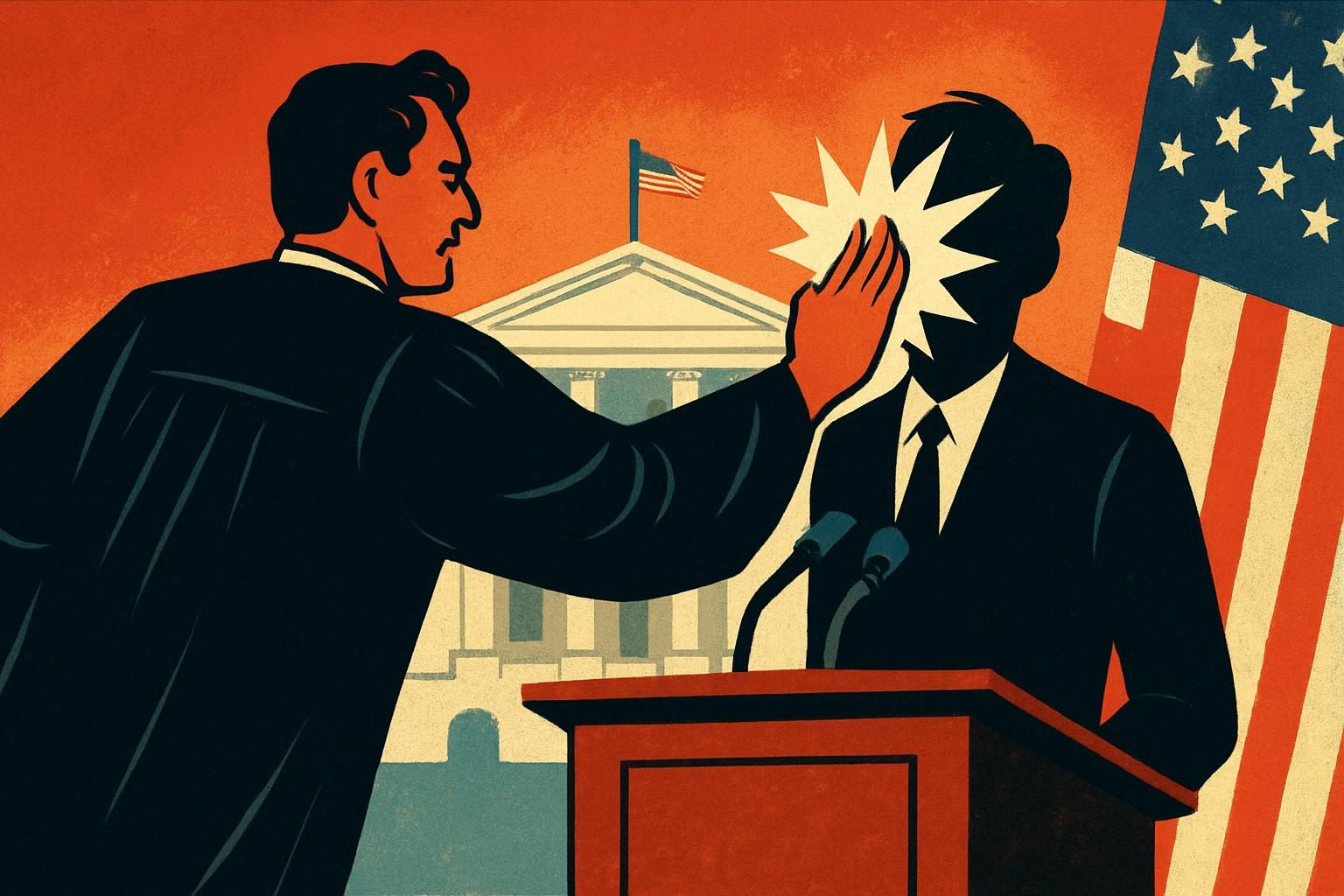
A federal judge has extended an order blocking the Trump administration from carrying out its attempt to strip White House press credentials from CNN, MS NOW, and Politico, keeping the outlets in the pool for now and turning a familiar skirmish over access into a live constitutional fight. What the White House framed as an administrative decision now looks, in the court’s view, a lot more like an effort that may run headlong into the First Amendment. The immediate effect is straightforward: the administration cannot use the credentialing process as a blunt instrument while the lawsuit proceeds. The larger effect is more embarrassing for a White House that has made conflict with the press part of its political identity and seems to have assumed that irritation and authority were interchangeable. Instead, the court has signaled that access rules are not simply a matter of presidential preference.
The judge’s ruling matters because it does more than freeze one specific personnel decision. By finding that the challenged move is likely to fail on constitutional grounds, the court has raised the stakes for the administration and made the case about more than a temporary access spat. White House press credentials are not a ceremonial perk; they are the mechanism that determines which reporters can get close enough to cover the presidency in real time, ask questions in confined settings, and follow developments that shape national policy. That makes any decision to remove outlets from the pool especially sensitive, since the practical consequence is not just inconvenience but exclusion from a core part of presidential coverage. The court’s intervention suggests that when the government starts handing out or taking away access in ways that appear retaliatory, it invites scrutiny that is much harder to dismiss than a talking point. In other words, if the White House thought it could make the pool smaller and the criticism quieter, the judiciary has now offered a firm correction.
The dispute also lands in a political environment where hostility toward the press has become an asset rather than a liability for the administration. Trump and his aides have long treated unfriendly coverage as proof of bias and have frequently tried to blur the line between criticism of reporting and punishment of reporters. That posture may play well with supporters who already see the media as an opponent, but it becomes much harder to defend when translated into official action with real consequences. A credential revocation is not just a symbolic swipe; it is an attempt to alter who gets access to the president and on what terms. That is why the lawsuit matters far beyond the three news organizations involved. If the administration can remove disfavored outlets from the pool because their coverage annoys the White House, then access becomes a reward system for compliance rather than a press function governed by neutral principles. The court’s order suggests that kind of model is exactly what constitutional safeguards are meant to block.
For now, the practical reality is that the administration has been told to stand down while the case moves forward, and that alone is a significant setback. The White House can keep arguing that it has legitimate reasons for its credential decisions, but it will have to do so under the burden of a judicial finding that the challengers are likely to prevail. That puts the administration in a difficult position: either it doubles down on a move that now carries the whiff of retaliation, or it backs away and admits the fight was more about political muscle than governing principle. Neither option is particularly flattering. The episode also serves as a reminder that the courts are still willing to treat press access as a serious constitutional issue rather than a backstage argument over whose turn it is on the briefing-room mic. The result is a temporary reprieve for the outlets targeted by the White House and a sharper warning to an administration that has repeatedly acted as though institutional norms are optional if they get in the way of a grudge. That may not end the fight, but it has definitely changed the terms of it.
Comments
Threaded replies, voting, and reports are live. New users still go through screening on their first approved comments.
Log in to comment
No comments yet. Be the first reasonably on-topic person here.