
Judge restores Seattle’s court-appointed U.S. attorney after Trump firing
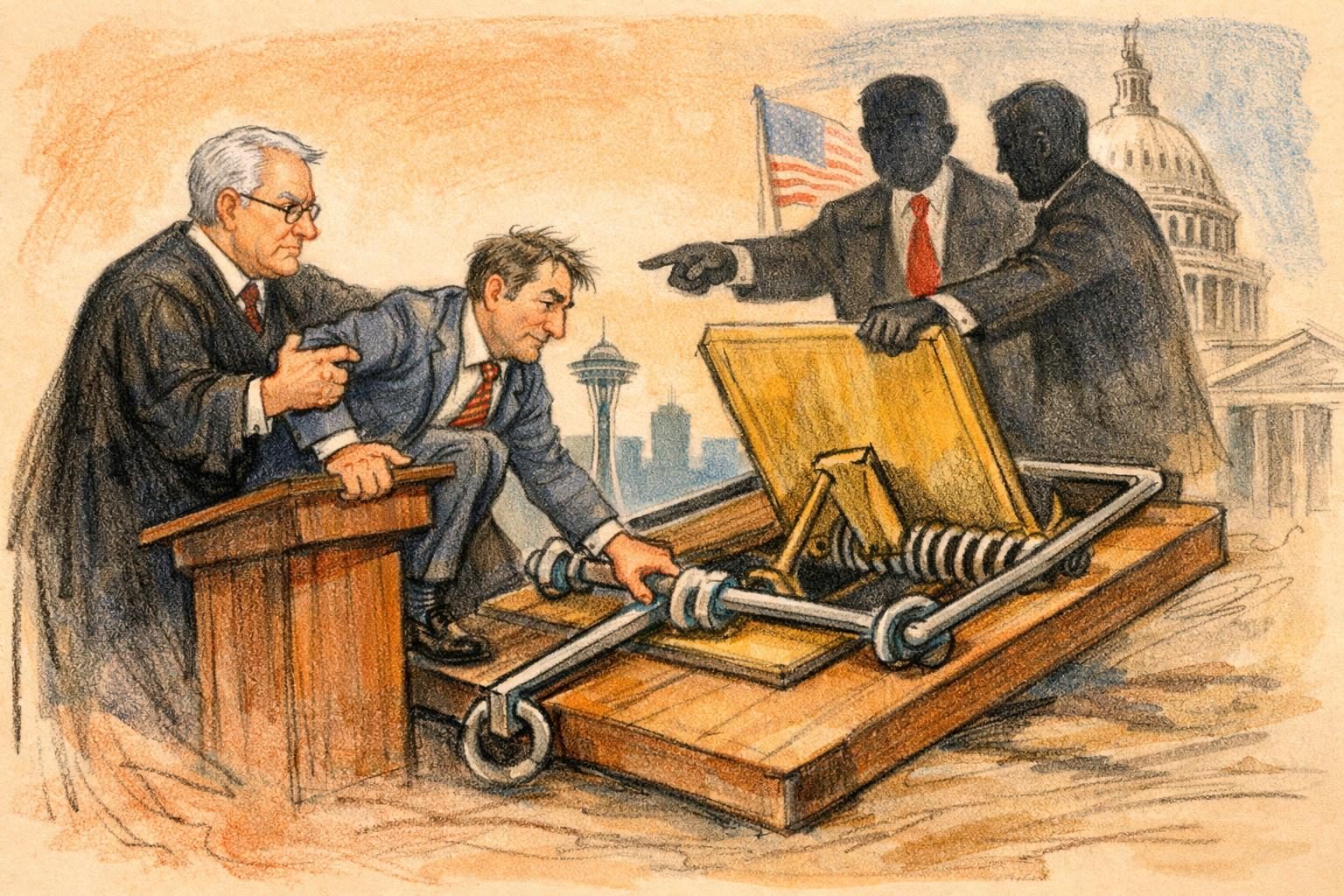
A federal judge in Washington state has undone President Trump’s effort to remove Seattle’s court-appointed U.S. attorney, restoring Roger Rogoff to the job and sharply curbing what the administration appeared to treat as a straightforward personnel move. The ruling landed as a direct rebuke to a White House that has repeatedly pushed the boundaries of executive authority, especially in places where the law places procedural limits on who gets to run a federal office. In this case, the judge found the firing unlawful, a word that does a great deal of work in a dispute over whether the administration can simply swap out a prosecutor when the normal appointment process has not produced a Senate-confirmed replacement. That makes the case more than a local staffing quarrel. It is a test of how far the executive branch can go in treating law enforcement leadership as something it can rearrange on command.
The position at the center of the fight matters because U.S. attorneys do not just sign paperwork and attend ceremonies. They set charging priorities, shape the internal culture of their offices, and influence how federal law enforcement interacts with the communities and state officials in their districts. When that post is occupied by a court-appointed official, the legal rules governing removal can become just as important as the policy preferences of the president. The administration’s move in Seattle appeared to rest on a broad view of presidential control, one that would let the White House impose its preferences even where the statutory structure says otherwise. The judge’s ruling cut against that theory and in doing so sent a message that legal authority still matters even when the executive branch would prefer to move quickly. If the White House believed it could replace a court-appointed prosecutor at will, the order suggests that belief was at minimum premature and possibly flatly inconsistent with the law.
The broader stakes go well beyond one office in one district. If the executive branch can unseat a court-appointed U.S. attorney whenever it wants, then the safeguards that are supposed to preserve some independence in Justice Department posts become much easier to strip away. That is why the ruling has been read as part of a larger confrontation over whether the administration is trying to centralize control over institutions that are supposed to operate within legal guardrails. Critics will see the episode as another effort to turn federal law enforcement into a more obedient arm of the presidency, with less room for independent judgment and fewer obstacles to political intervention. Supporters of the president are likely to argue that elected leaders should have more say over who runs federal prosecutors’ offices, but that position runs into a basic problem when a court concludes the dismissal itself lacked legal footing. In other words, the dispute is not just about whether the White House wanted a different person in the seat. It is about whether the White House had the power to make that choice in the first place.
The immediate practical effect of the ruling is that Rogoff is back in place, at least for now, and the administration’s attempt to assert control over the Seattle office has been checked by the judiciary. That leaves a live question about what happens next, both in this district and in others where similar fights could emerge if the administration keeps pressing for greater sway over prosecutor appointments and removals. The court’s intervention also creates a reminder that federal judges may be willing to step in when political actors push past statutory limits and try to recast formal legal processes as discretionary management. For the White House, the outcome is an institutional setback that goes beyond the individual case. For everyone else watching the balance of power between the presidency and the Justice Department, it is another example of how quickly an aggressive personnel decision can turn into a constitutional and statutory brawl. And if the administration continues to treat these slots like prizes to be taken and reassigned at will, it should expect more resistance from the courts, and more rulings that make clear federal law is not just advice the government can ignore when it becomes inconvenient.
Comments
Threaded replies, voting, and reports are live. New users still go through screening on their first approved comments.
Log in to comment
No comments yet. Be the first reasonably on-topic person here.