
Supreme Court leaves the FCC staring at its own process in a fresh elections-law fight
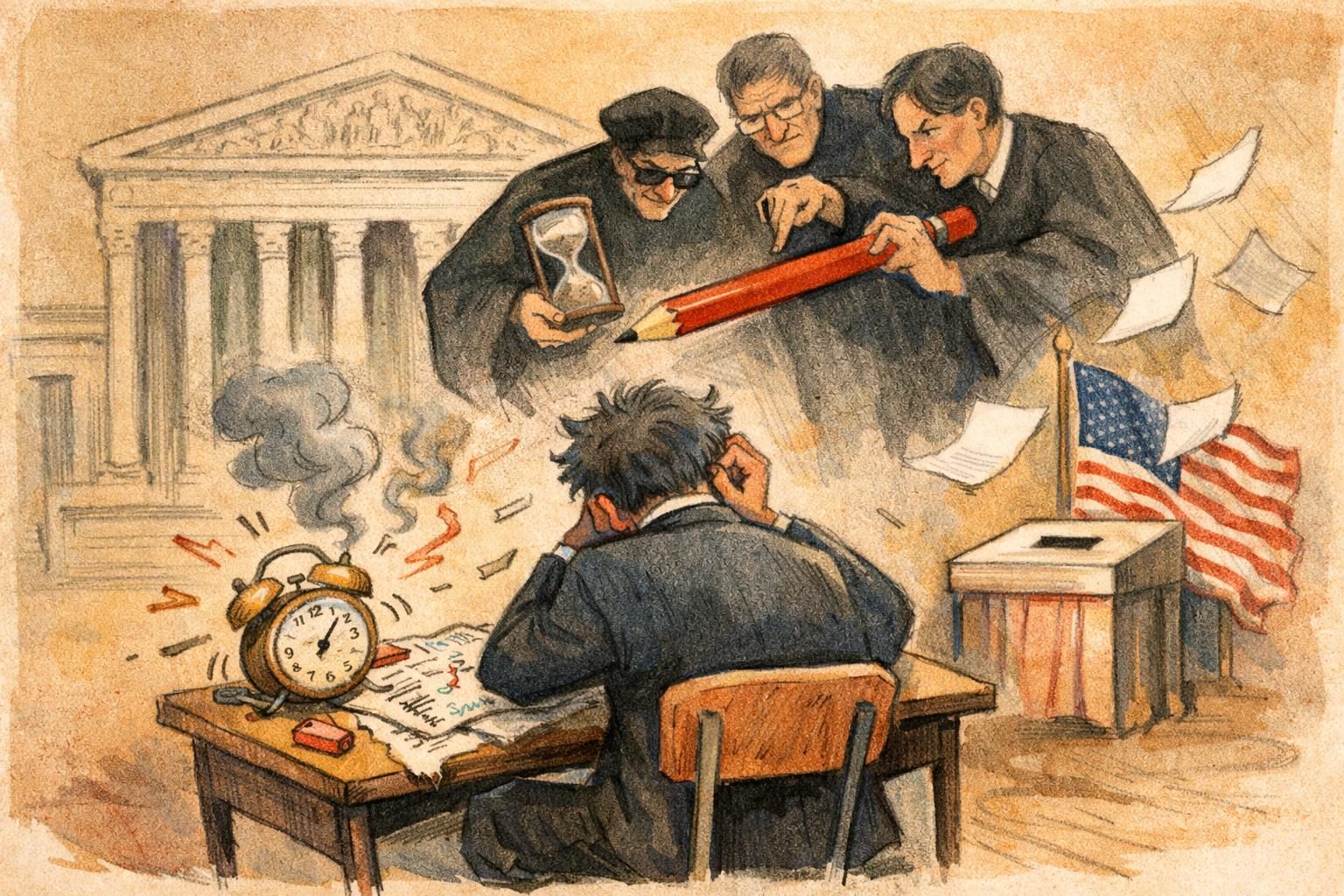
The Supreme Court stepped back into a dispute over Federal Communications Commission procedure on October 14, issuing another per curiam ruling in FCC v. Brown and leaving the agency once again to explain why its own timing rules should not become the center of an election-year fight. The case is not about a dramatic constitutional showdown or a sweeping rewrite of communications law. It is, instead, a very Washington kind of problem: a technical question about when a party is allowed to seek judicial review of agency action, and whether the FCC can insist that its internal process run its full course before a federal court gets involved. That may sound narrow, but in the world of election-related disputes, procedural timing can decide who gets leverage, who gets relief, and who ends up waiting so long that the dispute loses its practical force. The Court’s latest move makes clear that those questions are not academic. They can shape whether a challenge gets heard in time to matter.
At the heart of the fight is a familiar administrative-law tension. On one side is the agency’s interest in finishing its own review before being dragged into court, a position that reflects the basic idea that agencies should be allowed to correct errors, build records, and apply their expertise without premature litigation. On the other side is the challenger’s argument that delay itself can be a kind of denial, especially when the underlying dispute is tied to elections and timing windows are short. The specific issue in Brown turns on statutory timing and whether the FCC can be forced to move faster before judicial review can proceed. That kind of dispute can look abstruse on the page, but it matters because process is often destiny. If a party must wait for an agency to act before going to court, the agency effectively controls the calendar. If a party can run to court sooner, the agency loses some of that power, and the court gains a role before the matter is fully baked.
The Court’s ruling arrives after earlier emergency activity in the same case, which suggests the justices are treating the dispute as more than a routine quarrel over administrative housekeeping. A per curiam decision, especially in a case that has already seen emergency attention, often signals a Court trying to manage a procedural knot without turning the opinion into a broader lecture. Even so, the practical stakes here are obvious. Election-law disputes routinely live or die on deadlines, and a delay of days or weeks can be enough to change the real-world effect of any ruling. That is why the FCC’s process is under such scrutiny now: if the agency’s internal review moves too slowly, the delay itself can become the story. The Court’s posture also hints at a larger reluctance to let agencies dictate the pace of litigation when time-sensitive rights are involved. The result is a reminder that in modern election fights, the battle often begins not with the merits, but with the calendar.
For the FCC, the embarrassment is not just that it lost a procedural skirmish, but that the dispute exposes the agency’s own process to public grading at precisely the moment it would prefer less drama. A process-heavy ruling can be especially awkward for an agency because it forces a conversation about institutional competence rather than substantive policy. The question becomes whether the FCC’s procedures are efficient enough, clear enough, and fast enough to keep pace with the disputes they generate. That is an uncomfortable place for any bureaucracy, but particularly one dealing with election-adjacent controversies where delay can have outsized consequences. The Court’s ruling does not necessarily resolve every underlying issue in the broader conflict, and it does not promise that the next round will be any less messy. What it does do is reinforce that the agency cannot assume its internal timing will insulate it from review. In a fight like this, process is not background noise. It is the main event, and for now the FCC is the institution left answering for the clock.
Comments
Threaded replies, voting, and reports are live. New users still go through screening on their first approved comments.
Log in to comment
No comments yet. Be the first reasonably on-topic person here.