
Supreme Court steps in to halt lower-court order against the FCC
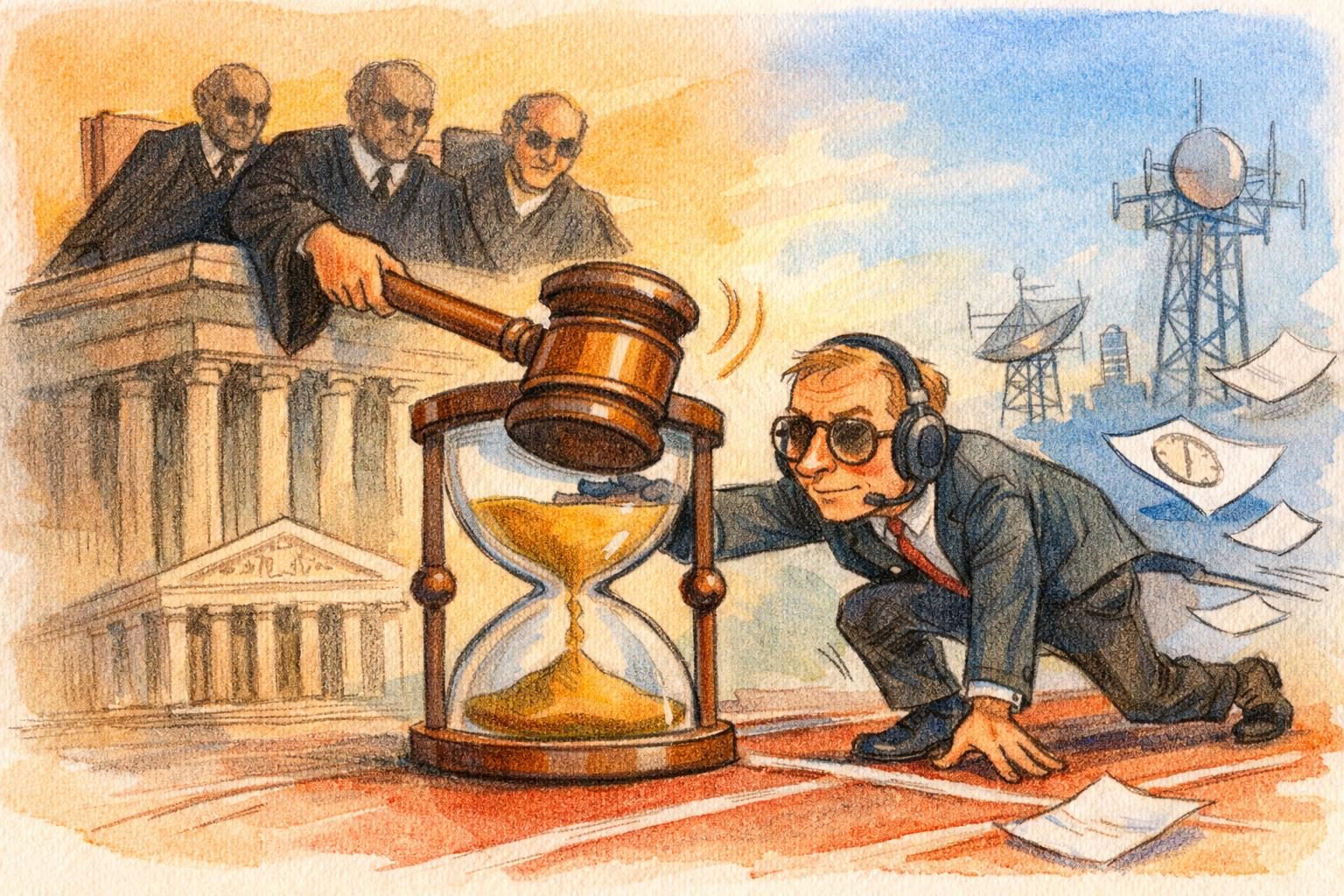
The Supreme Court stepped in on October 14 to put a temporary halt to a Fourth Circuit order that had tried to force the Federal Communications Commission to resolve an application for review within 48 hours. The practical effect is immediate and plain: for now, the FCC keeps control over its own timetable instead of being pushed into a court-imposed race against the clock. The stay does not settle the underlying dispute, and it does not decide whether the agency will ultimately have to act on the application in any particular way. What it does do is block a lower court from turning impatience into a hard deadline. That alone makes the order significant, because timing in administrative law is often the difference between meaningful review and a case being effectively decided by delay.
The dispute is narrow, but the stakes are not trivial. Administrative agencies routinely move at a pace that frustrates parties who want faster answers, and courts sometimes intervene when delay appears excessive or strategic. But the Supreme Court’s move signals that there is a line between judicial oversight and judicial management, and that line may have been crossed here. A 48-hour deadline is an unusually aggressive command in any regulatory proceeding, especially one involving internal agency review and deliberation. The lower court’s order appears to have treated the matter as urgent enough to justify extraordinary speed, while the Supreme Court’s response suggests skepticism that a court should dictate that kind of timeline without stronger justification. In effect, the high court has told the Fourth Circuit to back off, at least for the moment, and let the agency operate within its own process.
For the FCC, the stay is a procedural win, but a meaningful one. It preserves the agency’s breathing room and protects its ability to decide when the application should be reviewed and how quickly that review should proceed. That matters because administrative timing is not just a housekeeping issue; it can shape the substance of a case by determining whether parties obtain relief, remain in limbo, or lose leverage as time passes. If the agency were forced into a rush decision, it could alter both the quality of the review and the broader posture of the dispute. The stay also undercuts the message the Fourth Circuit sent, which was that the FCC needed a judicial prod to move faster. The Supreme Court’s intervention suggests a different view: courts can demand action when delay becomes unreasonable, but they should be careful about substituting their own schedules for an agency’s deliberative process.
The order is likely limited in immediate scope, but the institutional signal travels farther. Litigants and administrative lawyers pay close attention when the Supreme Court steps in to restrain a lower court from micromanaging an agency proceeding, especially where the lower court has attempted to impose a deadline that looks more managerial than remedial. The message here is not that agencies can move at any pace they like, nor that courts never have power to force action. It is that a reviewing court needs to justify why a particular agency process must be accelerated, and why ordinary agency timing is not enough. That distinction matters because administrative law often turns on whether a court is correcting unlawful delay or simply trying to hurry the government along. In this instance, the Supreme Court appears to have concluded that the Fourth Circuit moved too quickly from concern about delay to an outright command.
The stay also fits a broader pattern in which the Supreme Court has been willing to police lower-court improvisation when it thinks those courts are venturing too far into the administration of executive branch processes. That does not mean the FCC is out of the woods, and it does not mean the underlying controversy will end quietly. The application for review still exists, and the parties still have their dispute. But the immediate procedural advantage now belongs to the agency, not its opponents. The challengers lose momentum, the FCC gains time, and the lower court’s 48-hour deadline is, for now, off the table. In a case defined by procedural pressure, that is enough to change the balance of power even without touching the merits.
The timing of the Supreme Court’s move, posted the same day as the order itself, makes this more than a background administrative footnote. It is a live correction to a lower-court directive that the justices were apparently not willing to let stand, at least temporarily. The legal question is concrete, the docket is current, and the effect is easy to understand: the FCC is not being forced to snap to a judicial stopwatch. That does not resolve whether the agency eventually must act, or whether delay in this matter could later be challenged again on different grounds. It does, however, confirm that appellate impatience is not a blank check. For now, the Supreme Court has made clear that a court order demanding instant agency action is not automatically the last word.
Comments
Threaded replies, voting, and reports are live. New users still go through screening on their first approved comments.
Log in to comment
No comments yet. Be the first reasonably on-topic person here.