
White House opens a committee to investigate Lisa Cook, escalating the fight over Fed independence
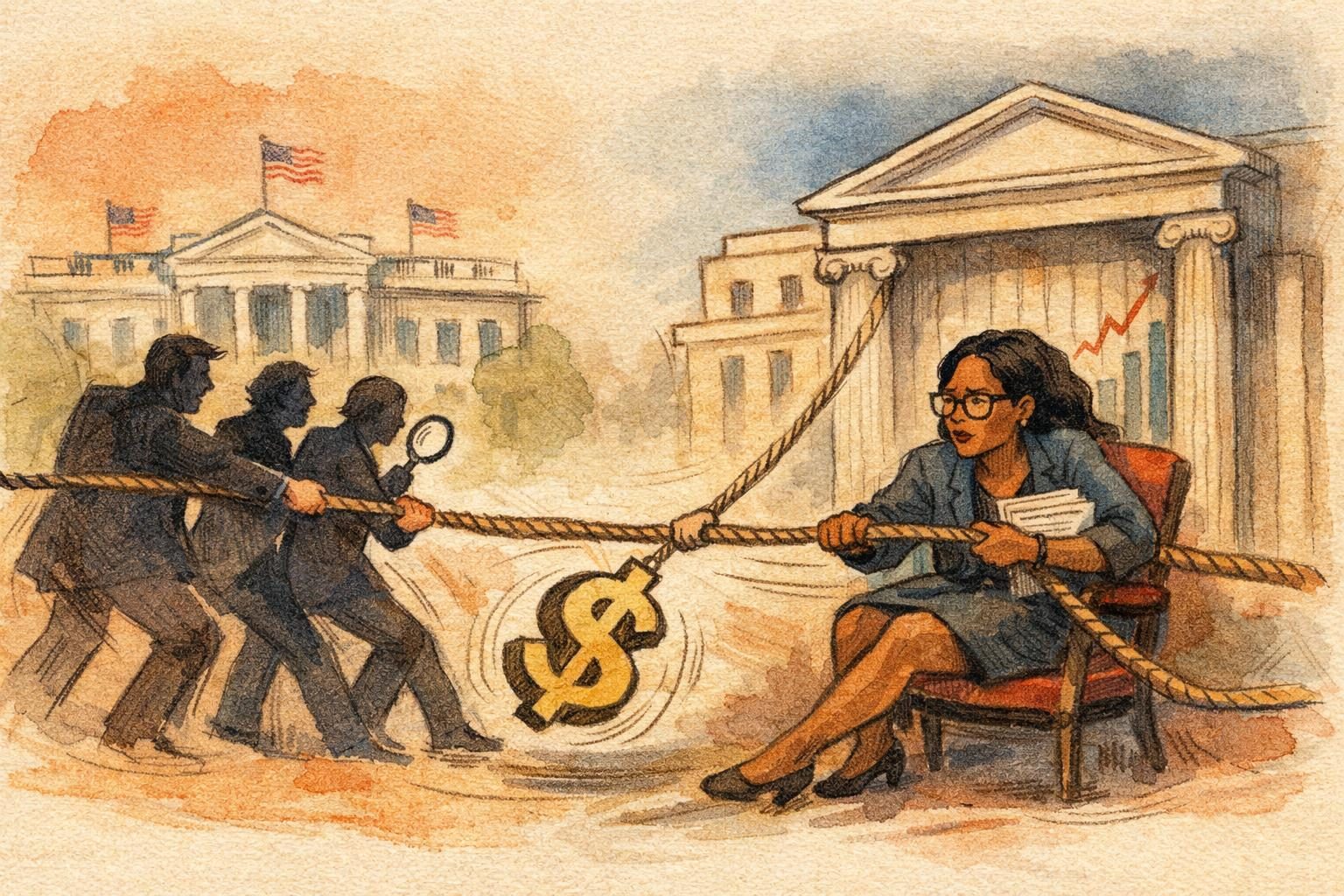
The White House has formally created a committee of inquiry to investigate allegations that Federal Reserve Governor Lisa Cook made false statements, turning what might have remained an internal personnel matter into a public test of how much pressure the executive branch can place on the central bank. The move does not amount to a removal, and it does not resolve the underlying allegations, but it does signal that the administration is willing to use formal machinery to intensify the dispute. That alone changes the politics of the moment. A presidential action aimed at a Fed governor is never just about one official; it inevitably becomes a proxy fight over the boundaries of central bank independence, the degree of insulation monetary policymakers should have from partisan power, and whether the White House is acting as a neutral investigator or as an aggressive institutional combatant.
The administration’s position is that it is following a legitimate process, one that allows it to examine allegations seriously rather than sweeping them aside. On that reading, the committee is a procedural step designed to build a record and determine whether the claims against Cook warrant further action. The White House can argue that it is not prejudging the outcome and that allegations involving false statements, if substantiated, deserve scrutiny regardless of the officeholder involved. But the political context makes that defense harder to separate from the broader confrontation around the Fed. Even if the committee is presented as a routine inquiry, it arrives at a time when every signal from the central bank is heavily interpreted through the lens of inflation, interest rates, and the next election cycle. That means a process that might otherwise seem bureaucratic now lands as a highly visible act of leverage.
Critics are likely to see the same move very differently. To them, the creation of a committee of inquiry looks less like a detached fact-finding effort and more like an attempt to box in a central bank official and remind the institution that the White House has tools to keep the pressure on. The Fed’s independence has long been treated as a guardrail against exactly this kind of raw political interference, and the timing of the action will only sharpen that concern. A formal inquiry is not the same thing as a firing, but it can have a chilling effect all the same because it places the official under a cloud and sends a message to other policymakers watching from inside the institution. When the White House starts building quasi-judicial structures around a Fed governor, the dispute stops looking like an isolated ethics matter and starts looking like a broader effort to shape the behavior of an independent agency through public and procedural force. That is why the body language matters here as much as the legal language.
The immediate fallout is likely to spread first through legal and financial circles, where any action touching the Fed gets parsed for what it may mean about institutional stability and future personnel fights. Congress is likely to become the next arena, especially if lawmakers conclude that the administration is using the allegations as cover for a wider campaign to discipline the central bank. Democrats and Fed watchers will almost certainly frame the move as another attempt to bully an independent regulator, while the White House will defend it as a necessary and orderly response to possible misconduct. Both narratives can be true to parts of the record without fully settling the deeper question, which is whether the administration is simply enforcing standards or testing how far it can push without appearing to attack the Fed outright. For now, the committee’s creation is the story: it is a formal escalation, it materially changes the stakes, and it gives the administration a vehicle to keep the pressure on while insisting it is doing nothing more than following procedure. In practice, that may be the very line between governance and intimidation that the country is now being asked to watch in real time.
Comments
Threaded replies, voting, and reports are live. New users still go through screening on their first approved comments.
Log in to comment
No comments yet. Be the first reasonably on-topic person here.