
California sues ICE over civil immigration arrests at courthouses
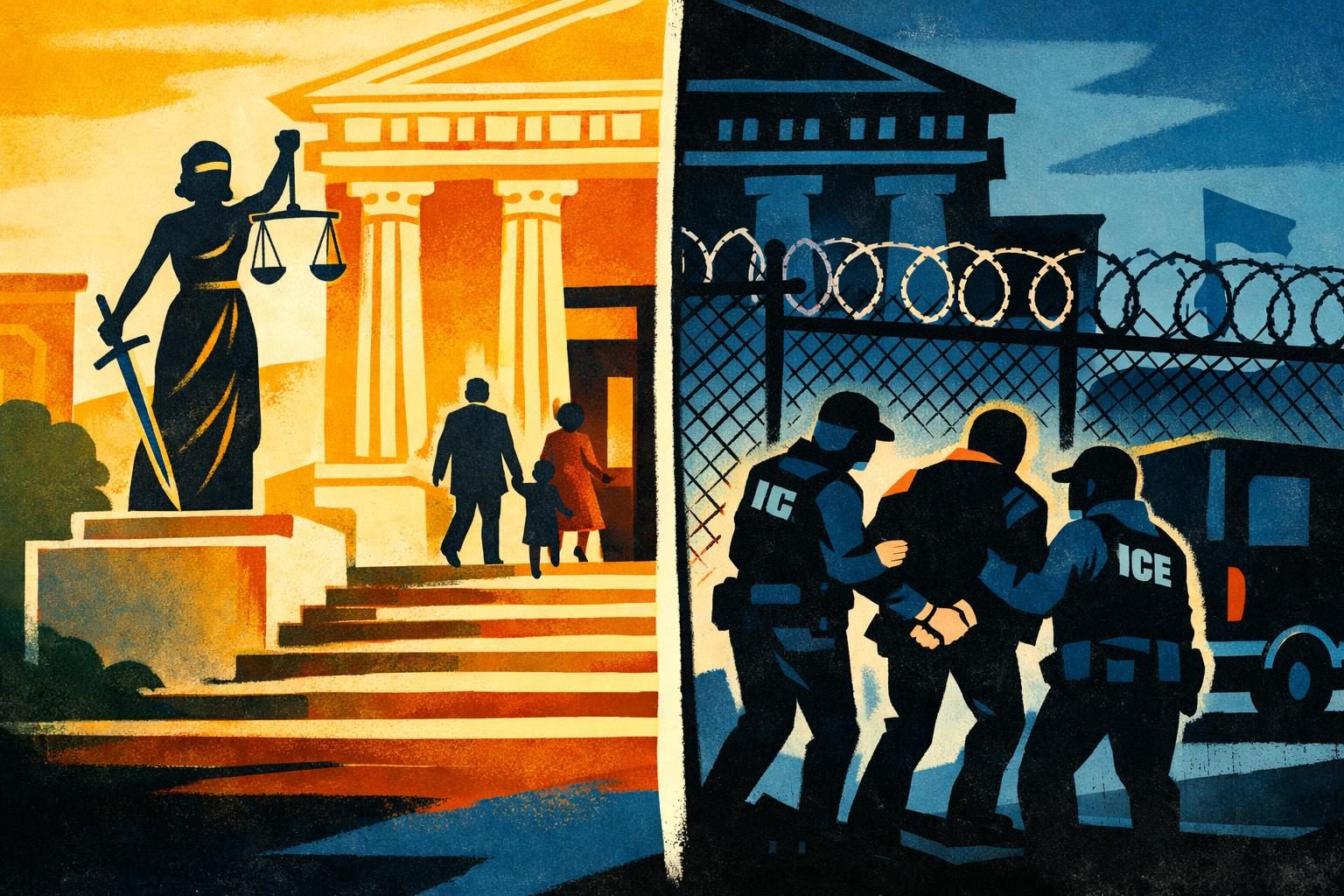
California is taking federal immigration enforcement to court again, this time over a practice the state says is doing more than rounding up people who lack legal status. On October 15, Attorney General Rob Bonta announced a lawsuit challenging civil immigration arrests at California courthouses, arguing that the practice interferes with access to justice and disrupts the state’s ability to administer its own court system. The basic dispute is not hard to understand: the state says courthouses are supposed to be places where people can appear to handle legal matters without wondering whether the trip will end in detention. Federal immigration officials, by contrast, have used courthouse arrests as one more tool of enforcement. California’s argument is that turning those buildings into hunting grounds creates fear that reaches well beyond the people actually targeted. If that fear keeps people away from hearings, then the legal system does not function normally, even if the courtrooms remain open on paper.
The lawsuit lands in a space that is both practical and symbolic, because courthouses are where the state expects people to show up and participate in public justice without needing to calculate the risk of being swept into immigration custody. That expectation matters in civil cases as much as in criminal ones, since tenants, parents, witnesses, victims, and parties to disputes often have no real option but to appear when ordered. If they do not come, judges cannot resolve cases the way they are supposed to, and the delay or breakdown affects everyone else waiting on the system. California’s complaint frames courthouse arrests as a direct interference with that process, not just a side effect of broader federal policy. The state is essentially saying that enforcement at courthouse doors chills participation inside the courthouse itself, which is why it sees the practice as a threat to the administration of justice. The worry is not theoretical or abstract, because the entire premise of a courthouse is that the public can come in and use it without first being forced to guess which government agency is waiting outside.
Supporters of the lawsuit are likely to argue that the federal government is taking a heavy-handed approach to immigration enforcement that deliberately spreads uncertainty into ordinary civic life. If people believe any appearance at court could expose them or someone they know to arrest, the result is a quiet but powerful deterrent effect, and that effect can spread through families and communities well beyond the courthouse steps. Opponents will likely say that enforcement near courthouses is an obvious part of a broader immigration strategy and that federal officers should not be barred from carrying out civil arrests simply because the location is inconvenient or uncomfortable. But that defense runs straight into the state’s central point: a courthouse is not just another public building. It is where the government asks people to tell the truth, comply with orders, and trust the process, and that trust gets harder to sustain if people think the building itself is part of a dragnet. Even if the federal government does not intend to stop people from coming to court, the practical effect of these arrests may be to make the legal system less accessible for the very people who most need it.
The case is also likely to matter well beyond California, because courthouse arrests are not being treated here as a narrow local quarrel but as a test of how far federal enforcement can reach into state judicial spaces. Other states will be watching closely to see whether a court accepts California’s argument that immigration arrests in and around courthouses go too far and burden the state’s own ability to provide justice. If California wins even a partial injunction, the decision could become a roadmap for limiting similar conduct elsewhere and for drawing a clearer line around places where people must be able to appear without fear. If California loses, the federal government will have a stronger claim that courthouse enforcement is just another ordinary tool available to immigration officers, even if it makes public participation in the courts more hazardous. Either outcome will say something important about the balance between federal power and access to state justice systems. For now, the lawsuit signals that California is no longer willing to treat courthouse arrests as an unfortunate side issue. It is presenting them as a direct challenge to whether the courts remain open in any meaningful sense to everyone who is supposed to use them.
Comments
Threaded replies, voting, and reports are live. New users still go through screening on their first approved comments.
Log in to comment
No comments yet. Be the first reasonably on-topic person here.