
Judge tosses Brennan bid to preserve DOJ records
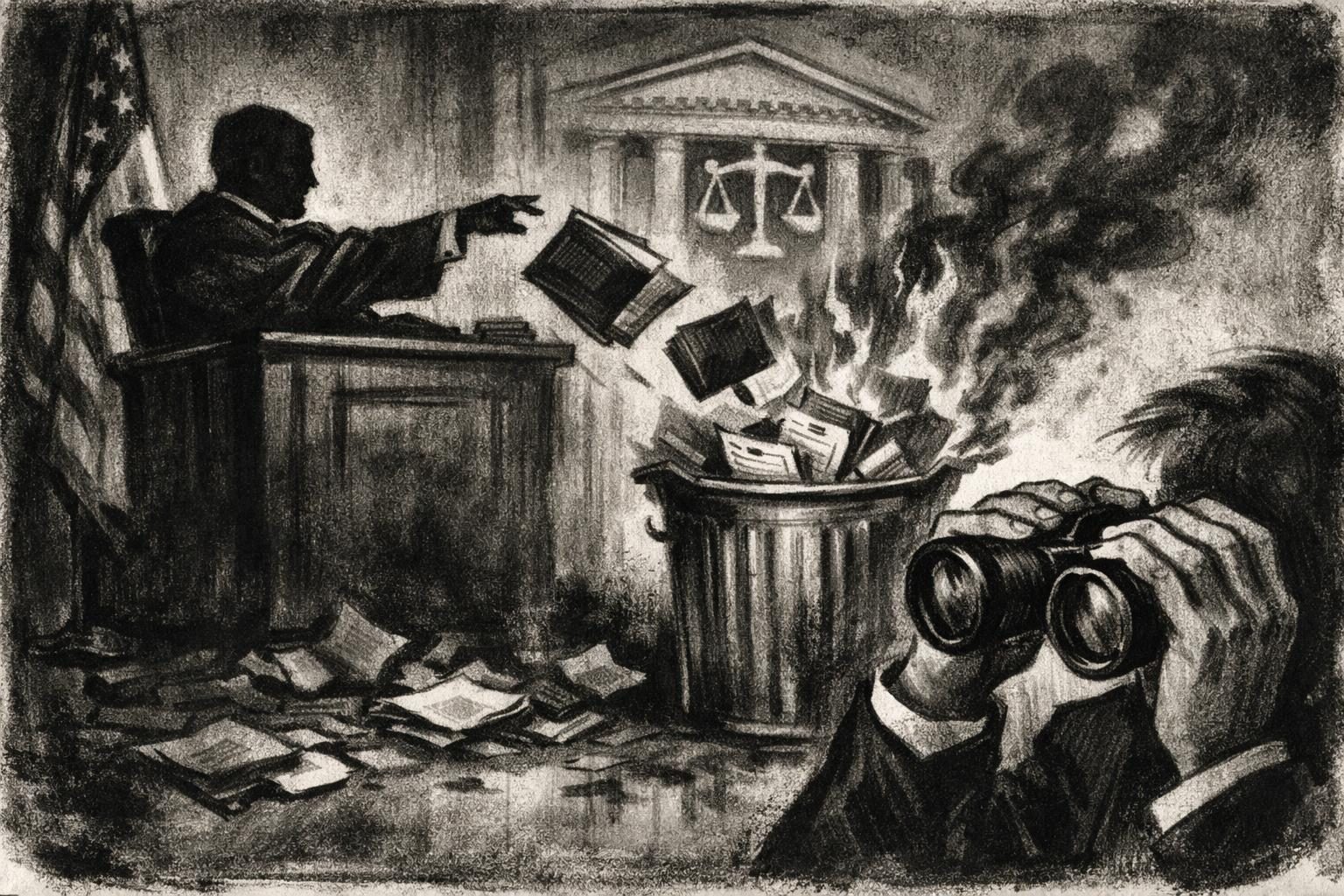
A federal judge has turned aside John Brennan’s bid to force the Justice Department to preserve records tied to a possible criminal case against him, leaving the former CIA director without an emergency court order that might have locked down the paper trail before any formal prosecution fight begins. Brennan had argued that the department’s recent conduct gave him reason to worry that records could be mishandled, lost, or otherwise put out of reach before the legal process could fully address the issue. The court was not persuaded that he had made the sort of specific, immediate showing that would justify that unusually aggressive remedy. In practical terms, the ruling keeps the department in control of its own materials for now and denies Brennan a procedural win at the threshold stage. It is not a ruling on guilt, innocence, or the merits of any eventual case, but it does leave the government with the advantage of moving first. For Brennan, it means the fight shifts back to the slower, messier terrain of trying to protect himself if the inquiry ever matures into charges.
The narrow legal result, though, is only part of why the dispute matters. The bigger story is the way the case lands in the middle of a wider credibility problem for the Justice Department, where the argument is not just about who is being investigated but about how the institution handles the machinery of power. A request to preserve records sounds bureaucratic on its face, but in a case involving a former senior intelligence official and a possible criminal probe, it becomes a proxy for much larger concerns about fairness, diligence, and whether the department can be trusted to manage sensitive material without sloppiness or bias. Brennan’s lawyers were trying to capture that risk before it became irreversible, and the judge’s refusal does not erase the concern that prompted the filing in the first place. If anything, it keeps that concern hanging in the air. When a Justice Department is accused of moving aggressively against a prominent Trump critic while also facing questions about how it maintains records, every procedural fight takes on a faintly poisonous cast. Even routine litigation starts to look like evidence in a broader case about institutional drift.
That is where the optics get ugly. Supporters of the government will say, correctly, that courts are supposed to demand more than speculation before issuing extraordinary orders that interfere with executive branch operations. Judges do not hand out preservation mandates simply because a plaintiff fears the worst. There has to be a concrete basis for believing that evidence is at risk and that ordinary protections are not enough. But critics are likely to see the decision through a different lens: not as a clean rejection of an overreaching request, but as another episode in which an already embattled department asks for trust it has not fully earned. The department’s defenders may insist the merits of any future investigation should be judged on their own facts, not on generalized suspicion. That is fair as far as it goes. Yet public confidence does not form in neat compartments. If an agency spends months or years generating doubts about selective enforcement, sloppy documentation, or vendetta-style targeting, then even a standard procedural ruling can look like a reinforcement of the problem rather than a correction. The law may be operating on one track while public perception is running on another.
Brennan still has options if the investigation produces something more concrete, and the case is far from over in any meaningful sense. But the ruling does hand the department a short-term institutional win at a moment when every such win carries reputational baggage. The government gets to keep the steering wheel, at least for now, yet that advantage comes with the lingering suggestion that the system is too comfortable operating on instinct and after-the-fact justification. That suggestion is hard to shake when the underlying dispute involves a high-profile critic of Donald Trump, a Justice Department already dogged by complaints about selective enforcement, and a paper trail that one side says must be protected before it disappears into the ordinary churn of bureaucracy. None of that proves bad faith, and none of it guarantees that Brennan is the victim of anything more than aggressive law enforcement theater. But it does explain why the fight is resonating beyond the parties in the case. The larger message is not flattering: in an environment already thick with suspicion, the department keeps finding ways to look less like a neutral institution than a shop that investigates first and worries about the guardrails later. That is a bad look in any democracy, and it is an especially bad one when the institution involved is supposed to be selling the public on the idea that no one is above the law, no matter how loudly the law itself appears to be wobbling.
Comments
Threaded replies, voting, and reports are live. New users still go through screening on their first approved comments.
Log in to comment
No comments yet. Be the first reasonably on-topic person here.