
Trump team sues California over ‘likely’ noncitizen ballots
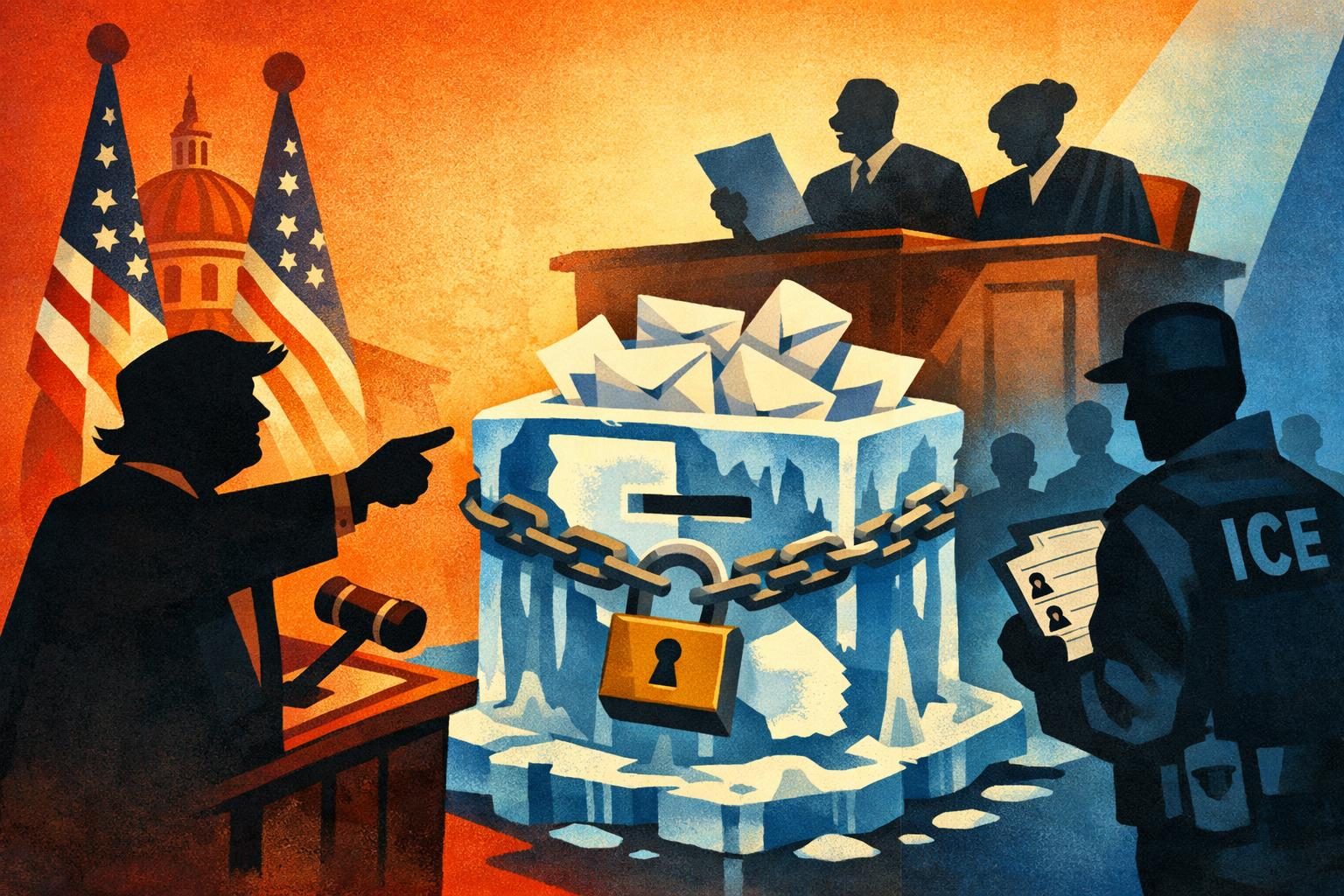
The Trump administration has taken its fight over California election administration into federal court, filing a new lawsuit Thursday that seeks to stop the state from counting certain mail ballots until voters’ citizenship can be confirmed. At the center of the case is a government-maintained list of names that federal officials say are “likely” noncitizens, a characterization that is doing a great deal of work in a dispute with potentially enormous consequences. The lawsuit was filed only weeks before the Nov. 3 election, which means the practical effect could be felt almost immediately if the court moves quickly enough to consider the request. It also follows a warning letter from the Justice Department urging California to review the password-protected list and take steps based on the federal government’s assessment. California has not agreed to that demand, and the administration has now escalated the conflict from a policy warning into a direct bid for judicial intervention.
The legal theory behind the case is aggressive, even by the standards of election-season litigation. The administration is not merely asking California to investigate specific allegations after the fact; it is asking a federal judge to intervene before ballots are fully counted and to halt tabulation for a category of voters identified through a disputed data match. That matters because election law is usually built around defined state procedures, deadlines, and remedies, not open-ended federal supervision based on an intelligence-style list that officials themselves describe only in probabilistic terms. California already says it has verification procedures in place, but the Justice Department appears to view those steps as inadequate or too slow. In other words, the filing is not really about one data list, but about who gets to decide when the state’s own safeguards are enough and when Washington can step in to impose a different standard. The answer could shape far more than one cycle, because a ruling favoring the administration could encourage future federal challenges whenever Washington believes a state is not acting with sufficient urgency.
The lawsuit also lands in a political environment where mail voting remains an easy target for suspicion and a useful cudgel for parties looking to frame the other side as reckless on election integrity. Critics are likely to say the timing is no accident and that the case is designed to create doubt around ballots cast by mail, even before any court has tested the underlying list or the reliability of the federal matching process. The phrase “likely noncitizens” is itself a clue to the uncertainty at the heart of the dispute. It suggests a screening tool rather than a settled determination, which is exactly why opponents are expected to argue that the government is trying to convert a tentative classification into a hard stop on vote counting. Supporters of the suit, by contrast, will say the government has a duty to act when it believes unlawful ballots may be entering the process and that allowing potentially ineligible votes to be counted would be a failure of enforcement. But even if that argument finds sympathy with a judge, the larger political effect is obvious: more suspicion, more noise, and another round of courtroom combat over the mechanics of an election that is already under a microscope.
The filing also fits a broader pattern of the administration using federal authority in a way that pushes deeply into partisan terrain. Election administration has long depended on a balance between state-run processes and federal oversight focused on broad protections, but this case tries to shift that balance in real time by asking for a court order tied to a specific list and a specific election. That is what makes the suit more than a narrow technical dispute over ballot verification. If the judge accepts the government’s theory, the decision could give Washington a sharper tool to challenge state counting procedures whenever officials believe they have assembled enough data to justify a pre-count intervention. If the judge rejects it, the administration may still claim it tried to prevent improper ballots from being included, while California can point to the ruling as validation of its authority to manage elections through its own established system. Either way, the lawsuit has already done what such filings often do in a polarized moment: it has turned an administrative disagreement into a high-stakes public fight over legitimacy, evidence, and control of the count. The immediate question is whether the court will treat the federal list as a sufficient basis for emergency relief. The larger question is whether this kind of pressure campaign becomes a template for future election battles, with “likely” claims becoming enough to drag state officials into court before the ballots are even finalized.
Comments
Threaded replies, voting, and reports are live. New users still go through screening on their first approved comments.
Log in to comment
No comments yet. Be the first reasonably on-topic person here.