
Voting Rights Groups Sue Over Federal Voter-Data Collection Spree
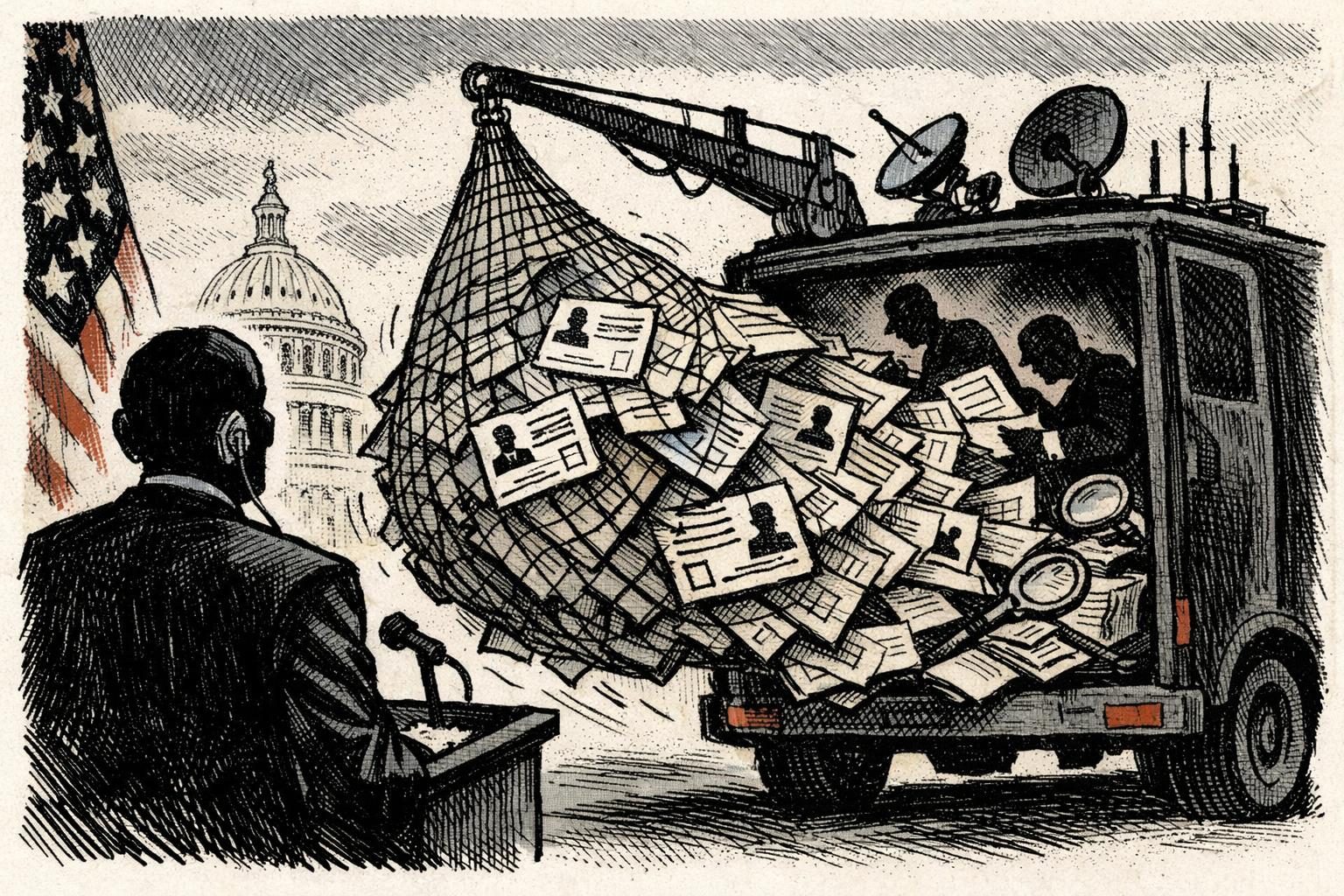
Voting rights and privacy advocates sued the federal government on Thursday, accusing it of building an expansive national voter-data collection operation that has swept up information from at least 47 states and, according to the complaint, handled that material in ways that run afoul of federal law. The lawsuit was filed by the League of Women Voters, the Electronic Privacy Information Center, and the League of United Latin American Citizens, three groups that have long treated election administration and privacy protections as overlapping fronts in the same fight. Their core claim is not simply that the government has been talking a big game about noncitizen voting; it is that the administration has translated that obsession into a broad data-gathering project with few obvious guardrails. In the plaintiffs’ telling, the federal effort has moved well beyond any narrow review of suspicious cases and into something closer to a national sweep of state election files. That is a significant legal and political escalation, because it turns a loud campaign slogan into a question about records retention, information sharing, and whether the government is respecting the limits that normally govern election data.
The complaint lands in the middle of a years-long push by the administration to elevate noncitizen voting as a national threat, even though available research has repeatedly described the problem as rare. That gap between the rhetoric and the evidence is central to the case now taking shape. Voting rights groups say the government is using fears about fraud as cover for a much broader effort to collect politically useful information from state systems, especially voter registration data that can reveal where people live, how they are registered, and in some cases other sensitive details depending on what a state includes in its files. If those claims hold up, the dispute is about more than election integrity messaging. It becomes a test of whether federal officials can pressure or absorb state voter data at scale and then use that information in a way that sidesteps privacy protections and ordinary administrative limits. The groups bringing the lawsuit are framing the matter as a classic overreach: a supposedly targeted enforcement campaign that, in practice, looks like a giant dragnet.
The administration’s defenders are likely to argue that election data collection is a legitimate response to concerns about the accuracy of voter rolls and the integrity of elections. But the scale described in the lawsuit is what gives the challenge its bite. At least 47 states, the complaint says, have had voter files gathered into the federal orbit, an extraordinary number that suggests a coordinated and unusually aggressive operation rather than isolated records requests. The plaintiffs also say the government has mishandled the information in ways that violate federal law, although the precise contours of those alleged violations will be fought out in court. That matters because the legal issues are not abstract. If federal agencies or officials are acquiring and processing state voter data without adequate safeguards, the case could force a much broader reckoning over who can see election records, for what purpose, and under what procedures. It also raises a structural question that goes beyond one administration: whether the central government can turn election administration into a national data project without upsetting the federal-state balance that has long defined American voting systems.
Politically, the lawsuit threatens to convert a favorite talking point into a liability. The White House has every reason to keep noncitizen voting in circulation as a message because it energizes supporters and keeps suspicion focused on the machinery of elections rather than on the administration’s own conduct. But the moment the issue becomes a story about data collection, privacy, and possible misuse, the frame changes. Instead of appearing tough on election fraud, the government risks looking invasive, sloppy, and opportunistic, especially if it is scooping up state voter files with the aim of building a national narrative around a problem that remains statistically uncommon. Even if the administration eventually persuades a court on some narrow legal question, the larger public-relations damage may be harder to undo. A government that treats voter rolls like a source of political ammunition is inviting exactly the kind of distrust that election officials have spent years trying to avoid. The lawsuit does not just challenge one program; it challenges the premise that a sprawling federal data dragnet is a reasonable answer to a problem that has not been shown to exist on anything like the scale officials keep suggesting.
Comments
Threaded replies, voting, and reports are live. New users still go through screening on their first approved comments.
Log in to comment
No comments yet. Be the first reasonably on-topic person here.