
DOJ and ATF wrap a major enforcement sweep in Missouri
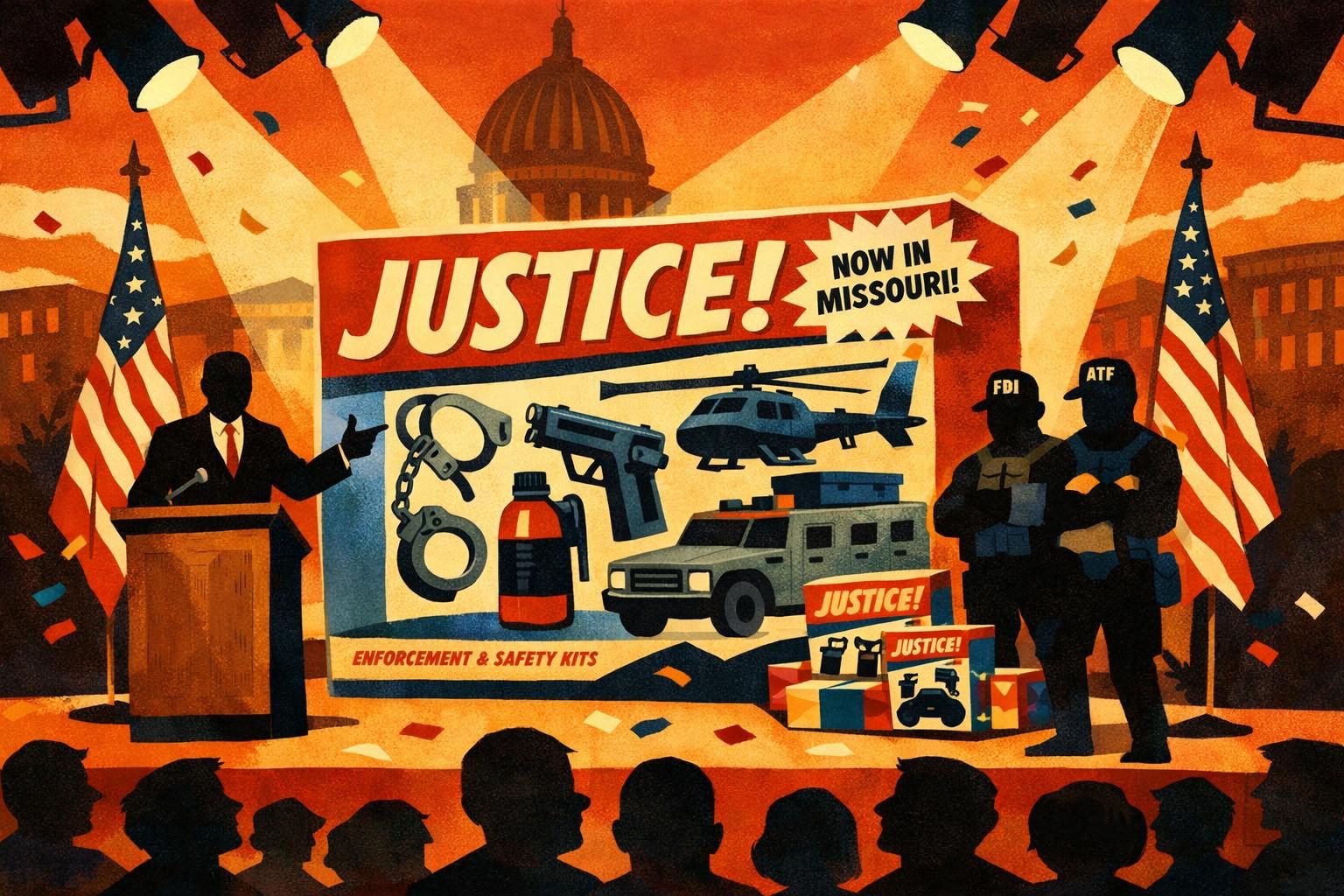
The Justice Department and the Bureau of Alcohol, Tobacco, Firearms and Explosives said on October 15 that they had wrapped up Operation Show Me Justice, a multi-agency enforcement effort in Missouri that brought together federal, state, and local law enforcement partners. On its face, the announcement is straightforward: arrests were made, prosecutions were pursued, and sentencing activity was part of the package. That alone makes this more than a press-release exercise, because there is a real enforcement action behind the branding. But the way the operation was presented also fits a familiar pattern in this administration, which has increasingly treated law enforcement not just as a set of actions, but as a political product that can be packaged, named, and sold. The result is a blend of actual policing and public relations, and it can be difficult to separate the two when the government is eager to tell a story about itself.
That story is built around public safety, order, and the appearance of momentum. A branded sweep like this signals a federal presence in a state where crime-related messaging is likely to resonate with voters and local officials alike. It also lets the administration claim that it is taking decisive steps without having to explain, in equal detail, the broader policy tradeoffs that usually sit underneath such operations. Enforcement campaigns can be useful tools, especially when they focus on specific offenders or coordinated criminal activity, but they also invite questions about what is being emphasized and what is being left to drift. When the government highlights a sweep with a memorable name, it is not simply describing a set of cases. It is also trying to create a political impression of competence, forcefulness, and responsiveness. That impression may be reinforced by real arrests and convictions, yet it still depends heavily on the presentation.
The administration’s preferred framing is obvious enough: this is proof that it is serious about public safety and willing to marshal resources across agencies and jurisdictions to show it. Supporters are likely to view the operation as an example of government doing the basic work it is supposed to do, and doing it in a coordinated way. Critics, meanwhile, are likely to see something more performative, a law-and-order showcase designed to produce headlines and talking points while leaving deeper problems untouched. Both reactions can be true at once. A targeted enforcement push can remove dangerous actors from the street and still function as a branding exercise, especially when the announcement arrives with polished messaging and a name designed to stick. The larger political value often lies less in the long-term effects of the operation than in the immediate optics: the public sees movement, action, and federal muscle. In an environment where many voters want visible proof that officials are responding to crime, that visual can matter almost as much as the substance.
Still, there is a reason this kind of story does not rise to the level of a major scandal. The operation described here is not a case of obvious corruption, abuse, or deception in the narrow sense. It is a current federal action with real enforcement consequences, not a fabricated victory lap pulled out of thin air. The more interesting question is what the administration chooses to do with it afterward. If the pattern continues, this sort of campaign will be used to reinforce a broader narrative that the White House is on the side of safety, discipline, and order, even if the underlying problems remain stubbornly in place. That is where the politics gets messy. The public is being asked to judge not only the merits of the operation itself, but the meaning of the packaging around it. In that sense, Operation Show Me Justice is less a standalone event than another example of how this administration turns enforcement into messaging, and messaging into a claim of governing strength.
Comments
Threaded replies, voting, and reports are live. New users still go through screening on their first approved comments.
Log in to comment
No comments yet. Be the first reasonably on-topic person here.