
The administration’s noncitizen-voting crusade keeps turning into a court problem
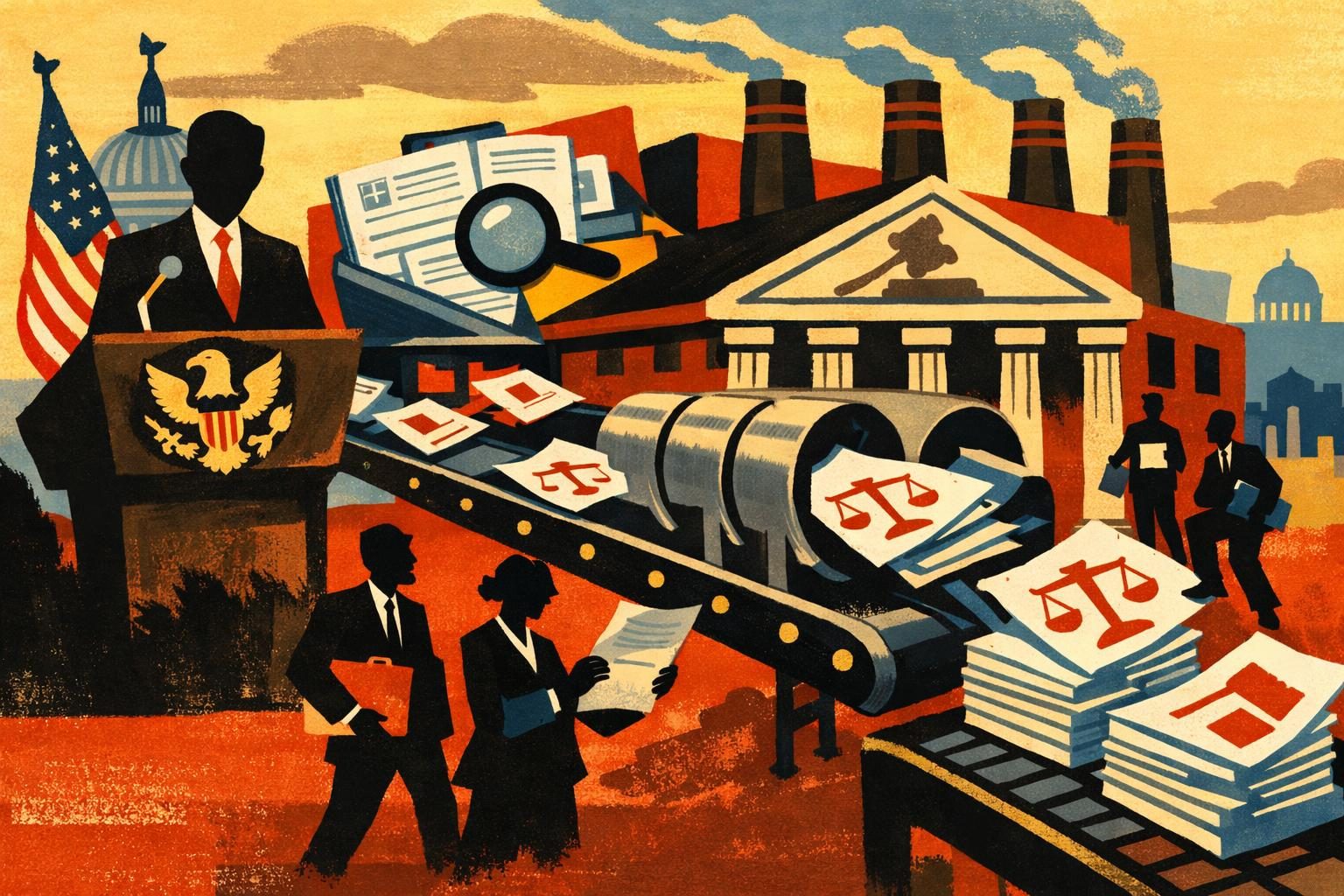
The administration’s campaign against noncitizen voting has started to resemble less a policy initiative than a rolling court docket. On October 15, the effort ran into fresh legal trouble on two fronts at once: one lawsuit focused on the federal government’s push to intervene in California’s ballot-counting process, and another challenged the broader project of assembling voter information from state records and commercial data. Taken together, the two cases highlight a pattern that has become hard to ignore. The government keeps saying it is trying to secure elections, but the way it is going about that work keeps producing immediate legal resistance. That is not just an embarrassment for a single filing or a single state. It suggests an approach that may be structurally built to collide with the courts.
The California dispute captures the most aggressive edge of the administration’s campaign. Federal officials have asked a court to stop or restrict the counting of ballots from people they suspect may be noncitizens, a move that sits directly inside the contested space between election protection and election interference. The government frames the effort as a necessary safeguard against unlawful voting. Critics see something much more dangerous: a request that could chill lawful participation, invite broad suspicion around ballots, and force election administrators to make decisions under extraordinary pressure. Even if the number of actual noncitizen votes is very small, the remedy being sought is sweeping. That mismatch is part of what makes the case so combustible. A system that is supposed to protect the franchise starts looking like one that is willing to burden eligible voters first and sort out the details later.
The other lawsuit reaches deeper into the machinery of the campaign. It challenges the administration’s effort to build a federal database by pulling together state voter files and commercial information in order to identify suspected noncitizens. On its face, that kind of project may sound administrative, even mundane, but the stakes are much larger. Such a database would raise obvious questions about privacy, accuracy, and how far the federal government can go in combining scattered records into a powerful screening tool. It also raises federalism concerns because states traditionally control their own voter rolls and election administration. The more data the government collects, the more people it labels as possible problems, and the more likely innocent voters are swept into a system that is supposed to be hunting for a tiny number of bad records. In that sense, the database case is not just about technology or bureaucracy. It is about whether the government can turn suspicion into infrastructure without creating a mess of false flags and legal challenges.
That is why the legal blowback matters beyond the specifics of either lawsuit. The administration is presenting its election posture as protective and patriotic, but the criticism landing in court is grounded in more basic concerns: due process, privacy, federal authority, and the risk that eligible voters will be discouraged or delayed in the name of rooting out an uncommon problem. Those are not niche objections from the political sidelines. They go to the core of how elections are supposed to work in a democracy that values both access and integrity. If the government wants to claim it is protecting the system, it has to show that its tools are narrowly tailored, legally sound, and reliable enough to justify the disruption they create. So far, the pattern looks more improvisational than disciplined. The same instinct keeps showing up in different forms: gather more data, pressure more states, push harder at the edges of election administration, and rely on the courts to sort out the damage after the fact.
That sequence helps explain why this moment feels bigger than a pair of isolated lawsuits. The administration may still argue that it is responding to a legitimate concern, and it is true that governments have a duty to guard against unlawful voting. But a duty to act is not the same thing as a license to overreach. When one legal challenge targets the ballot-counting request and another targets the information-gathering apparatus behind it, the broader picture becomes difficult to spin away. The government is not merely facing resistance to one controversial tactic; it is facing resistance to the style of governance itself. In practical terms, that means more attorney time, more emergency filings, more uncertainty for election officials, and more public doubt about whether the campaign is actually making elections safer. In political terms, it feeds the perception that the administration has chosen a strategy that generates lawsuits as readily as it generates safeguards. That is how a crusade becomes a litigation factory, with the courts serving less as a backstop than as the main place where the policy gets tested, trimmed, and possibly stopped altogether.
Comments
Threaded replies, voting, and reports are live. New users still go through screening on their first approved comments.
Log in to comment
No comments yet. Be the first reasonably on-topic person here.