
Miami man pleads guilty in oxycodone diversion scheme
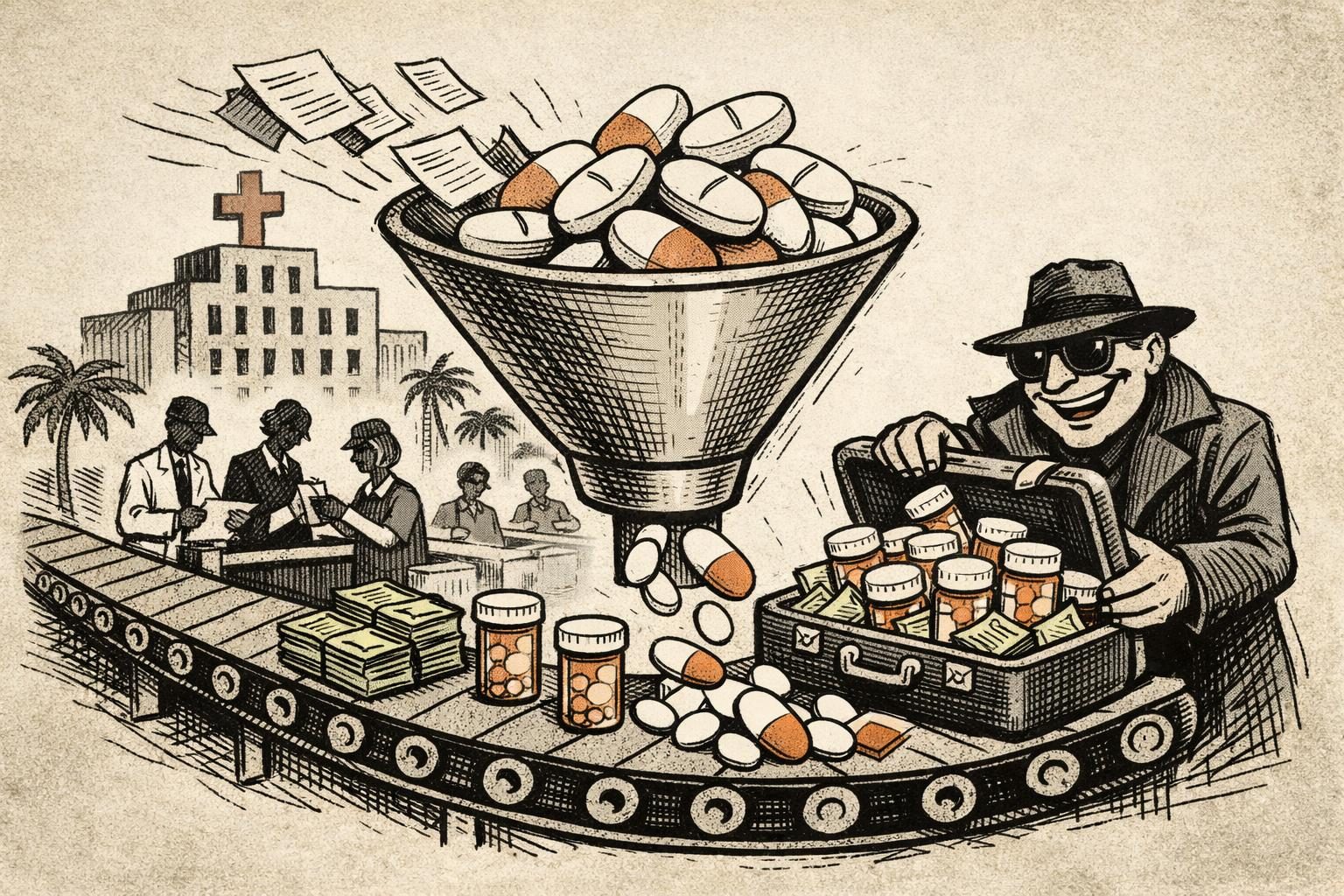
A Miami man pleaded guilty on Oct. 15 to his role in a prescription-fraud operation that prosecutors say moved more than 87,000 oxycodone 30-milligram pills through South Florida clinics and pharmacies. According to the Justice Department, the defendant functioned as a patient recruiter, paying people to pretend to be legitimate patients so they could obtain medically unnecessary opioid prescriptions. Those prescriptions were then funneled into a broader diversion pipeline that relied on complicit or compromised parts of the health-care system. The case is straightforward on its face: a man admitted helping steer powerful painkillers out of lawful channels and into illegal circulation. But the scale of the operation, and the matter-of-fact way prosecutors describe it, also point to a deeper problem that has remained stubbornly alive long after the worst years of the opioid crisis first came into focus. It is not just that one defendant broke the law. It is that a relatively ordinary chain of medical paperwork, office visits, and pharmacy transactions could be bent into a mass-distribution scheme.
The Justice Department says the scheme depended on people willing to show up at clinics and doctors’ offices as supposed patients, even when there was no genuine medical need for the opioids being prescribed. That sort of fraud is not glamorous, but it is effective, which is exactly what makes it dangerous. A patient recruiter sits at the front end of the system and helps convert paper legitimacy into a commodity that can be sold, traded, or otherwise passed along. In practice, the process can look almost boring: appointments are arranged, prescriptions are written, pills are filled, and the drugs disappear into a black market where demand remains intense. Yet behind that ordinary administrative routine is a highly organized criminal enterprise. Moving more than 87,000 oxycodone pills is not the kind of thing that happens because one clinic makes a mistake or one doctor misses a red flag. It suggests repeat participation, repeat access, and repeated failures of oversight across multiple points in the supply chain. The plea therefore marks not only an admission of guilt, but also a window into how prescription-drug fraud can become industrialized when enough actors cooperate, directly or indirectly.
This case also connects to the prosecution of a pharmacist and pharmacy owner who was previously convicted for illegally dispensing an even larger volume of oxycodone. That link matters because it shows this was not an isolated side hustle by one man operating alone. It was part of a wider ecosystem in which different participants appear to have played different roles, from recruiting patients to processing prescriptions to dispensing pills that should never have been released in the first place. When pharmacies and clinics become points of vulnerability rather than safeguards, the result is a system that can be exploited at frightening scale. The formal mechanics of health care can give criminal activity a veneer of legitimacy, and that is especially difficult to police when the transactions themselves resemble legitimate medical care until they are examined closely. Prosecutors understandably frame these cases as wins for enforcement, and they are. But they are also reminders that the line between treatment and diversion can be crossed with alarming ease when controls are weak or when financial incentives overwhelm caution. A guilty plea in one case may help disable one node in the network, but it does not automatically reveal how many similar arrangements may still be operating elsewhere.
The broader significance of the plea is that opioid diversion remains an active public-health and criminal-justice problem, not a historical footnote from the peak of the prescription-pill era. The pills in these schemes are not abstract contraband; they are potent opioids with real risks of misuse, dependency, and overdose. That is why the government treats these conspiracies as serious trafficking offenses rather than merely paperwork violations. It is also why these cases carry a certain political value for federal authorities, who can present them as evidence of vigilance and accountability. Still, the deeper lesson is less comforting. A system that can be gamed into releasing tens of thousands of oxycodone pills has structural weaknesses that are larger than any one defendant. Cash, desperation, and the appearance of medical legitimacy can create a dangerous mix, especially in places where oversight is inconsistent and where the demand for opioids remains high. The plea is an important legal outcome, but it is not the same thing as solving the problem. What remains is the harder work of tightening controls, spotting fraud earlier, and closing off the pathways that allow seemingly routine medical processes to be converted into large-scale drug diversion. Until that happens, cases like this will continue to stand as proof that the pipeline from clinic to street can still leak badly enough to sustain criminal markets and deepen the harms that follow."}]} }] Moreover
Comments
Threaded replies, voting, and reports are live. New users still go through screening on their first approved comments.
Log in to comment
No comments yet. Be the first reasonably on-topic person here.