
DOJ sues California over voter list in a late-cycle election power grab
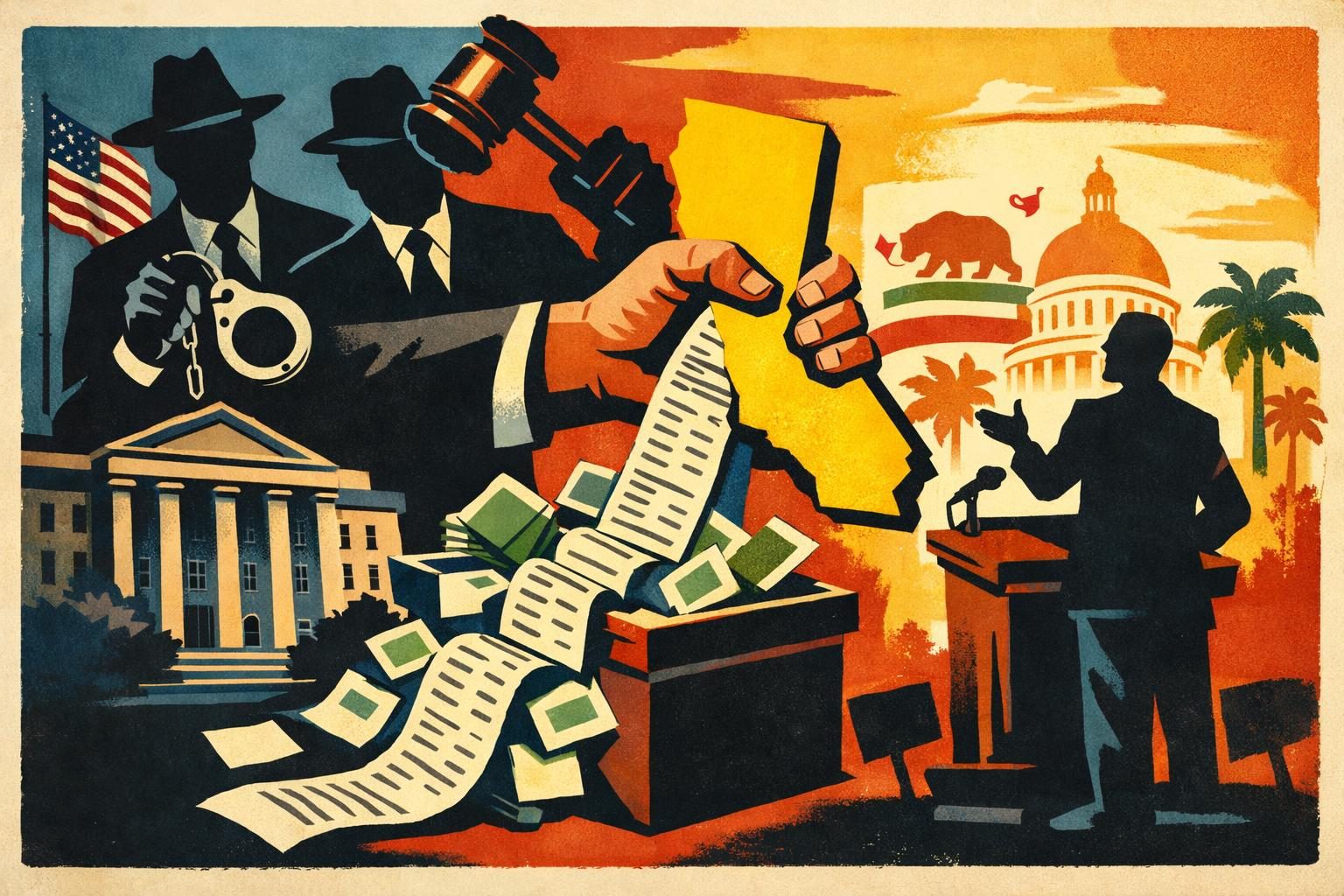
The Justice Department on Thursday filed a fresh lawsuit against California, escalating a fight over the state’s voter rolls and putting a deeply political issue squarely into the middle of the late-election season. Federal officials say California has not done enough to maintain its registration list and are asking a court to force changes after concluding that more than 20,000 people they describe as “likely aliens” are registered to vote. According to the complaint, federal and homeland security officials compared public registration records with immigration-related data and identified names that they believe may belong to noncitizens. The filing does not prove that those individuals voted illegally, but it argues the mere presence of those registrations reflects a failure to keep the rolls clean. California was warned earlier, the federal government says, and officials in the state declined to accept the fix Washington wanted, setting up the lawsuit as a direct clash over who gets to decide what counts as adequate election administration. What might otherwise have been a bureaucratic dispute has now become a full-bore court battle with Election Day approaching fast.
The timing is what makes this case feel so combustible. When the government sues over election administration just weeks before voters go to the polls, the legal filing does more than seek records or compliance; it sends a message about legitimacy, trust, and who is presumed to be protecting the system. The administration is presenting the move as a straightforward enforcement action rooted in federal concerns about voter-roll accuracy, but the political effect is impossible to ignore. Any time officials publicly suggest that thousands of registered voters may not be citizens, the accusation carries consequences well beyond the courtroom, even if many or most of the names turn out to be explainable by data errors, outdated records, or other administrative mismatches. That is especially true in a state as large and as closely watched as California, where election systems are already a target for partisan suspicion and where a legal fight of this scale can quickly become a talking point far beyond the facts of the case. The complaint may be framed as an attempt to protect the integrity of federal elections, but it also has the practical effect of injecting doubt and pressure into the state’s election machinery at the exact moment officials are trying to run it.
California, for its part, is signaling that it sees the lawsuit as federal overreach dressed up in the language of enforcement. State officials are likely to argue that voter-roll maintenance is a routine and carefully managed administrative task, not something that should be seized upon by Washington as a pretext to interfere in how states run elections. The federal filing says California refused to accept the preferred remedy after being put on notice, which suggests the two sides are already at odds not just over the facts, but over the entire theory of the problem. That matters because these disputes often hinge on methodology: what data was used, how it was matched, how confidence was measured, and whether any supposed noncitizen registrants were actually eligible voters whose records were simply incomplete or misread. None of that makes the question trivial. If there really are thousands of ineligible registrations, that is a serious concern. But if the data is weak, overbroad, or poorly matched, then the lawsuit risks becoming an instrument for stoking fear rather than solving a genuine administrative issue. In either scenario, state officials now have to respond under intense national scrutiny while also continuing to run an election for millions of people.
The broader pattern here is hard to miss. This case fits neatly into a wider strategy of making election administration itself part of a partisan standoff, with federal power used to advance a narrative about fraud, weak safeguards, and the need for intervention. Supporters of the lawsuit will say the government is simply doing its job and insisting that states keep accurate registration lists. Critics will say the administration is exploiting immigration data and election-season timing to bully states, create confusion, and cast suspicion on lawful voters. Both things can be true in the abstract: states do have an obligation to maintain clean rolls, and federal officials do have the authority to enforce election law in certain circumstances. The problem is that once the issue becomes a public spectacle, the line between enforcement and intimidation gets very thin. If the evidence is solid, the administration may eventually claim vindication. If it is not, the case could become another embarrassment for a Justice Department already accused of treating a contested political narrative like a verified crisis. Either way, the immediate effect is the same: California is now in the middle of a high-stakes, highly public legal fight, and the rest of the country is watching a late-cycle election battle get even messier.
Comments
Threaded replies, voting, and reports are live. New users still go through screening on their first approved comments.
Log in to comment
No comments yet. Be the first reasonably on-topic person here.